About us
About us
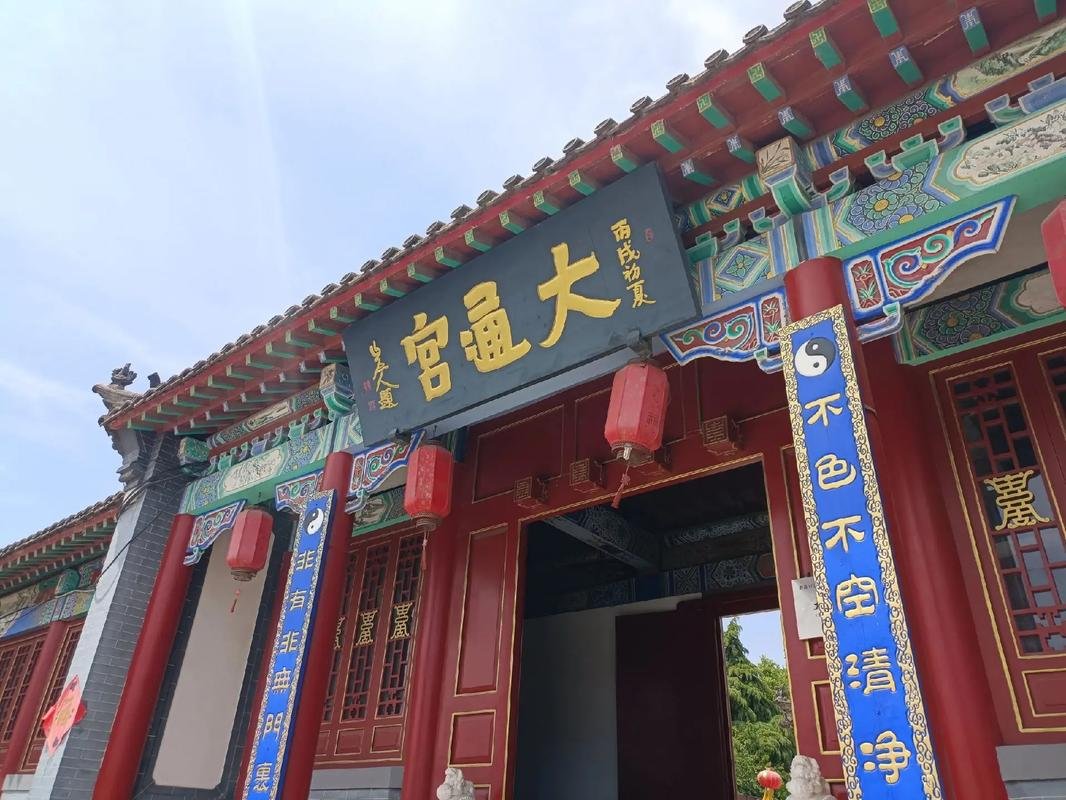
Datong Palace, commonly known as Shiqiao Temple, formerly called Yuhuang Pavilion, is located north of Chengzi Village, on a high mound on the west bank of the Moshui River. According to Volume 4 of the Wanli edition of the *Laizhou Prefecture Gazetteer* (Ming Dynasty), "Yuhuang Pavilion is thirty li south of the county seat." Its initial construction date is unknown, but folk legend says it was built during the Tang Dynasty, with Yuan Tiangang and Li Chunfeng selecting the site. Yuan Tiangang and Li Chunfeng were indeed real people during the Tang Dynasty. Yuan Tiangang was from Chengdu and authored *Liuren Ke* and *Wuxing Xiangshu*. Li Chunfeng was from Yong County, Qizhou, and was knowledgeable in astronomy and calendar systems, authoring *Faxiang Zhi*. Whether they ever visited Chengyang is not recorded in historical documents. However, the location of Shiqiao Temple, according to the geomantic principle of "Azure Dragon on the left, White Tiger on the right, Vermilion Bird in front, and Black Tortoise behind," has ensured its continuous popularity for centuries.
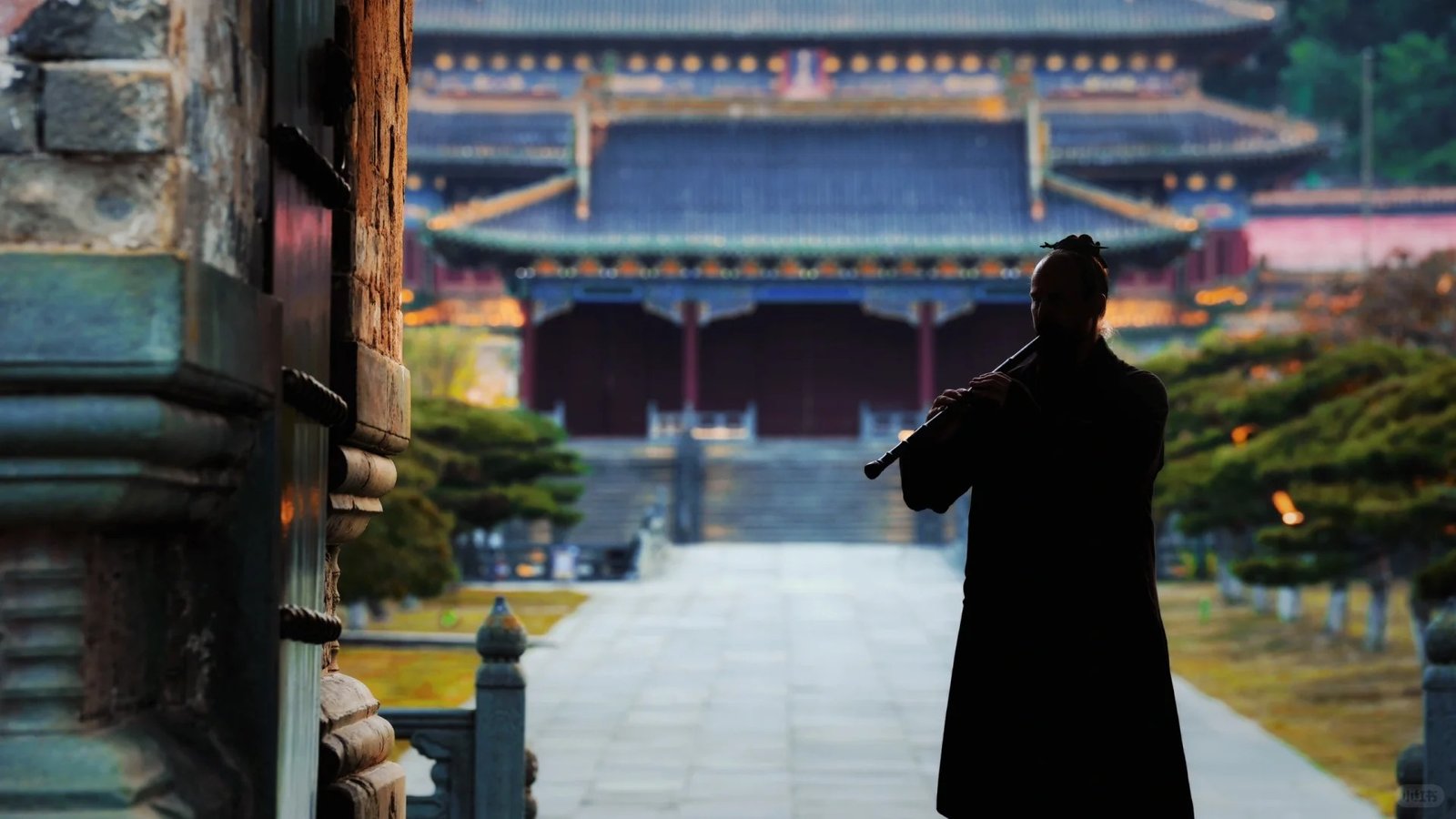
The Shiqiao Temple has three halls on the right, arranged north-south, all of which are timber-framed structures. The main hall is a traditional palace-style building with bracket sets and flying eaves, supported by four stone pillars. The temple buildings are covered with small blue tiles, and the ridges are decorated with ornaments commonly known as celestial dogs, flying dragons, and supreme deities. The main hall, named the Jade Emperor Hall, enshrines the Supreme Being of the Azure Heaven, with a jade-faced eagle beak, glaring eyes, and a bluish-purple complexion. To the left is the Goddess of Lightning (commonly known as the Lightning-Strike Lady), a goddess holding a bright mirror in her hands, draped in colorful ribbons, and with her hair styled in a bun.
There are two side halls on the east and west sides of the Jade Emperor Hall. The east side houses the Eighteen Arhats, and the west side houses the Thousand-Handed and Thousand-Eyed Guanyin (commonly known as the Thousand-Thousand Buddha). According to eyewitnesses, the Thousand-Handed Buddha statue has twenty-four arms besides the two clasped hands, each arm possessing an eye. The walls of the east and west side halls are painted with murals promoting karma and retribution, the figures lifelike. To the east of the east side hall is a six-room Taoist temple, lower than the main hall.
The lower hall of the Stone Bridge Temple enshrines the Zhenwu Spiritual Response and Protector Emperor, also known as the True Martial Emperor, a guardian deity worshipped in Taoism. The statue stands, with flowing hair, dressed in black, wielding a sword, and standing on a tortoise and snake. The front hall of Shiqiao Temple houses two door gods, one on the east and one on the west. The one facing west has a white face and holds a mace; the one facing east has a purple face and holds a large sword. Legend has it that these two are the Tang Dynasty generals Qin Shubao and Yuchi Gong. To the east of the front hall is a small Kui Xing Pavilion, dedicated to the God of Literature. To the south is a mountain gate, outside which stands a stone tablet, but unfortunately, the inscription is lost. Outside the west wall of Shiqiao Temple are more than ten brick pagodas, the burial place of the successive abbots. In addition, there are 38 mu of temple property.
Qingxiao Palace, located west of Shiqiao Temple, is commonly known as the Old Mother Temple. It was completed in the spring of 1940. Originally, a Qingxiao Yuanjun Shrine was built on Lingshan Mountain in Jimo. The Tongzhi edition of the *Jimo County Gazetteer* records, "The Lingshan Qingxiao Yuanjun Temple, its origins are unknown, was rebuilt during the Wanli era. During the Wanli era, the remains of Yuanjun and a stone tablet were unearthed, indicating it was built in the fifth year of King Zhou Yuan's reign." A temple fair is held annually on the 15th day of the fourth lunar month, attracting great crowds.
After the Japanese occupation of Lingshan in 1938, the public was prohibited from offering incense and attending the fair. It is said that a new temple dedicated to the Old Mother was built at Shiqiao. Around 1939, a council for the relocation of the Old Mother Temple to Lingshan was formed, headed by Niu Xizhen and Yuan Ganglun from Chengyang, and Ren Zhifan from Jingkou (the exact name is now forgotten), and fundraising began. Many people, merchants, and individuals from Chengyang, Jimo, Jiaozhou, Qingdao, and other parts of Shandong Province donated, with amounts ranging from 2 to 500 yuan. At that time, villagers from Chengzi Village dismantled stone slabs from the Huanggu Nunnery and sold them to the Qingxiao Palace. After its completion, two stone tablets were erected outside the mountain gate, recording the temple's construction and the names and amounts of donors. The inscriptions stated that Yuanjun was the sixth of the seven fairy maidens of Yaochi in Heaven, who attained immortality and was responsible for observing human good and evil.
The main hall of Qingxiao Palace was dedicated to Yuanjun, and its structure and format were similar to the Shiqiao Temple. In the courtyard was a brick incense burner, and there were two corridors, one on the east and one on the west, totaling eight rooms. The east corridor housed an information desk to answer questions about drawing lots, and Yuan Ganglun also provided medical advice and prescriptions. At the south end of the main hall were two two-story bell towers (on the east) and drum towers (on the west), about seven or eight meters high, accessible by stone steps (demolished in 1980). Between the bell and drum towers was the mountain gate, outside which stood a flagpole. On the fifteenth day of the fourth month of the summer of the Gengchen year of the Republic of China (May 21, 1940), a consecration ceremony was held, and the first April Temple Fair was also launched.