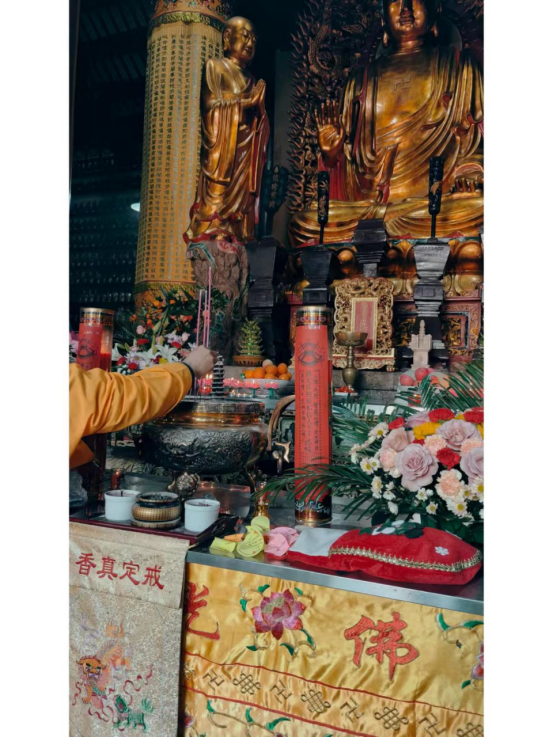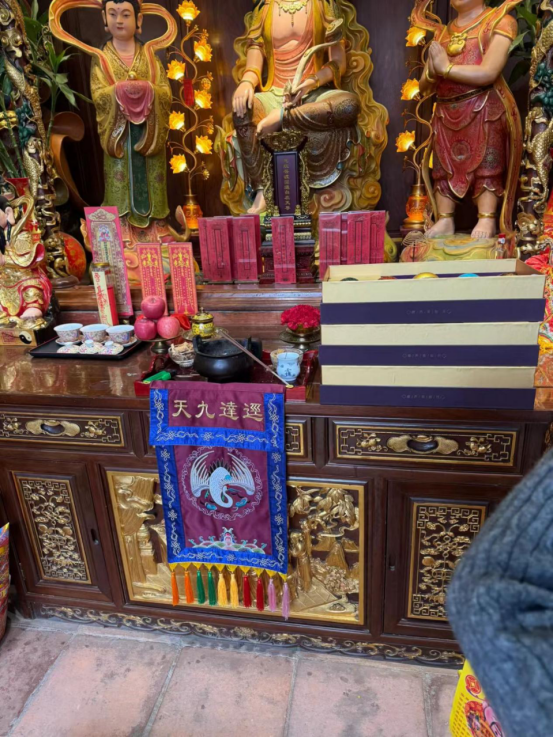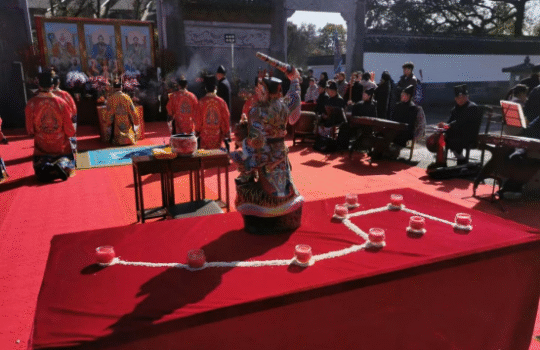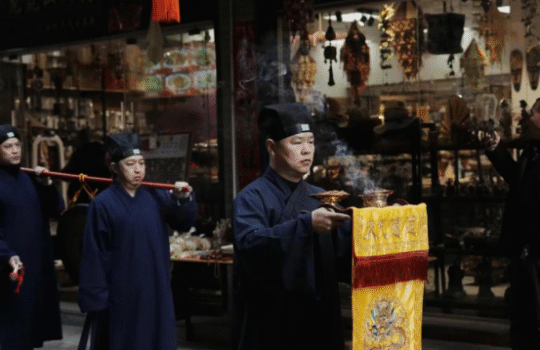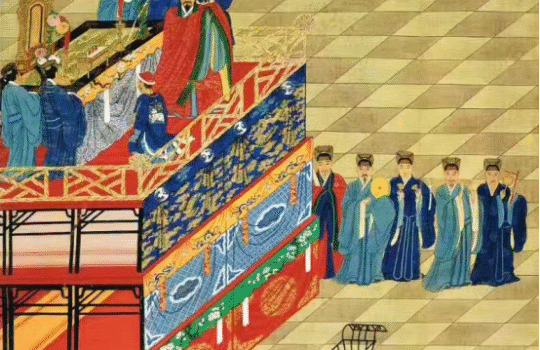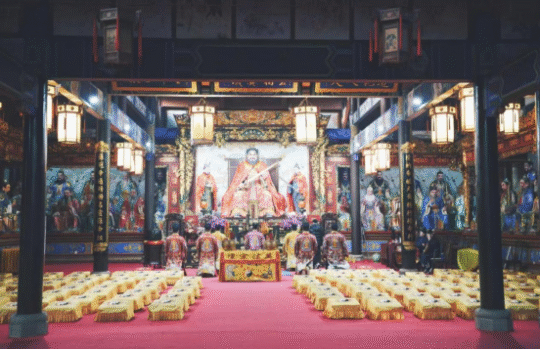
The Taoist consecration ceremony is conducted by a high-ranking priest. During the ceremony, the eye instrument is consecrated. The core of this process lies in following standardized procedures such as choosing auspicious days to set up the altar, purifying the environment to invite deities, and using a writing brush to mark the eyes. These steps are aimed at drawing the spiritual energy from the universe and the spirits of deities into the statue or ritual object, endowing it with sacredness and spiritual power. Thus, it becomes a sacred vessel capable of communicating with deities and protecting believers.
I. Core Concepts and Applicable Objects
Essence: By using rituals to connect with heaven, earth and deities, remove the original dirt and negative energy from objects, and infuse spiritual power, it achieves “the arrival of divine presence and the acquisition of spiritual qualities” for the objects, embodying the Taoist concepts of “interaction between heaven and man” and “revering the deity as if the deity is present”.
Applicable Objects:
Deity Images: Images and statues of the Three Pure Ones, the Four Emperors, Emperor Wu of the Great Emperor, etc., used for worship.
Divination Tools: Peachwood swords,the Eight Trigrams mirrors, talismans, seals of power, etc., Taoist divination tools.
Prayer Objects: Jade pendants, bracelets, amulets, etc., used for protection and prayer.
Prohibition: Daily necessities, living creatures, consumables, and non-physical items (such as mobile phone numbers) are generally not blessed.
II. Core Procedures and Key Steps
For a formal consecration ceremony, a auspicious date and time are required. It is conducted by a high-ranking master with a long lineage. The core procedures include twelve rituals, and the key steps are as follows:
Set up the altar and prepare items: Build a ritual altar, place statues and offerings, set up incense, flowers, lamps, water, and fruits as offerings; prepare red ink, white root, new brushes, mirrors, a rooster (male chicken), new towels, purified water, etc.
Cleanse and purify: The master recites the “Golden Light Mantra” and uses purified water and incense smoke to purify the altar and items, removing evil spirits and impurities, creating a clean space for the deities to arrive.
Invite the deities to arrive: Burn incense and offer prayers, using mantras, hand gestures, and the Eight Trigrams and Six Directions to respectfully invite the main deity and guardian deities to the altar, sit and offer blessings.
Inscribe the pen and mirror: The master holds the pen and recites the mantra, endowing the brush with spiritual power; using the mirror to reflect the light of the sun and moon onto the items, symbolizing the invocation of the divine light to awaken the spirit.
Consecrate the eyes: Using a mixture of red ink, white root, and chicken blood, the master uses a new brush to consecrate the eyes, ears, nose, mouth, hands, and feet of the items, symbolizing “opening the channels of spirit”, awakening the spiritual nature; everyone echoes “It’s done”, indicating that the deities have taken their positions.
Restrain the spirit and sit down: Position the deity or item, remove the red cloth covering, recite oaths for blessings, send the deity to thank the saints, and complete the consecration.
III. Ritual Objects and Incantations
Core Ritual Objects:
Cinnabar Pen: Used for opening the mind and channeling divine energy. It symbolizes the infusion of divine power.
Mirror: Reflects the light of the sun and moon, dispels evil spirits, and reveals spiritual clarity.
Golden Rooster: Enriched with rooster blood, symbolizing abundant yang energy and warding off evil while bringing good fortune.
Pure Water / Spell Water: Purifies the altar and objects, removing impurities.
Common Incantations: “Golden Light Mantra”, “Opening Brightness Mantra”, etc., used for protecting oneself, removing evil spirits, and awakening spiritual light.
V. Cultural Significance and Precautions
Cultural Significance: It is an important carrier of Taoist faith practice, integrating elements such as traditional rituals, music, calligraphy, and folk customs, strengthening believers’ reverence for deities and their connection with faith, and possessing both religious and cultural inheritance value. Notes:
The items for consecration should be kept clean and free from dirt.
When being worshipped or worn, treat them with sincerity. Regular cleaning and making wishes are necessary to align with the concept of “the more sincere the heart, the more effective the magic”.Consecration should be performed by a legitimate temple or a master with a lineage, avoiding the influence of non-formal rituals on the outcome.