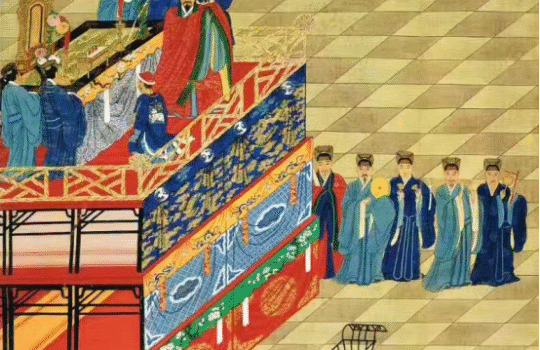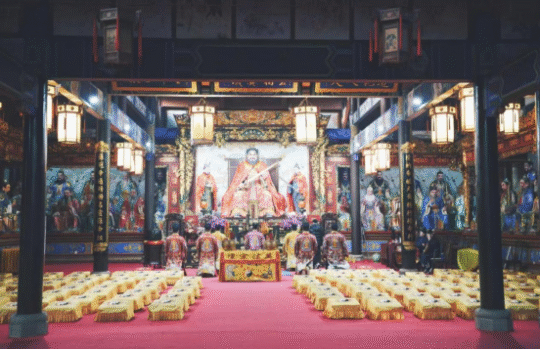
The prayer and blessing in Taoism is a religious practice where believers, through specific rituals and actions, seek protection and fulfillment of their desires from the deities. The core of this practice is based on the concept of “interaction between heaven and man”, aiming to establish a communication bridge between humans and the deities. It combines the religious ritual nature with the folk customs.
Core Concepts and Praying Objects
Core Concepts: Taoism holds that celestial deities govern the cosmic order and human fortune and misfortune. Believers, through sincerity, discipline, and rituals, can obtain the protection of deities and achieve the goals of “seeking good fortune and avoiding misfortune” and “wish fulfillment”, while emphasizing “reward for good deeds”, and praying for blessings requires a foundation of accumulating virtue and doing good deeds, which aligns with the “responsibility” ethics.
Common Praying Objects
Supreme Deity System: The Three Pure Ones (seeking the protection and wisdom of Taoism), the Four Emperors (Yuhuang Emperor seeking protection for the three realms, Ziwudi Emperor seeking to eliminate disasters and misfortunes, Mother Earth Goddess seeking peace and tranquility of water and soil);
Special Deities: Zhenwu Emperor (seeking peace and warding off evil), Wenchang Emperor (seeking academic and career success), Wealth God (Zhao Gongming, etc., seeking prosperous finances), Nianzi Goddess (seeking continuous offspring), Doctor God (seeking good health) etc.;
Local Deities: City God (protecting the peace of a certain area), Landlord (preserving the smoothness of the home and the residence) etc.
Main types of blessing
By intention classification
Peace blessing: Praying for the well-being of family members, a stable home, and smooth travel, this is the most common type of blessing, often seen during festivals such as the Spring Festival and Qingming Festival;
Academic and career blessing: Students pray to the God of Culture, seeking success in exams and academic progress; Working people pray for prosperous career and smooth affairs;
Financial blessing: Worshipping the God of Wealth, Fan Li, etc., seeking prosperous business and abundant wealth;
Marriage and offspring blessing: Praying for the matchmaker to connect good matches, praying for the Goddess of Adoption to give birth to children;
Eliminating disasters and relieving misfortunes blessing: When encountering misfortune or illness, praying to the deities to resolve disasters and restore prosperity.
By scale classification
Personal blessing: Worshippers go to the temple alone or with their families to burn incense and make wishes, the process is simple, and it is mostly a one-on-one wish-making;
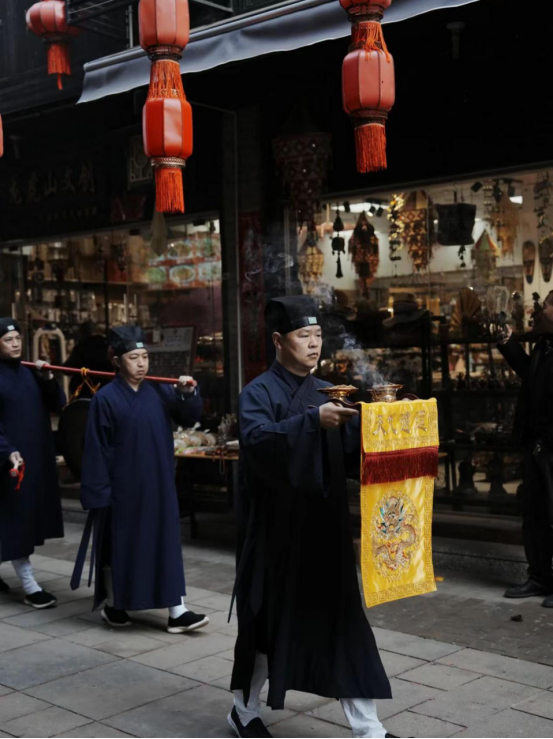
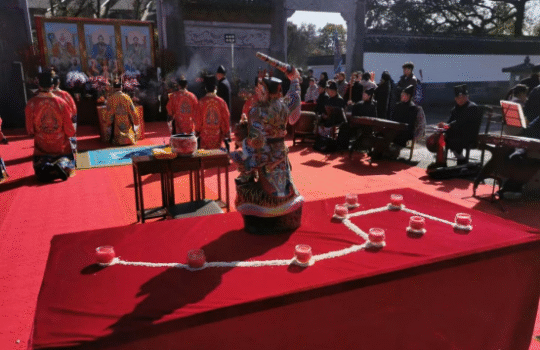
Group blessing: Large-scale blessing ceremonies held in temples (such as the New Year’s Auspiciousness Festival, the Year of the Horse Blessing Festival), led by Taoist priests, praying for blessings for a group of believers or a specific group (such as those in the zodiac year).
Core process and method
Simple folk prayer (commonly used in daily life)
Washing and purifying: Before praying, take a bath and change clothes to keep the body and mind clean, and eliminate distractions;
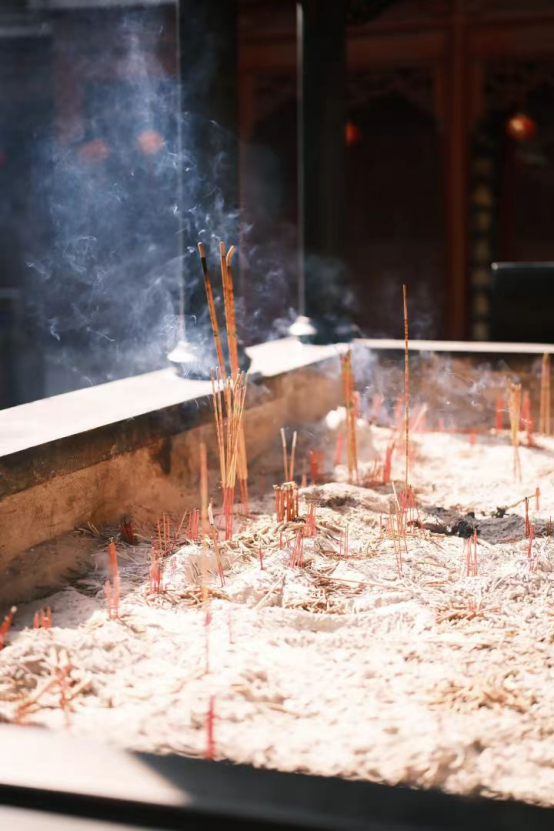
Choosing a place to burn incense: Go to a formal temple or place the family’s deity statue, hold the incense (usually three sticks, representing heaven, earth, and man), bow, and insert it into the incense burner;
Quietly making a wish: Facing the deity statue, put your hands together or hold them in an arch, clearly recite the name, address, and wish, and promise the way to fulfill the wish after it is achieved (such as returning the incense, donating, doing good deeds);
Kneeling and bowing: Perform three bows and nine kowtows or hold hands in an arch to express respect, and complete the prayer.
Taoist incantation prayer (formal rituals)
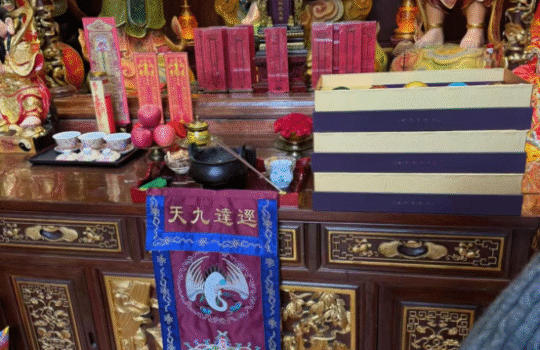
Set up the altar and prepare the equipment: Build a prayer altar, offer corresponding deities, and place five offerings (incense, flowers, lamps, water, fruits), scriptures, and talismans;
Clean the altar and summon the gods: The Taoist chants incantations to purify the altar, and through the method of divination and incense burning, respectfully invite the gods to descend;
Recite scriptures for prayer: Recite classics such as “Yuhuang Jing” and “Beidou Jing” together to enhance the power of the scriptures and inform the gods of the believers’ wishes;
Send the gods and fulfill the vow: After the ceremony, respectfully send the gods away. If the believers’ wishes are fulfilled, they need to fulfill the vow at the temple as promised, completing the “prayer – vow” closed loop.
Key customs and precautions
Blessing fulfillment ritual: After the wish is fulfilled, it is necessary to fulfill the vow promptly. Common methods include burning incense, donating merit, rebuilding the deity statue, and doing volunteer work, etc. One must not break their promise to the gods.
Time selection: Choose auspicious days and times more often, such as the 5th day of the first lunar month to welcome the God of Wealth, the 3rd day of the second lunar month for the birthday of the God of Literature, the 1st and 15th day of each month, etc. Those born in the zodiac year will also worship the zodiac sign at the beginning of the year for blessings.
Taboos and norms: When making a blessing, one should have a sincere heart and not speak nonsense; when entering a Taoist temple, one must abide by the rules and avoid stepping on thresholds and making noise; the blessing items (such as offerings) should be clean, and it is forbidden to use meat, fish, or filthy substances.
Differences in Schools
Zhengyi School: The rituals for blessing are elaborate, emphasizing the use of talismans, incantations, and written documents. It often undertakes various special blessing ceremonies from the folk, closely meeting the needs of believers’ lives;
Quanzhen School: The blessing focus is more on theTaoist priest’s own spiritual cultivation and merit accumulation for the return, with the rituals relatively simple. It emphasizes “When the heart is sincere, it will be answered”, integrating blessing with the cultivation of one’s nature and conforming to the concept of “completing both life and immortality”.