In Taoist thought, the cultivation of self-cultivation and moral improvement is centered around the concept of “Tao”, advocating the dual pursuit of spiritual and physical well-being. It emphasizes both the purification of the spirit and the maintenance of the body, with the ultimate goal being to achieve unity with the Tao, achieve immortality, or attain enlightenment and become an immortal. The core ideas and specific methods are as follows:
Core concept:
Dual cultivation of life and spirit: This is the core principle of Taoist self-cultivation and spiritual development. “Spirit” refers to the heart, spirit, and morality, while “life” refers to the body, life, and vital energy. Taoism holds that the two are inseparable. Only by balancing the cultivation of spirit and body can one reach the state of “Tao”. In the early stage of Taoism, there was a tendency to focus on cultivating life (such as alchemical techniques), while in the later period, it emphasized “prioritizing spirit over life” or “cultivating both spirit and life together”, achieving the unity and elevation of body and mind.
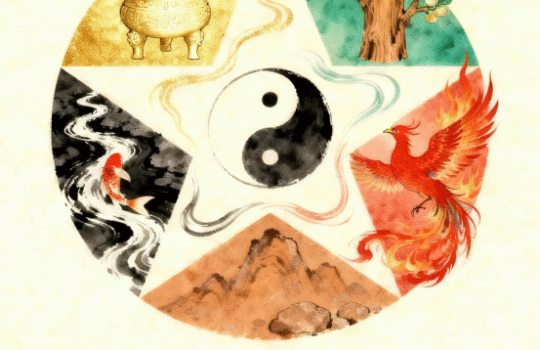
Oneness of Heaven and Man: It advocates that the human body is a microcosm of the universe, and the essence, qi, and spirit within the body resonate in harmony with the yin-yang and five elements of the universe. Therefore, self-cultivation and spiritual development should follow the rhythms of the universe, such as adjusting work and rest according to the changes of the four seasons and conducting internal alchemy training in accordance with the laws of the sun and moon to achieve harmony and integration between man and nature.
Purity and non-action: It inherits the core ideology of Taoism, believing that inner purity is the foundation of cultivation. Eliminating desires such as greed, anger, and ignorance, and not clinging to gains and losses of external things, can allow the spirit to return to its original state and enable the vital energy within the body to flow smoothly, conforming to the non-action essence of “Tao”.
Accumulation of virtue and good deeds: It combines moral practice with cultivation, proposing the concept of “accumulating merit and virtue”, believing that doing good deeds is a necessary prerequisite for achieving immortality. The “responsibility and consequence” theory in Taoist ethics (the connection between an individual’s misfortune and the family’s cause and effect) also strengthens the moral constraints of practitioners, requiring them to base their actions on loyalty, filial piety, kindness, and trustworthiness.
Perfection of Nature: Purification of Mind and Morality
Emptying the mind and maintaining tranquility, purifying desires
Methods: Through methods such as “meditation”, “meditative thinking”, and “reciting scriptures”, the mind should be brought to a state of emptiness and tranquility. For example, the “retaining the One” method in Taoism, which involves focusing on the “Dao” itself (or a certain part within the body) to eliminate external disturbances and purify distractions, restoring the purity of the mind.
Based on: Derived from the “Attaining the Extremity of Emptiness and Staying Firm in Tranquility” in the “Tao Te Ching”, Taoism believes that an empty and tranquil mind is the bridge for communication with the Dao and the prerequisite for maintaining vital energy.
Adhering to the precepts and accumulating virtue
Methods: Abiding by the Taoist rules and regulations, such as the basic “Five Precepts” (not killing, not stealing, not committing adultery, not lying, not drinking alcohol), as well as the “Ten Precepts” and “One Hundred Precepts” for monks; at the same time, practicing good deeds, such as helping the poor, saving lives, protecting life and conserving resources, and persuading others to be virtuous, to accumulate “merit”.
Based on: The “Taiping Jing” proposes that “Those who wish to seek immortality should base themselves on loyalty, kindness, harmony, and trustworthiness”, believing that without moral cultivation, the mind is not pure and cannot align with the Taoist path.
Reciting scriptures and attaining enlightenment, clarifying the mind and realizing nature
Methods: Reciting Taoist scriptures (such as “Tao Te Ching”, “Qing Jing”, “Yuhuang Jing”, etc.), not only is it a study of the teachings, but also through the rhythm and connotation of the scriptures to purify the mind, understand the true meaning of the “Dao”, and achieve spiritual enlightenment.
Rejuvenation: The Maintenance of the Body and Vital Energy
Internal Alchemy Practice (Core Method)
Principle: Consider the human body as a “pot”, using the “essence, qi, and spirit” within the body as the “ingredients” of the “elixir”. Through three stages, achieve the unity of life and body:
Refining Essence into Qi: Harmonize the acquired essence (physiological essence) and transform it into primordial qi, concentrating it in the Dan Tian.
Refining Qi into Spirit: Further refine the qi to elevate it to the form of the spirit, achieving the integration of qi and spirit.
Refining Spirit into Void: Merge the spirit with the source of the “Dao”, reaching the state of “coexisting with the heavens and earth, shining with the light of the sun and moon”.
Characteristics: Internal Alchemy is the core rejuvenation method of Taoism in its later stage, emphasizing “internal seeking” rather than “external seeking”, distinct from the early external alchemy.
Guiding and moving qi, unblocking meridians
Method: Through specific body movements (such as the Five-Animal Exercises, Eight Sections of Brocade, and the early form of Tai Chi) and breath regulation (such as fetal breathing, inhalation and exhalation), unblock meridians, harmonize qi and blood, promote the smooth flow of vital energy, enhance physical fitness, and maintain the original essence of life.
Based on: Based on traditional Chinese medicine and the theory of Yin-Yang and Five Elements, it is believed that the obstruction of qi will lead to physical decline. Guiding and moving qi can achieve “smooth qi and blood flow, no diseases” (referring to the prevention of diseases).
Fasting and Absorbing Qi, Purifying Internal Organs
Method: For a short or long period, avoid grains and cereals, replacing food with inhaling the primordial qi from the universe and taking herbal medicines, to achieve the purpose of cleaning the intestines, reducing the interference of postnatal turbid qi, and maintaining the primordial qi.
Note: Fasting is a professional cultivation method, requiring guidance from a mentor and should not be attempted blindly.
The levels and goals of self-cultivation and moral improvement
Basic level: Prevent diseases and enhance physical fitness. Through methods such as guiding the body and consuming vital energy, one can regulate the body, improve health, and achieve longevity.
Intermediate level: Clarify the mind and spirit. Through practices like remaining calm, observing precepts, and performing good deeds, one can achieve inner peace and moral perfection, attaining spiritual tranquility.
Ultimate level: Achieve enlightenment and become immortal. Through the integration of life and death cultivation, one can achieve the unity of the spirit and the Tao, either achieving immortality of the physical body or ascending to the celestial realm, completing the ultimate transcendence of life.