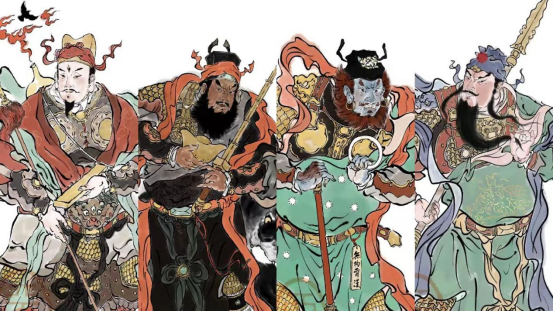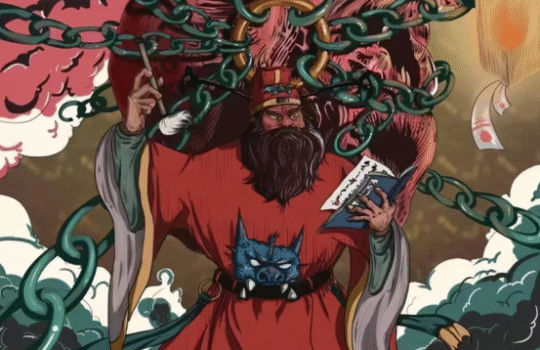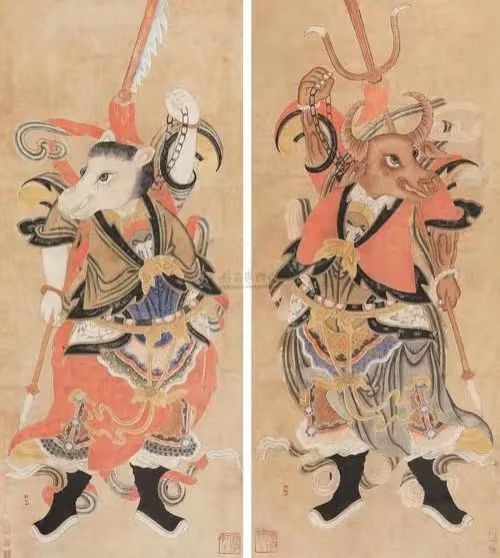
The Four Heavenly Generals of Taoism are the four chief guardians in the Taoist pantheon who command the celestial troops, drive away evil spirits and demons, and guard the altar sites. They are the important executors of the power of Taoist doctrines, often summoned by magicians in rituals and spells to subdue demons and evil spirits and protect the righteous path. The specific combination of the Four Heavenly Generals varies slightly in different regions and Taoist sects, but the most common and authoritative ones are “Ma, Zhao, Wen, Guan” or “Ma, Zhao, Wen, Zhou”.
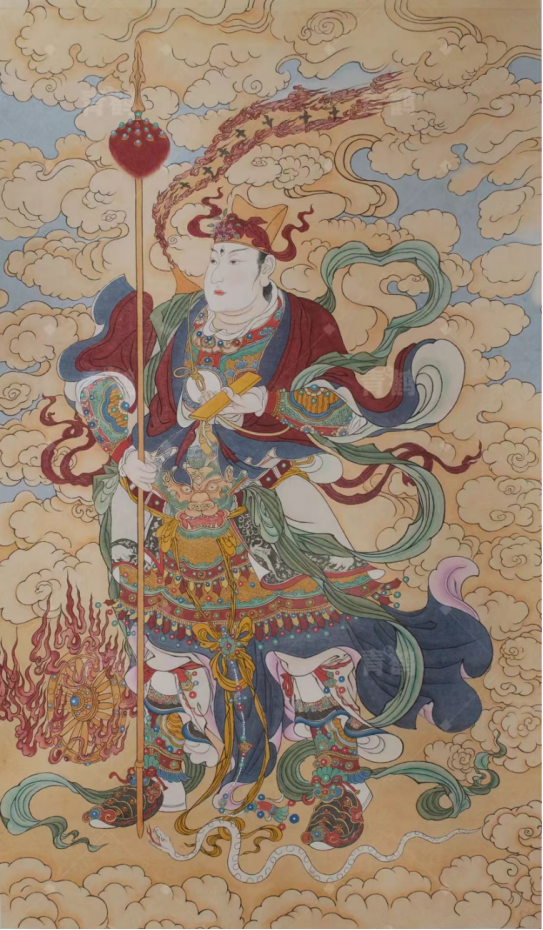
1. Ma General (Huaguang Great Emperor, Ma Tian King, Three-Eyed Spirit Illumination)
Physical characteristics: The most distinctive feature is the three eyes (eyebrows above the eyes), holding a golden spear, often standing on a wind and fire wheel, surrounded by fire crows, with a face like charcoal, extremely powerful. Also known as “Ma Sifu’s Three Eyes”.
Religious origin: Its prototype is complex, integrating legends of Buddhist Huaguang Ruler and folk fire gods. In Taoism, he is depicted as the chief deity of the fire department, in charge of fire, able to use the five virtues (divine powers), especially skilled in warding off fires and driving away evil spirits.
Guardian function: Due to his extensive powers and sharp eyesight (the three eyes symbolize the ability to observe the three realms), he is regarded as a guardian general, dedicated to inspecting good and evil, driving away evil spirits and binding demons. Folk troupes, acrobatics industries, etc. also often worship him as a protective deity.
II. Emperor Zhao (Zhao Gongming, Zhao Xuantan)
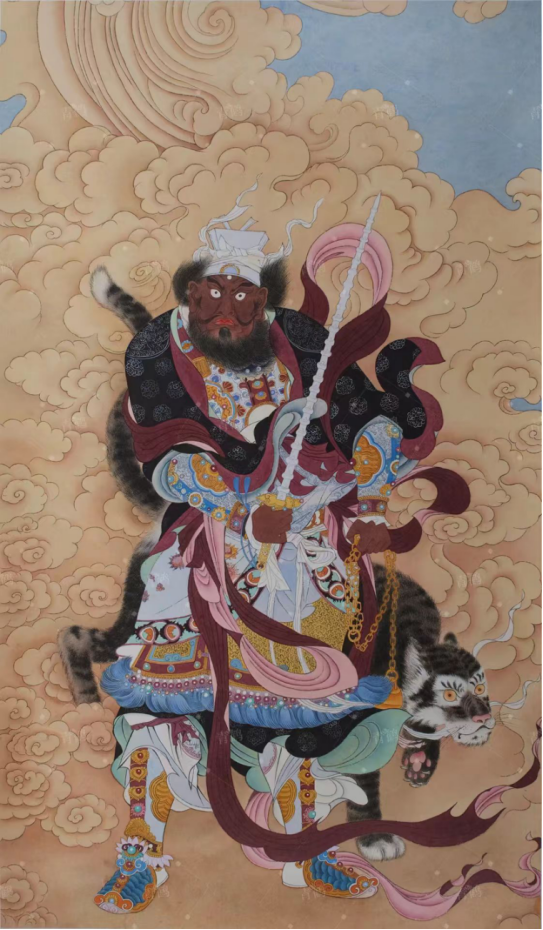
Physical Characteristics: Dark complexion, long beard, wearing an iron crown, holding an iron whip, riding a black tiger. The image is fierce and stern. He is the most well-known among the four generals among the common people.
Religious Origin: His belief has a long history. Originally, he was a plague god and a ghost general. After being shaped by literary works such as “The Legend of the Divine Comedy”, he gradually evolved into the Golden Dragon如意 Zhengyi Longhu Xuantan True Lord, commanding four subordinates: “Invoking Treasure Heavenly Lord”, “Collecting Precious Things Heavenly Lord”, “Inviting Wealth Messenger”, and “Profit and Prosperity Angel”. He became the top martial and financial god in the world.
Guardian Functions: In the Taoist system, he is not only a god of wealth but also an important guardian deity and the leader of the thunder department. He is in charge of fair rewards and punishments, driving thunder and lightning, summoning wind and rain, and driving away plagues and disasters. When Taoist priests summon Emperor Zhao, it is often used for summoning spells, suppressing evil spirits, and attracting wealth and prosperity.
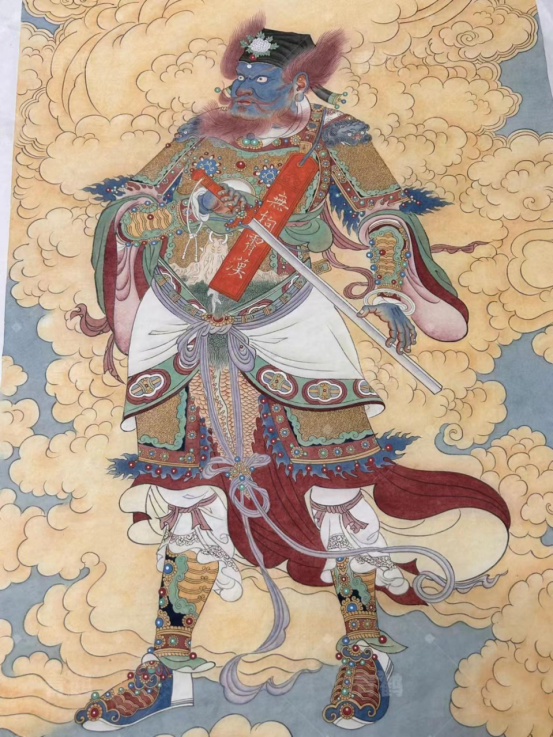
III. Wen Yuanshuai (Wen Qiong, Wen Tianjun)
Physical Characteristics: With a pale complexion and red hair, his fangs protrude, his appearance is fierce, but his character is upright. Usually he holds a jade ring and a wolf’s tooth stick.
Religious Origin: According to legend, he was originally a scholar from Zhejiang. Due to his bravery in doing good deeds and sacrificing himself to defeat evil spirits, he was later enshrined by the Eastern Emperor as the first among the ten chief guards of the Eastern Heaven, becoming the chief deity of the Yue Family (the Eastern Heaven’s underworld).
Guardian Function: He is the main commander of the underworld’s dark troops, specializing in capturing ghosts, detaining living souls, and suppressing evil spirits. In the Taoist rituals of “transcending” and “breaking the prison” for guiding the souls of the deceased, Wen Yuanshuai is often summoned to open the way to the underworld and summon the souls of the deceased. At the same time, he is also responsible for patrolling the human world, inspecting good and evil deeds.
IV. Guan Yu (Guan Zhong Emperor, Guan Deity)
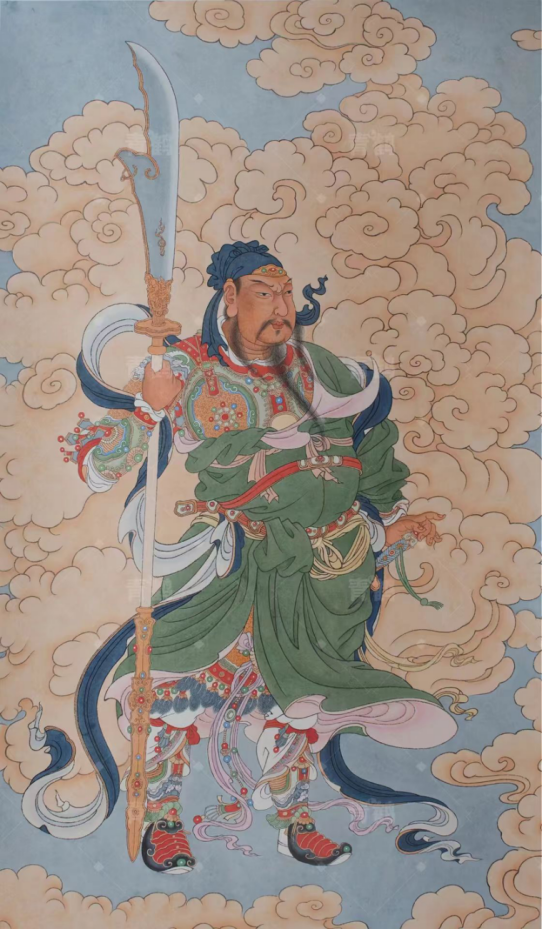
Characteristics: His face is like a dark red plum, with long flowing hair, with a pair of dragon-like eyes and prominent eyebrows. He holds a blue dragon scimitar and sometimes sits upright reading (The Spring and Autumn Annals). His image is loyal, righteous and imposing, deeply rooted in people’s hearts.
Religious Origin: In history, Guan Yu, a famous general of the Three Kingdoms, was honored by Confucianism, Buddhism and Taoism for his “loyalty, righteousness, integrity and bravery” virtues. In Taoism, he was titled as “The Great Emperor of Three Realms, Divine Lord of Far-reaching Command, Guan Deity Emperor” and had an extremely high divine status.
Guardian Function: He is the Vengeful Emperor, commanding the heavenly troops, eliminating evil spirits and chaos, and protecting the righteous. At the same time, he is also the Martial Wealth God and the God of Literature and Education (because of reading The Spring and Autumn Annals). In Taoist rituals, Guan Deity is often regarded as the commander of the thunder department or the guardian deity, and his divine power can defeat evil spirits and demons, and protect the country and the people. He is the one with the most comprehensive and noble divine status among the four generals.
The beliefs of the four generals embody the concentrated essence of the Taoist principle of “using martial power to safeguard the Tao”. Each of them has their own focus:
• Ma General focuses on fire, eyesight, and inspection.
• Zhao General focuses on thunder, wealth, and fairness.
• Wen General focuses on the yin (female) element, the earth, and detaining evil spirits.
• Guan General focuses on loyalty, righteousness, and subduing demons.
In Taoist rituals, the high-ranking priests invoke the four generals by reciting mantras, chanting incantations, walking the compass, and burning seals, to summon them to lead the heavenly troops and generals to descend to the altar. Their purpose is threefold:
1. Guarding the altar area: Protecting the site where the ritual is performed and preventing external demons from interfering.
2. Executing the ritual instructions: Delivering the priest’s talismans and documents to the heavens or the underworld, or carrying out specific tasks such as capturing demons and driving away evil spirits.
3. Demonstrating the divine power of Taoism: Showing the sacredness and majesty of Taoist magic, and strengthening the faith of the believers.
They are the most action-oriented and combat-capable “special forces commanders” in the vast pantheon of Taoist deities, and are the key executors who transform the sacred will of Taoism into specific “supernatural powers”.