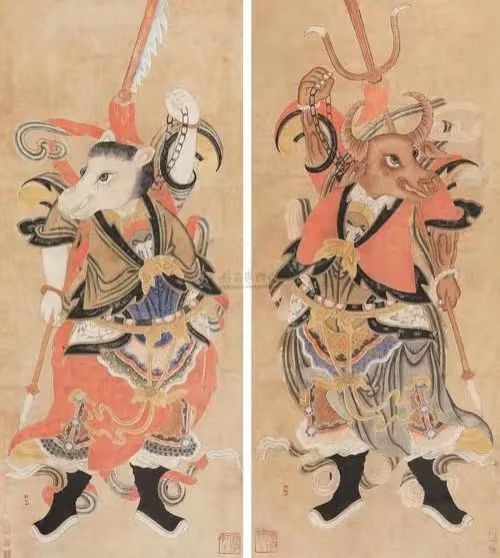
The Acquired Immortals and True Lords refer to a group of immortals in the Taoist pantheon who stand in contrast to the Primeval Saints and True Lords. They are beings who attained immortal status as mortals through accumulating merits, cultivating the Dao, taking elixirs, or receiving enfeoffment into the immortal register. Distinguished from the primeval deities that have existed since the beginning of time, their core characteristic lies in “mortals cultivating to become immortals and achieving enlightenment through meritorious deeds”, embodying the Taoist cultivation philosophy that “immortality can be learned”.
Among the Acquired Immortals and True Lords, figures such as the Four Great Heavenly Masters, the Five Great True Lords, the Five Patriarchs and Seven True Masters, the Three Maos True Lords, the Eight Immortals, Zhang Sanfeng, Magu, the Goddess of the Nine Heavens Xuannü, and Mazu are all representative examples who achieved immortality as mortals—either through dedicated cultivation, accumulating great merits, or being enfeoffed in recognition of their illustrious virtues. Each has their own unique cultivation path and divine mission, collectively embodying the Taoist tenet that “immortality can be learned and enlightenment attained through meritorious practice”.
The Four Great Heavenly Masters
They are important patriarchs of the Zhengyi (Orthodox Unity) Sect of Taoism, all of whom ascended to immortality through mortal cultivation:
Zhang Daoling went to Sichuan to cultivate the Dao, founded the Way of Orthodox Unity and Imperial Authority, subdued demons and evil spirits, and was revered as the First Heavenly Master.
Ge Xuan mastered talismanic arts and elixir refining, widely practiced Taoist magic to save all living beings, and was honored as Heavenly Master Ge.
Xu Xun slew flood dragons and controlled water disasters to benefit the people of Yuzhang; upon completing his merits, he ascended to immortality in broad daylight and was titled Heavenly Master Xu.
Sa Shoujian learned Taoist doctrines, took relieving human suffering and benefiting all creatures as his life’s mission, exorcised evil spirits and cured the sick, and was known as Heavenly Master Sa.Together, the four Heavenly Masters preside over exorcising evil spirits, averting disasters, and safeguarding the inheritance of the Taoist faith.
The Five Great True Lords
They are paragons of cultivation from different Taoist schools, renowned mostly for their profound spiritual attainments and merits in saving the world:
Zhuangzi, the Nanhua True Lord: Authored Zhuangzi to expound Taoist thought, advocated aligning with nature, and attained enlightenment by comprehending the harmony between heaven and humanity.
Liezi, the Chongxu True Lord: Attained the Dao of the Wind Immortal, could ride the wind to travel, advocated emptiness, tranquility and non-action, and achieved enlightenment through spiritual cultivation.
Wenzi, the Tongxuan True Lord: Studied Laozi’s teachings, wrote books to spread Taoist wisdom, and benefited the world with his profound virtue.
Kang Cangzi, the Dongling True Lord: Advocated embodying the Dao and uniting with the true nature, cultivated moral character and nurtured life, and enlightened all living beings with his wisdom.
Zhang Boduan, the Ziyang True Lord: Founder of the Southern School of the Internal Alchemy Sect, authored The Awakening of the Truth, advocated the dual cultivation of nature and life, and revealed the methods of internal alchemy practice.The Five Great True Lords, whether expounding Taoist doctrines or guiding spiritual cultivation, are the core inheritors of Taoist philosophy and practice.
The Five Patriarchs and Seven True Masters
They are the patriarchal figures of the Northern and Southern Schools of the Taoist Internal Alchemy Sect, all of whom attained enlightenment as mortals through rigorous internal alchemy cultivation and comprehending the Great Dao.
The Five Patriarchs are divided into the Southern and Northern Schools:
The Five Patriarchs of the Southern School include Zhang Boduan, Shi Tai, Xue Daoguang, Chen Nan, and Bai Yuchan. They inherited and passed down the internal alchemy cultivation methods in an unbroken line, advocating cultivating life first and then nature and the dual cultivation of both.
The Five Patriarchs of the Northern School are Wang Chongyang, Zhong Liquan, Lü Dongbin, Liu Haichan, and Wang Xuanfu. Wang Chongyang founded the Quanzhen (Complete Perfection) Sect, advocating the integration of Confucianism, Buddhism, and Taoism, with the key tenets of purifying the heart, restraining desires, and cultivating the mind and nature.
The Seven True Masters are the seven prominent disciples of Wang Chongyang: Ma Danyang, Tan Chuduan, Liu Chuxuan, Qiu Chuji, Wang Chuyi, Hao Datong, and Sun Bu’er. Each established their own branch, propagated Quanzhen Taoist doctrines, recruited numerous disciples, and saved the world and enlightened all beings, becoming the core driving force behind the later development of Taoism.
The Three Maos True Lords
They are the patriarchs of the Maoshan Sect of Taoism, three mortal brothers—Mao Ying, Mao Gu, and Mao Zhong—who lived during the Han Dynasty. All three abandoned official positions to cultivate the Dao, lived in seclusion on Maoshan Mountain, dedicated themselves to spiritual practice, and mastered the art of longevity. They often used Taoist magic to heal the sick and ward off plagues, achieving remarkable merits. In the end, they ascended to immortality in broad daylight and were revered as the Three Maos True Lords. They preside over the spiritual veins of Maoshan Mountain and safeguard the peace of the region. Later generations of the Maoshan Sect honored them as its founding patriarchs, inheriting their arts of talisman writing, sacrificial rituals, exorcism, and healing.
The Eight Immortals
They are the most down-to-earth group of Acquired Immortals and True Lords in folk belief, all born as mortals with legendary life experiences:
Tieguai Li was originally a handsome scholar; he missed returning to his physical body while his spirit was traveling, and thus attached his soul to the body of a crippled beggar. After learning Taoist magic, he dedicated himself to saving the world.
Han Zhongli once served as a general of the Han Dynasty; after being defeated in battle, he encountered an immortal who enlightened him. He then devoted himself to cultivating the Dao and attained the Great Dao of Golden Elixirs.
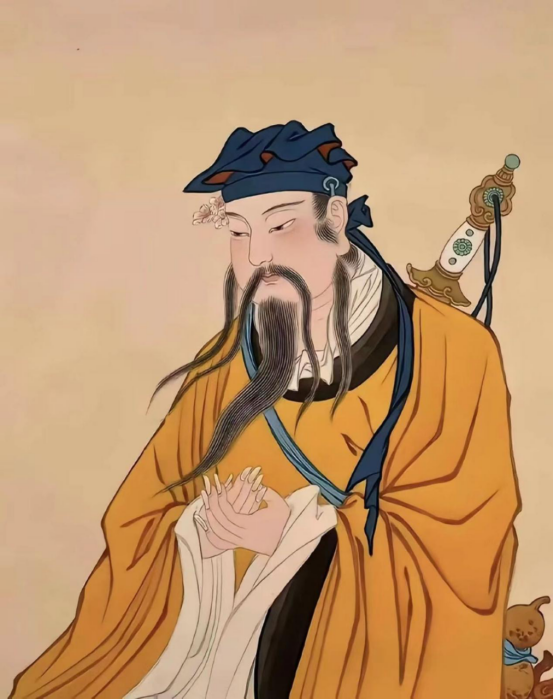
Lü Dongbin repeatedly failed the imperial examinations; he met Han Zhongli, who enlightened him, leading him to see through the vanity of the mortal world. He mastered swordsmanship and Taoist magic, slew demons, and relieved the suffering of the afflicted.
Zhang Guolao lived in seclusion in the mountains, cultivated to become an immortal, and often traveled the world riding a donkey backward.
He Xiangu was originally a peasant girl; she attained immortality by consuming mica, practiced compassion to benefit the world, and protected women and children.
Lan Caihe wandered the rivers and lakes, making a living by singing Taoist ballads. He enlightened people through his playful banter and laughter, and eventually ascended to immortality.
Han Xiangzi was the nephew of the renowned literatus Han Yu; he studied the Dao from an early age, mastered the art of summoning phoenixes with his flute, and enlightened his uncle.
Cao Guojiu was originally an imperial uncle of the Song Dynasty; he saw through the emptiness of wealth and fame, abandoned his official position to cultivate the Dao, and attained enlightenment under Lü Dongbin’s guidance.Each of the Eight Immortals has a distinct personality, unconstrained by rigid rituals and etiquette, and takes saving all living beings as their mission. They symbolize that mortals, regardless of their background or occupation, can achieve immortality through cultivation and merit accumulation.
Zhang Sanfeng
He was a revered Taoist master at the end of the Yuan Dynasty and the beginning of the Ming Dynasty, born as a mortal. Gifted with extraordinary intelligence from an early age, he extensively studied various classics before devoting himself to Taoist cultivation. He founded the Wudang Sect, advocated the integration of the three religions, focused on internal alchemy cultivation, and also practiced martial arts. His internal alchemy philosophy emphasized “dual cultivation of nature and life, and simultaneous cultivation of internal and external aspects”. The Wudang martial arts he created, which overcomes rigidity with softness, has been passed down to later generations. Zhang Sanfeng often traveled the world to help the people and was revered as the founder of the Wudang Sect. Later generations honored him as an immortal who safeguards the inheritance of martial arts and Taoist cultivation.
Magu
She is a goddess in Taoism who presides over birthdays and auspicious omens, originally a mortal. Endowed with great wisdom from childhood, she dedicated herself to cultivating the Dao and attained immortality under the guidance of celestial beings. Legend has it that she could turn rice grains into elixirs with a flick of her hand and had witnessed the East China Sea turn into mulberry fields three times—a symbol of longevity and the passage of time. In folk belief, she is regarded as an emblem of good fortune and longevity. During birthday celebrations, people often enshrine statues of Magu to pray for long life and happiness. Magu also always helps the world and protects the well-being of all living beings with her compassionate heart.
The Goddess of the Nine Heavens Xuannü
Though often regarded as a primeval deity, some Taoist scriptures record that she attained enlightenment as a mortal. Legend states that she was originally an ancient goddess who later reincarnated in the mortal world, where she mastered military strategy and esoteric Taoist magic. She once assisted the Yellow Emperor in defeating Chiyou; in recognition of her illustrious merits, she was enfeoffed as the Goddess of the Nine Heavens Xuannü. She presides over warfare, strategy, Taoist talismans, and seals, and protects righteous armies. Generals and strategists of later generations often worshipped her to pray for invincible victories in battle. Meanwhile, she also saves the world and exorcises evil spirits with Taoist magic, becoming an Acquired Immortal and True Lord embodying both martial and Taoist divine attributes.
Mazu
She is a sea goddess elevated to immortal status from a mortal. Her real name was Lin Mo, a native of Putian in Fujian Province during the Song Dynasty. From an early age, she was intelligent and skilled in swimming; she often rescued fishermen and merchant ships in distress at sea, predicted weather changes, and guided vessels on their courses. She ascended to immortality at the age of twenty-eight. Due to her meritorious deeds of relieving suffering and saving lives, she was revered as Mazu by later generations. She presides over maritime safety and protects fishermen and travelers on their journeys. As her belief spread, her divine functions gradually expanded, and she became an all-powerful deity who safeguards regional peace and dispels disasters and misfortunes. Mazu temples have been built all over the country, with thriving incense offerings, making her a widely venerated Acquired Immortal and True Lord among Chinese people at home and abroad.
All these Acquired Immortals and True Lords came from the mortal world, either attaining enlightenment through rigorous cultivation or benefiting the world with meritorious deeds. Their stories and divine missions not only embody the Taoist concepts of “harmony between heaven and humanity” and “immortality can be learned” but also carry people’s sincere wishes for peace, good fortune, longevity, and justice。