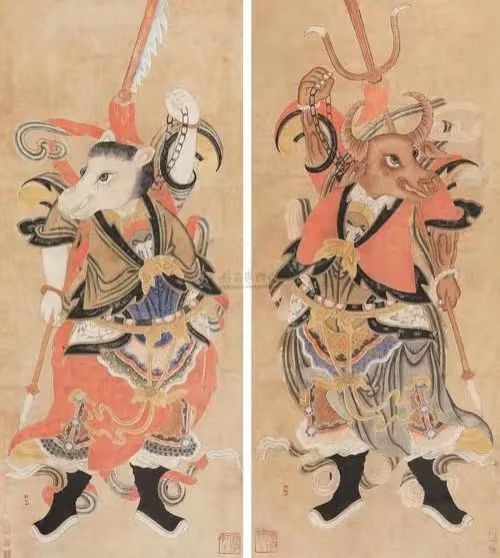
The Three Caverns Master is a revered title and specific religious position in Taoism conferred on high-ranking masters who have received the highest-level Taoist ordination talismans and mastered the Three Caverns True Scriptures. It represents the pinnacle of authority, erudition, and divine power within the Taoist clergy hierarchy. Far from a generic honorific, it is a hierarchical title with strict definitions and a formal inheritance system.
Core Definition: The Meaning of “Three Caverns”
The “Three Caverns” (San Dong) form the foundational classification system for Taoist scriptures, consisting of:
Cavern of Perfection (Dong Zhen Bu): Primarily transmits the scriptural teachings of the Shangqing (Supreme Clarity) Sect, focusing on spirit visualization and qi cultivation to pursue individual attainment of immortality.
Cavern of Mystery (Dong Xuan Bu): Mainly inherits the textual traditions of the Lingbao (Numinous Treasure) Sect, centered on sacrificial rituals and ceremonies for saving sentient beings and delivering the living from suffering.
Cavern of Divinity (Dong Shen Bu): Chiefly passes down the canonical methods of the Zhengyi (Orthodox Unity) Sect (also known as Heavenly Master Taoism), emphasizing talismanic magic and the invocation and command of gods and spirits.
Thus, the “Three Caverns” embody the entire essence and orthodox lineage of Taoist scriptural doctrines and magical arts. A master can only be titled a Three Caverns Master if they have systematically received, thoroughly mastered, and been authorized to practice the scriptures, ordination talismans, precepts, and rituals of all three categories.
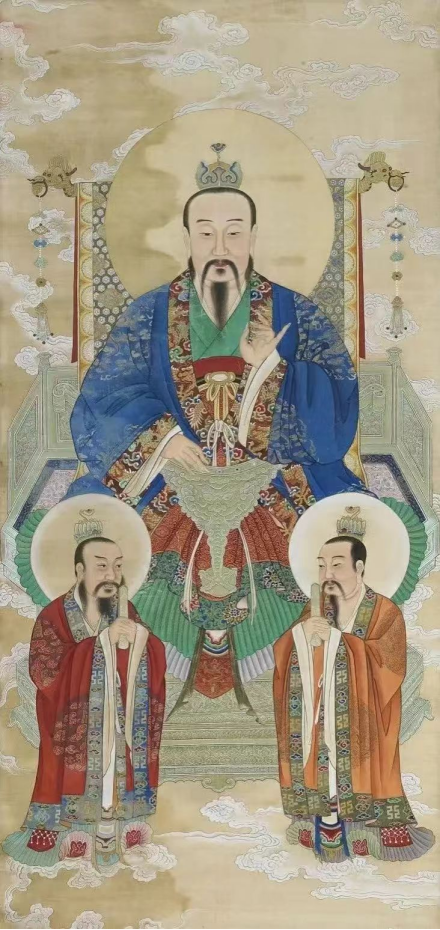
How to Become a Three Caverns Master: Rigorous Lineage Inheritance
This title cannot be self-proclaimed; it must be obtained through Taoism’s most stringent inheritance ritual—the ordination ceremony (Shoulu).
Gradual Ordination Advancement: A Taoist priest begins with the elementary Three-Five Du Gong Talisman, and as their cultivation deepens and merits accumulate over time, they progressively receive higher-ranking ordination talismans, such as the Zhengyi Mengwei Talisman and the Shangqing Great Cavern Scripture Talisman.
Conferment of the Three Caverns Scriptures and Talismans: When a master attains a sufficiently high rank (usually the highest or second-highest ordination grade), the Celestial Master’s Mansion or authorized senior Taoists will confer upon them the Three Caverns Scriptures and Talismans.
Divine Authority Recognition: Receiving this ordination signifies that the entire pantheon of deities associated with the Three Caverns in the Heavenly Court has recognized the master, endowing them with the legitimate clerical authority to invoke the Three Caverns gods and spirits and perform the Three Caverns magical arts. Their religious position (e.g., Shangqing Three Caverns Five Thunder Scriptures and Talismans Master) will be officially recorded in the Taoist registry and the celestial archives.
Functions and Status: Authority Within Taoism
Presiding Over the Highest-Rank Rituals: Only a Three Caverns Master is qualified to preside over national-level, large-scale grand ceremonies such as the Golden Register Grand Retreat and the Yellow Register Grand Retreat. These rituals are held to pray for national peace and prosperity and to transcend large numbers of wandering souls—tasks beyond the capability of ordinary masters.
Transmitting High-Level Taoist Lineages: They are the orthodox inheritors and teachers of Taoist doctrines, empowered to pass down the Three Caverns scriptures, precepts, and talismans to disciples, serving as the linchpin for sustaining the unbroken continuity of Taoist traditions.
Exercising the Full Spectrum of Magical Arts: By mastering all three Caverns, they can comprehensively apply Shangqing’s spirit visualization, Lingbao’s sacrificial rituals, and Zhengyi’s talismanic magic to address the most complex and significant religious needs (e.g., large-scale disaster-averting ceremonies and imperial state sacrifices).
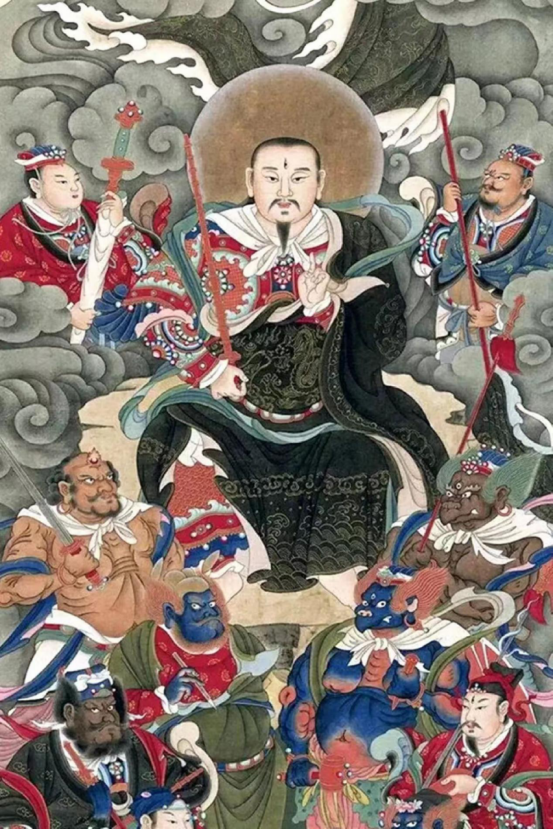
Holding Lofty Status in Taoism: Historically, those who attained the title of Three Caverns Master were often imperial tutors or leaders of Taoism nationwide (e.g., Du Guangting, Liu Hunkang, Lin Lingsu). They acted as interpreters of Taoist doctrines and administrators of the Taoist community.
Differences From Ordinary Masters and High Priests (Gao Gong)
Ordinary Masters/Priests: May only have received partial ordination talismans from one sect (e.g., Zhengyi) and mastered a limited range of magical arts.
High Priests (Gao Gong): Refers to Taoist priests who serve as the chief officiant in specific rituals—a temporary religious role. A High Priest may not be a Three Caverns Master, but a Three Caverns Master is inherently a High Priest.
Three Caverns Master: Is a permanent, highest-rank hierarchical title, representing the master’s comprehensive mastery, orthodoxy, and supreme authority in Taoist theology, rituals, and magic. They are “the High Priest among High Priests”.