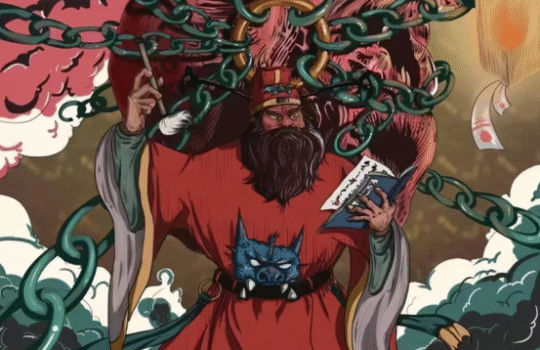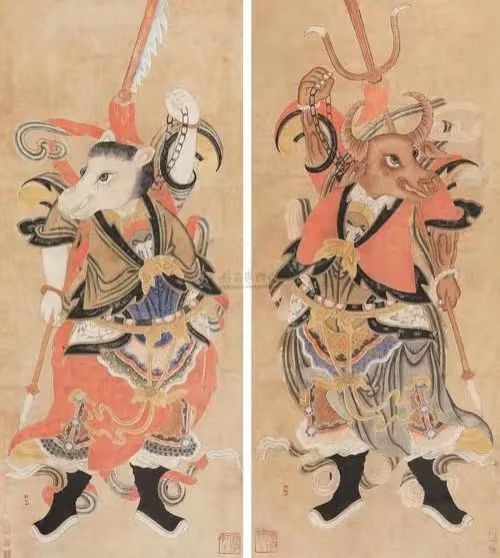
The Five Regional Lords in Taoism—namely the Lord of the Nine Yi Tribes of the East, the Lord of the Eight Man Tribes of the South, the Lord of the Six Rong Tribes of the West, the Lord of the Five Di Tribes of the North, and the Lord of the Three Qin Regions of the Center—are core deities blending ancient regional tribal beliefs with the Taoist directional protection system. Rooted in the awe of the ancient Chinese ancestors toward the tribes and territories of the five cardinal directions, they were later incorporated into the Taoist pantheon. They preside over regional peace, tribal welfare, the safety of travelers and merchants, and territorial stability, embodying the concept of “region-specific guardianship”. Their canonical basis can be found in Taoist scriptures such as Records of the Primordial Supreme True Immortals and The Golden Scripture of Lingbao Teachings for Salvation and Deliverance. These deities retain the simple traits of ancient tribal cultures while integrating the core Taoist philosophy of “harmony between heaven and humanity, and peace among all nations”.
The Lord of the Nine Yi Tribes of the East
The Lord of the Nine Yi Tribes of the East is the guardian deity of the nine ancient Yi tribes, who inhabited the coastal areas and the Huaihe River basin in eastern China (including the Huaiyi, Laiyi, and Bird Yi tribes). Corresponding to the East and the color cyan, he presides over maritime border security, fishery and agriculture, merchant travel, and tribal harmony in the eastern regions. Legend has it that he was manifested from the fusion of the wood qi of the East and the ancestral beliefs of the Nine Yi Tribes. Well-versed in coastal climates and mountain forest resources, he protects fishermen’s safe voyages, ensures farmers’ bumper harvests, resolves tribal conflicts, and repels external invasions.
Depicted as a figure wearing a cyan brocade robe and a feather crown (echoing the Yi tribes’ bird totem belief), holding a fishing fork or seedling, with a firm yet gentle face, surrounded by cyan qi, ocean waves, and auspicious clouds. He embodies both the authority of a maritime guardian and the simplicity of tribal ancestors. As the core protector of coastal residents, fishermen, farmers, and traveling merchants in eastern China, he symbolizes “vitality of the East and tranquility of the maritime borders”.
The Lord of the Eight Man Tribes of the South
The Lord of the Eight Man Tribes of the South is the guardian deity of the eight ancient Man tribes, who lived in the mountain forests and water towns of southern China (including the Jingman, Minman, and Nanyue tribes). Corresponding to the South and the color red, he presides over mountain forest peace, agricultural water conservancy, expulsion of miasma and diseases, and tribal well-being in the southern regions. His worship originated from the fire qi of the South and the southern Man tribes’ reverence for nature. Legend states that he can regulate the hot and humid southern climate, resolve floods, dispel plagues and miasma, protect farmers from reclaiming mountain woodlands, ensure fishermen’s bountiful catches, mediate tribal disputes, and ward off attacks from venomous insects and beasts.
Portrayed in a vermilion robe and a rattan crown adorned with plants, holding a wooden staff or rice ear, with a dark, resolute face, surrounded by red light, vegetation, and auspicious clouds. He combines the tenacity of mountain tribes with the fervor of fire virtue. As the protector of mountain dwellers, farmers, and healers in southern China, he symbolizes “abundance of the South and immunity from miasma and diseases”.
The Lord of the Six Rong Tribes of the West
The Lord of the Six Rong Tribes of the West is the guardian deity of the six ancient Rong tribes, who resided in the grasslands and Gobi deserts of western China (including the Quanrong, Qiangrong, and Lirong tribes). Corresponding to the West and the color white, he presides over grassland peace, smooth merchant routes, thriving animal husbandry, and territorial stability in the western regions. His belief integrates the metal qi of the West and the nomadic culture of the Rong tribes. Legend has it that he safeguards herdsmen’s cattle and sheep to be fat and healthy, ensures merchants’ safe passage through Gobi deserts, repels foreign invasions, resolves grassland conflicts, regulates the arid western climate, and prevents sandstorm attacks.
Depicted wearing a white silk robe and a leather crown decorated with animal fur, holding a scimitar or shepherd’s whip, with a solemn and composed face, surrounded by white qi, sandstorms, and auspicious clouds. He fully demonstrates the fortitude of a grassland guardian and the sharpness of the metal deity. As an important protector of herdsmen, merchants, and border guards in western China, he symbolizes “unimpeded access in the West and prosperous animal husbandry”.
The Lord of the Five Di Tribes of the North
The Lord of the Five Di Tribes of the North is the guardian deity of the five ancient Di tribes, who inhabited the grasslands and frigid regions of northern China (including the Xiongnu, Xianbei, and Wuhuan tribes). Corresponding to the North and the color black, he presides over cold-region peace, thriving animal husbandry, resistance to severe cold, and cessation of warfare in the northern regions. His worship stems from the water qi of the North and the Di tribes’ cold-resistant culture. Legend states that he protects herdsmen from extreme cold, prevents cattle and sheep from freezing damage, resolves tribal conflicts, stops the spread of wars, and ensures border residents live and work in peace and contentment.
Portrayed in a black robe, draped in a fur cloak, wearing a sable crown, holding a battle axe or bow and arrow, with a firm and stern face, surrounded by black qi, snowstorms, and auspicious clouds. He embodies both the tenacity of a cold-region guardian and the calmness of the water deity. As the protector of herdsmen, border guards, and residents in frigid northern areas, he symbolizes “tranquility of the North and immunity from cold evils”.
The Lord of the Three Qin Regions of the Center
The Lord of the Three Qin Regions of the Center is the guardian deity of the three ancient Qin regions—the core area of Chinese civilization centered on the Guanzhong Plain (including the Qin land and the Three Auxiliary Regions). Corresponding to the Center and the color yellow, he presides over the stability of the central foundation, national peace and prosperity, cultural inheritance, and harmony among the four directions. His belief integrates the earth qi of the Center and the agricultural civilization of ancient Chinese ancestors. Legend has it that he is an incarnation of the primal ancestors of Chinese culture. He safeguards the stability of the imperial capital, ensures bumper harvests, guarantees the smooth implementation of government decrees, coordinates the Four Regional Lords, and mediates regional imbalances, acting as the core leader of the Five Regional Lords.
Depicted in a yellow imperial robe and a royal crown, holding a jade seal or cauldron (symbolizing central authority and foundational stability), with a kind yet majestic face, surrounded by yellow qi and rays of light. He fully represents the reverence of the Central Plains emperor and the earth deity’s virtue of nourishing all things. As the protector of Central Plains residents, entrepreneurs, and family inheritors, he symbolizes “stability of the Center and completeness of blessings and fortune”.
The core functions of the Five Regional Lords span four dimensions: regional guardianship, tribal harmony, people’s welfare, and territorial stability. On the natural level, they regulate the climate of their respective regions and resist natural disasters (such as maritime disasters in the East, miasma in the South, sandstorms in the West, severe cold in the North, and droughts and floods in the Center). On the humanistic level, they protect the production and livelihoods of local people (farming, animal husbandry, fishing and hunting, merchant travel), resolve tribal and regional conflicts, and repel external disturbances. On the cultural level, they inherit the cultural traits of various regional tribes and maintain the harmonious coexistence of the Chinese nation and surrounding tribes.
Within the Taoist pantheon, the Five Regional Lords belong to the category of “region-specific guardian deities”. They rank below the Three Pure Ones, the Four Sovereigns, and the Five Directional Emperors, yet above local City Gods and Earth Gods. They take direct orders from the Jade Emperor and the Supreme Emperor of the Southern Pole (the God of Longevity), and act in coordination with the Four Directional Protective Spirit Generals and local City Gods, forming a regional protection network characterized by “central governance and four-directional guardianship”. Unlike the Five Directional Emperors, who focus on “cosmic Five Elements regulation”, the Five Regional Lords emphasize “precision guardianship of grassroots regions”. Their belief embodies the Taoist concept of “adjusting measures to local conditions and ensuring overall peace”, and also carries the cultural connotation of “harmony among all nations and universal peace” in ancient Chinese civilization.