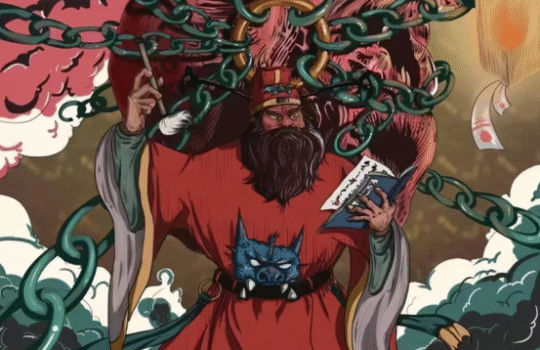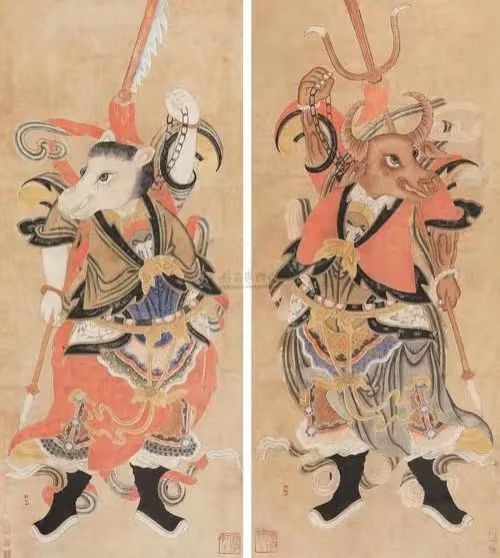
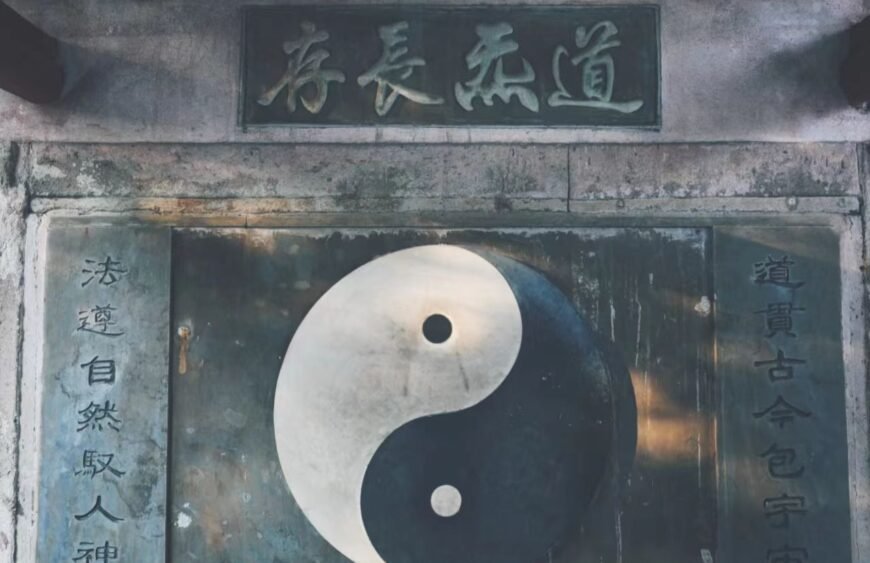
The Five Divine Ladies are female deities in Taoism who guard the five cardinal directions – east, south, west, north, and center. Also known as “Five Cardinal Directional Ladies,” they are the female manifestations of the essence of the five elements and directions. They hold a high position in the Taoist divine hierarchy and are often paired with the Five Sovereigns (Five Elders of the Five Directions) to jointly maintain the order of heaven and earth. Their beliefs originated from ancient orientation worship and the theory of the five elements. After the rise of Taoism in the Eastern Han Dynasty, they gradually became systematized. The core scriptures are found in “Yunji Seven Treatises,” “Laozi Middle Canon,” and “Taiping Jing.”
The Eastern Blue-Staffed Jade Lady is the essence of the wood element, governing the generation of all things, the vitality of spring, and the seas of the east. It is clearly recorded in Chapter 18 of “Yunji Seven Treatises,” “The Eastern Divine Lady is called the Blue-Staffed Jade Lady.” She wears a blue celestial robe, wears a blue jade tiara, holds a blue jade scepter (symbolizing the vitality of wood), and is surrounded by blue auspicious clouds and the vitality of new buds. Her face is gentle and elegant, and she often accompanies the Eastern Blue Emperor (the Nine Qi Heavenly Lord of the Blue Spirit). Her attendants are twelve Blue-Staffed Jade Ladies. Her core function is to stimulate the growth of plants and protect the growth of crops. She is an important guardian deity for spring sowing and autumn harvest, and also harmonizes the yin and yang in the east, balances the climate, and prevents floods and droughts. She presides over the virtue of “Ren” to protect people’s benevolence and harmonious interpersonal relationships. She particularly protects students’ academic progress, the creative inspiration of scholars, and prosperous business for merchants and families’ prosperity.
The Southern Red-Staffed Jade Lady is the essence of the fire element, governing light, heat energy, summer, and the southern territory. It is recorded in both “Yunji Seven Treatises” and “Laozi Middle Canon.” She wears a red silk dress, wears a golden crown, holds a red talisman (symbolizing the authority of fire), and is surrounded by red flames of light. Her eyes are like torches, and her face is firm and passionate. She accompanies the Southern Red Emperor (the True Lord of the Golden Spirit, the Third Qi Heavenly Lord) and governs the three qi of the south. Her functions include governing the heat of summer and the prosperity of all things, regulating the temperature to avoid excessive heat and cold imbalance, and protecting the virtue of “Li” to promote social etiquette and order. She dispels pestilence and evil spirits, breaks curses of evil spirits, and is an important deity for preventing diseases in the southern region. She particularly protects prosperous business, successful careers, harmonious marriages, and family prosperity for merchants and officials.
The Central Yellow Jade Lady is the essence of the earth element, governing the nurturing of the earth, the harmonization of the four seasons, and the central court. Relevant records can be found in “Yunji Seven Treatises” and “Laozi Middle Canon.” She wears a golden robe of the same color, wears a crown, holds a jade scepter or jade seal (symbolizing central authority), and emits a golden-yellow aura. Her face is kind and dignified, and her demeanor is elegant. She accompanies the Central Yellow Emperor (the Supreme Lord of the Yellow Spirit, the One Qi Heavenly Lord) to govern in the center and control all directions. Her core function is to manage fertile land and abundant grains, being an important guardian deity for agricultural civilization. She also harmonizes the climates of all four directions and balances the five elements to prevent natural disasters. She presides over the virtue of “Xin” to protect the integrity and contractual spirit of the world. She particularly protects the stability of the capital, the prosperity of the dynasty, the unity of the country, and ethnic unity. She wore a black robe, a black jade crown, and held a black jade gem (symbolizing the flexibility of water). She was surrounded by black auspicious clouds and the ethereal charm of ice and snow. Her face was cold and mysterious. She often governed the north with the Northern Black Emperor (the Fifth Immortal of the Five Divine Qi Heavenly Lord) and was in charge of winter. Her duties included governing the severe cold and the hibernation of all things, regulating precipitation to prevent floods and droughts, protecting “wisdom” and virtue to inspire wisdom, dispelling confusion, resolving water disasters to protect maritime safety, and dispelling cold evil spirits. She especially protected safe travels, academic progress, wisdom growth, and the reproduction of offspring.
The Five Divine Ladies and the Five Divine Kings form a “complementary yin-yang” deity system, jointly maintaining the cosmic order. Their beliefs embody the Chinese civilization’s concept of “harmony between heaven and man”, and demonstrate the cosmic view of the interplay of the five elements. The “five virtues” corresponding to the Five Divine Ladies, namely “benevolence, propriety, faith, righteousness, and wisdom”, not only echo the core values of Confucianism but also reflect the deep integration of Taoism and traditional culture. In Taoist rituals and ceremonies, there is often a “inviting the Five Divine Ladies” section. Worshippers pray for good weather, national peace, and people’s well-being; in the folk, they hold sacrifices during the Spring Equinox, Summer Solstice, Autumnal Equinox, Winter Solstice, and throughout the four seasons, thanking the Five Divine Ladies for their protection. This belief not only reminds people to respect natural laws and live in harmony with the universe, but also has important implications for modern society’s moral construction. Its “five virtues” spirit also provides important inspirations for modern moral construction. The philosophical wisdom of the harmony of yin-yang and the interplay of the five elements, as well as the auspicious meanings of each deity’s domain, are also contained within it.