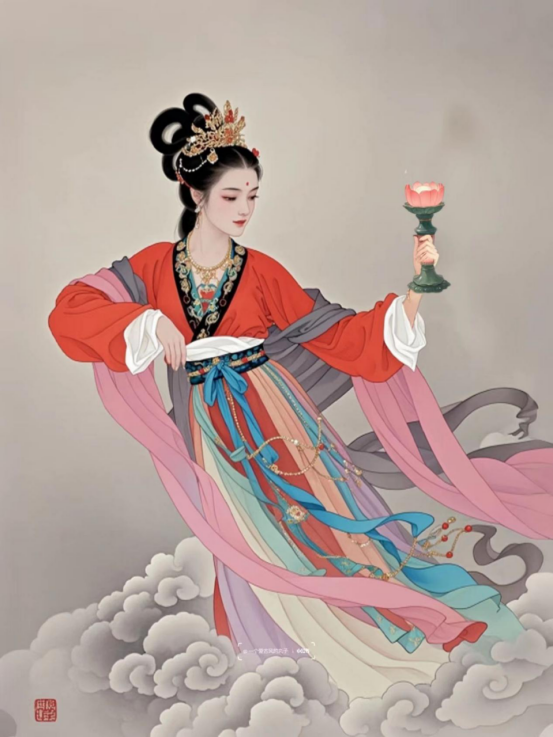
The Third Lady of Mount Hua, also known as the Third Holy Mother, is the third daughter of the Great Emperor of the Western Mountain (White Emperor Shao Hao) in the Taoist Five Mountain Deities system. Her original name was Nü Hua (according to the “Taiping Huanyu Ji”). She resided in the Cuiyun Palace (Biyun Palace) on Mount Hua, overseeing the spiritual veins and clouds and rain of Mount Hua, and protecting the area from droughts and floods. She is a beloved goddess revered by both the common people and Taoism. Her core image is found in the Tang Dynasty’s “Guang Yi Ji”, and she became widely known due to the legend of “Chen Xiang Rescuing His Mother”.
Core Identity and Function
Divine Origin: An important goddess in the Five Great Mountains belief system, she was first recorded in the Tang Dynasty’s “Guang Yi Ji” and later merged with folk narratives in the Song Dynasty, becoming a symbol of “unyielding maternal love and protection of all beings.” In folk tales, she is often associated with the legends of the Lotus Lantern and Chen Xiang Rescuing His Mother, emphasizing her “defying the heavens for love and deep mother-son bond” personality traits.
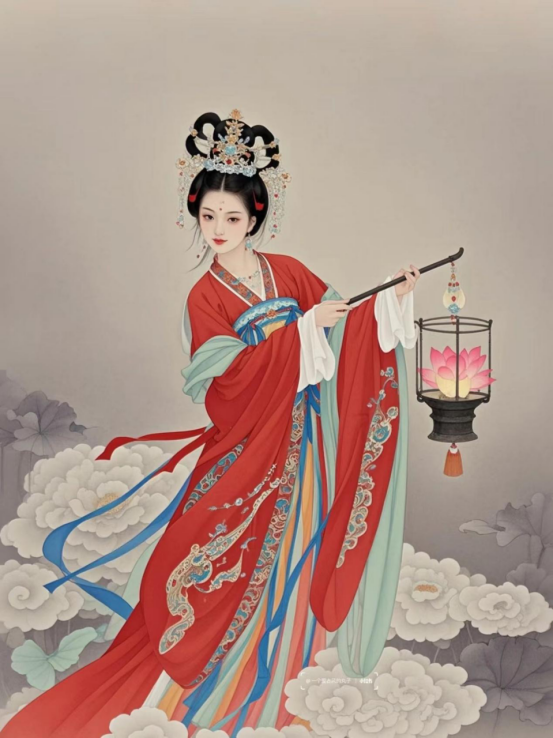
Core Function: She governs the weather of Mount Hua, regulating droughts and floods, and protects agriculture and people’s livelihoods. With a compassionate heart, she empathizes with the hardships of the common people and often responds to believers’ prayers, bestowing blessings, resolving misfortunes, and ensuring the safety of homes. She is an important object of faith for people seeking blessings of health and safety, marital harmony, and the well-being of mothers and children.
Symbolic Representation: The Lotus Lantern is her core ritual object, symbolizing light, protection, and purification. It can ward off evil spirits and calamities and represents maternal radiance and protective power. Her image combines divinity and humanity, becoming a cultural symbol of “retribution for good and evil, filial piety, and saving one’s mother.”
Cultural Value and Worship Sites
Worship Sites: The Three Mothers Hall in Cuiyun Palace (West Peak) on Mount Hua and Dongdaoyuan in Xiyue Temple are places where believers can pay homage and pray for blessings, with a thriving incense offering tradition.
Cultural Significance: Her story embodies the Taoist concept of “valuing life and compassion in saving others,” and also reflects the folk pursuit of true love and justice.