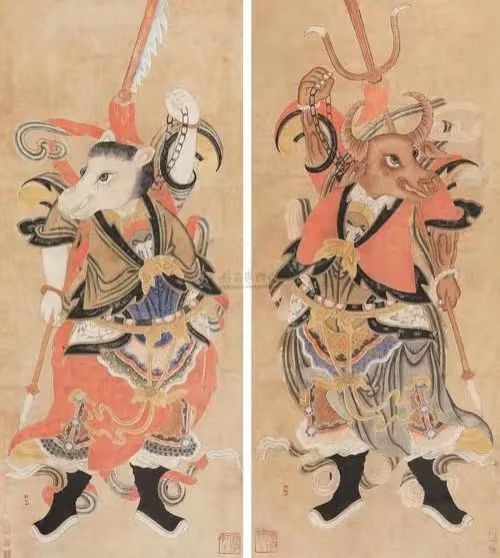
The Source Kings of the Four Great Rivers
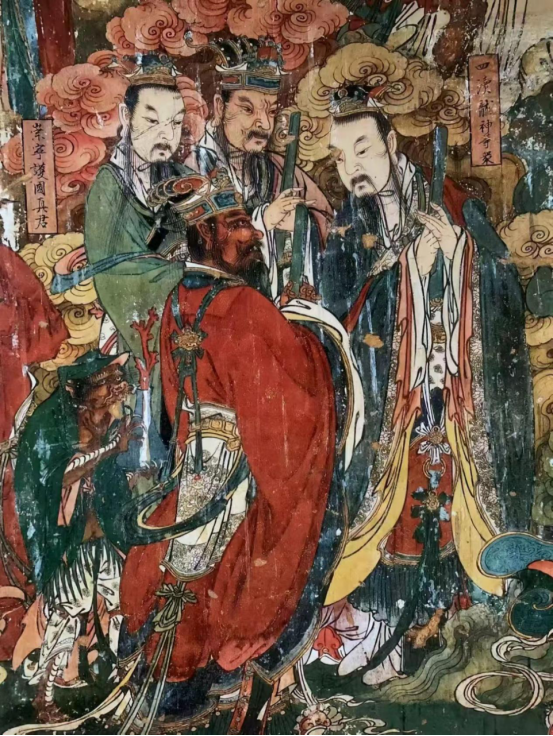
The Four River Source Kings were water deities in ancient Chinese mythology and Taoism, who were in charge of the four major rivers (the “Four Rivers”) and were revered as “Water Emperors”. They were among the important deities in the state sacrificial ceremonies. The “Four Rivers” referred to the four major rivers that flow directly into the sea: the Yangtze River, the Yellow River, the Huai River, and the Jih River. They represented the highest worship of water systems in ancient China.
Detailed Explanation of the Four River Source Kings
1. Huanghe Lingyuan Hongjiuzhong King (Huanghe River Source King of Divine Power)
Original Prototype: River God Feng Yi (also known as Bing Yi, Feng Shou), said to be a native of Tongxiang, Huayin County. He obtained the position of water deity after taking eight stones of immortal medicine, or drowned and was enshrined by the Heavenly Emperor as the river god.
Duties: Oversees all rivers in the world, is responsible for flood control and water volume regulation in the Yellow River Basin, and is revered by Taoism as the “Clarifying Supreme Deity”, being the lord of the Yellow River.
Image: Human face with fish body, with water as the country, with fish and turtles as the people, holding a jade scepter, symbolizing water rights.
Religious Center: Yellow River God Temple in Yongji City, Shanxi Province. Emperors of successive dynasties often worshipped here to pray for good weather and national peace.
2. Changjiang Guangyuan Shunjiuzhong King (Changjiang River Source King of Broad Governance)
Original Prototype: One theory suggests Qu Yuan (a scholar of the State of Chu in the Warring States Period, who drowned in the Miluo River), and another theory suggests local water deities such as Qi Xiang and Xiangjun.
Duties: Oversees the Yangtze River Basin and surrounding water systems, is responsible for shipping safety and water balance, and is regarded as the guardian deity of the Yangtze River and the “Water Deity of Great Power”
Image: Wearing a royal robe, holding a jade scepter, wearing a crown, symbolizing the authority of governing the Yangtze River
Religious Center: Jiangduo Temple in Chengdu, Sichuan Province (established in the Qin Dynasty), March 16th of the lunar calendar is the birthday, and there is a “Jianghuang Guangyuan King Birthday” sacrificial activity in the folk
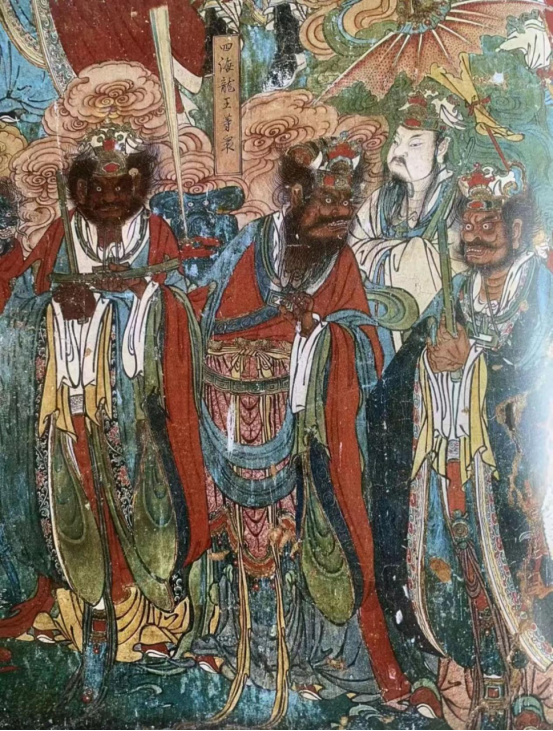
3. Huaihe Changyuan Bojiuzhong King (Huaihe River Source King of Great Governance)
Original Prototype: There is no information about Yushizhi (the water deity of Huaihuo River, resembling an ape and having immense strength) or the Ming Dynasty General Zhang Xiang (who was killed by a boat owner and then appeared as a spirit, being enshrined as “Guardian South King of the Great Huai River”)
Duties: Oversees the water resources and waterways of the Huaihe River Basin, is responsible for regulating the water volume of the Huaihe River, and is responsible for preventing floods, being revered as “East River Great Deity of the Huai River”
Image: Wearing golden armor, holding a long spear, with an imposing expression, symbolizing the power to suppress floods
Religious Center: Huaiduo Temple in Tongbai Mountain (also known as “Huaiyuan Temple”), located at the source of the Huaihe River, is an important place for sacrificing to the Huai River deity in successive dynasties
4. Jihui Qingyuan Pujiuzhong King (Jihui River Source King of Pure Governance)
Original Prototype: It is said to be the incarnation of the Water God Emperor or a descendant of the ancient water deity Gongming. Due to the characteristic of “submerged in the ground” of the Jih River, it was endowed with mysterious connotations
Duties: Oversees the Jih River Basin (which once independently flowed into the sea but partially disappeared due to the diversion of the Yellow River), is responsible for water source protection and water quality purification, and is revered as “North River Great Deity of Jih River”
Image: Wearing a robe with water waves, holding a pure water bottle, symbolizing the virtue of “pure source” of the Jih River, capable of removing turbidity and purifying water
Religious Center: Jihu Temple in Jiyuan County, Henan Province (established in the year 582 of the reign of Emperor Taizong of the Tang Dynasty), Emperor Taizong moved the North Sea Dragon King here, showing its high status.
The cultural significance of King Sui Duanyuan:
As a symbol of the integration of natural worship and humanistic beliefs, it embodies the traditional Chinese concept of “harmony between heaven and humanity”. The Four Rivers are regarded as the lifeblood of the earth, and the Four River Sources Kings are the masters of this lifeblood.
In the Taoist divine system, the Four Rivers Source Kings fall under the jurisdiction of the Water Guardian Emperor. Together with the Five Great Kings of the Five Great Mountains and the Four Great Kings, they form the complete Taoist understanding of the cosmic space.
In folk beliefs, the Four Rivers Source King is regarded as the guardian deity for preventing floods, ensuring shipping safety, and promoting agricultural prosperity. River workers, fishermen, and water transport of grain to the capital practitioners in various places generally offer sacrifices to him.
The beliefs of the Four Rivers Source King and the dragon culture are intertwined. In some areas, the Four Rivers Source King is confused with the Four Seas Dragon Kings, and the “Four Rivers Dragon Deities” belief is formed, believing that they are branches or manifestations of the Dragon Kings.
In the Taoist classic “The Comprehensive Secret Essentials for Assisting the State and Saving the People by the Supreme Lord”, the Four River Source Kings were officially included in the Taoist pantheon and were revered as “Water Deities”. They are an important part of the Taoist Thunder Department system and together with “Nine Departments and Three Ministries”, “Four Saints of the North Pole”, etc., form the Taoist system of worship for natural forces.
Taoism believes that the Four River Source Kings can summon wind and rain, eliminate disasters and solve difficulties. They are often summoned in rituals and ceremonies to pray for national peace, bountiful harvests, and smooth waterways.