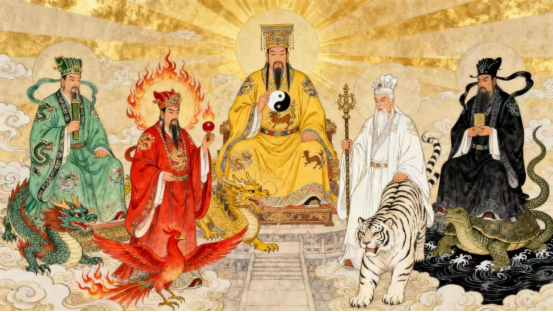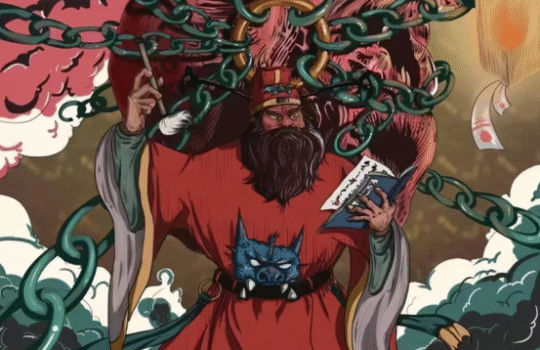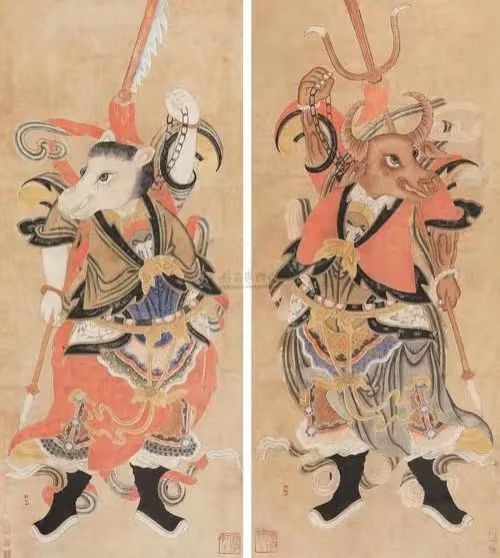
The Five Elders of the Five Directions are five supreme deities in the Taoist pantheon who govern the cosmic realms of the East, South, Center, West, and North, as well as the origin of the Five Elements. Their worship is rooted in the ancient concepts of directional cosmology and the Five Elements, serving as a vital symbol of Taoist cosmogony and the cosmic order of heaven and earth. Below is a separate introduction to each of the five revered deities:
I. The Azure Primeval Elder, Lord of the Nine Qi of the East
Direction and Symbolism
He guards the Eastern Realm, corresponding to Wood in the Five Elements, and presides over growth, germination, and benevolence. His symbolic color is azure (or green), his associated vital energy is the Azure Qi, his corresponding season is spring, his celestial body is the Year Star (Jupiter), and his sacred mountain in the mortal world is Mount Tai, the Eastern Great Mountain.
Divine Nature and Functions
He symbolizes the primal force of life initiation and growth between heaven and earth, governing the sprouting of all things and the flourishing of plants and trees. In Taoist cultivation practice, the Azure Qi of the East is believed to nourish the liver, awaken spiritual awareness, and stand as the symbol of the rising morning sun and the initial stirring of yang energy.
Cultural Connections
In the Confucian system, the East corresponds to benevolence and virtue; in Traditional Chinese Medicine (TCM), it is associated with the liver and the ethereal soul (hun). In Taoist rituals, practitioners often visualize the descent of the Azure Qi of the East to purify defilements and usher in renewal.
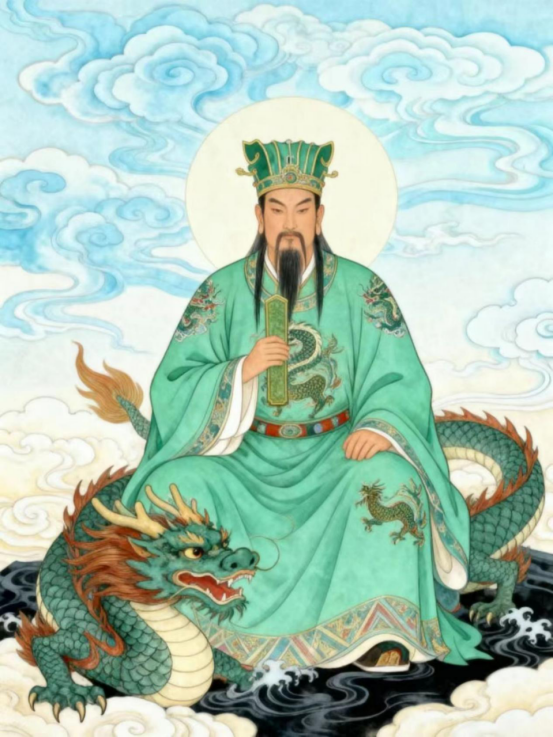
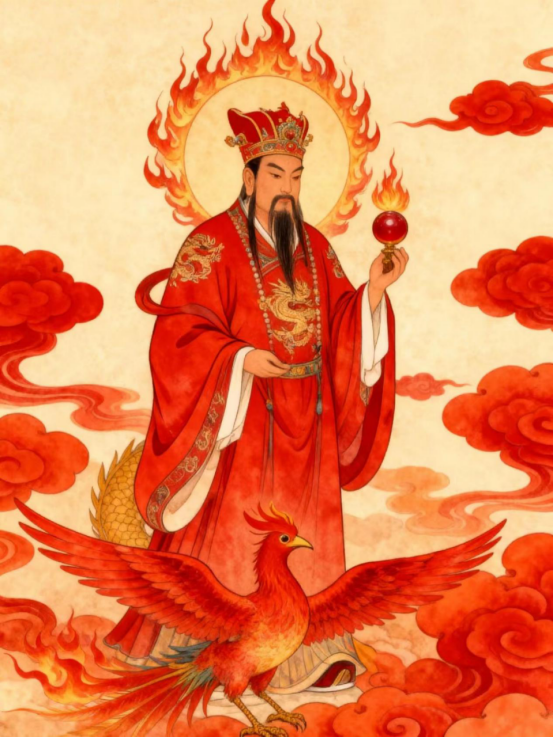
II. The Vermilion Primeval True Elder, Lord of the Three Qi of the South
Direction and Symbolism
He guards the Southern Realm, corresponding to Fire in the Five Elements, and presides over nurturing, growth, and ritual propriety. His symbolic color is vermilion (cinnabar red), his associated vital energy is the Vermilion Qi, his corresponding season is summer, his celestial body is the Blazing Star (Mars), and his sacred mountain in the mortal world is Mount Heng, the Southern Great Mountain.
Divine Nature and Functions
He symbolizes the power of light, heat, and maturation, governing sunlight, scorching heat, and the flourishing prosperity of all things. In the Taoist pantheon, the fire of the South is also associated with thunder magic and spiritual cultivation of the mind, representing clear spiritual illumination and the dispelling of darkness and obscurity.
Cultural Connections
In the context of ritual propriety, the South corresponds to the virtue of li (ceremony and decorum); in the human body, it is linked to the heart and the spiritual essence (shen). Taoist doctrines such as “refining elixirs with the heart fire” and “the Southern Dipper presiding over birth” are both closely associated with the Qi of the South.
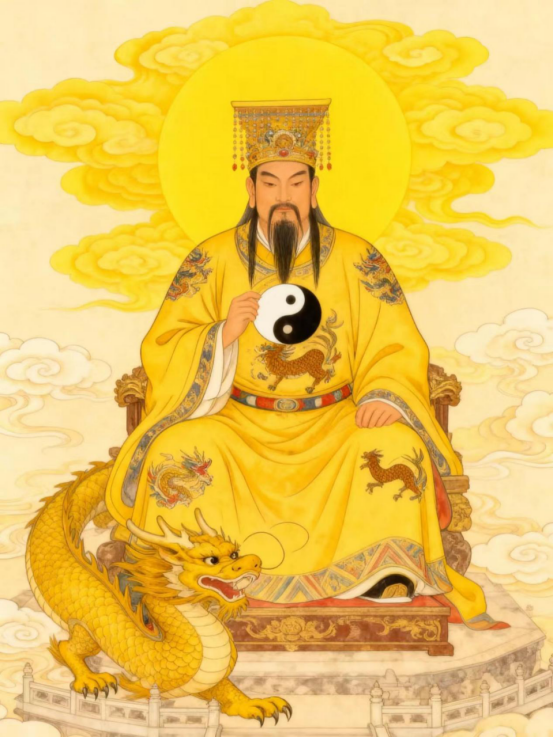
III. The Yellow Primordial Origin Elder, Lord of the Single Qi of the Center
Direction and Symbolism
He guards the Central Realm, corresponding to Earth in the Five Elements, and presides over harmony, balance, and sincerity. His symbolic color is yellow, his associated vital energy is the Yellow Qi, his corresponding season is ji xia (the long summer, the transitional period between summer and autumn), his celestial body is the Supporter Star (Saturn), and his sacred mountain in the mortal world is Mount Song, the Central Great Mountain.
Divine Nature and Functions
He symbolizes the power of containment, endurance, and transformation inherent in the earth, serving as the pivotal hub for balancing the four cardinal directions. He governs the transition between seasons and the nurturing and growth of all living things. In Taoist cosmology, the Center is regarded as the “Palace of Wu and Ji”—the core where the vital energies of heaven and earth converge and harmonize.
Cultural Connections
In Confucianism, the concept of the “Central Land” corresponds to the virtue of sincerity; in Traditional Chinese Medicine (TCM), the spleen (associated with the element of Earth) is the source of qi and blood production. Taoism holds that the Yellow Qi of the Center can harmonize the five internal organs and stabilize both the body and the spirit.
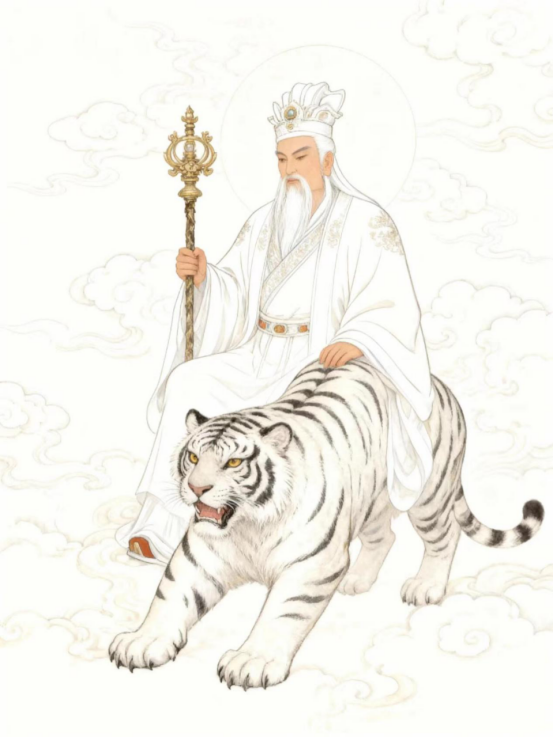
IV. The White Primordial August Elder, Lord of the Seven Qi of the West
Direction and Symbolism
He guards the Western Realm, corresponding to Metal in the Five Elements, and presides over restraint, contraction, and righteousness. His symbolic color is white, his associated vital energy is the White Qi, his corresponding season is autumn, his celestial body is the Great White Star (Venus), and his sacred mountain in the mortal world is Mount Hua, the Western Great Mountain.
Divine Nature and Functions
He symbolizes the power of purification, restraint, and transformation, governing metal, weaponry, harvest, and the cycles of renewal and transition. In Taoist cultivation practice, the White Qi of the West is associated with the lungs and the corporeal soul (po), representing the state of “the golden soul consolidating into true essence” and possessing the efficacy of refining the physical form into qi.
Cultural ConnectionsIn the ethical system, the West corresponds to the virtue of yi (righteousness); in the natural world, it symbolizes the clarity, purification, and ripening of autumn. The Taoist concept of “golden elixir refluxing to cinnabar” is also inherently connected to the Metal Qi of the West。
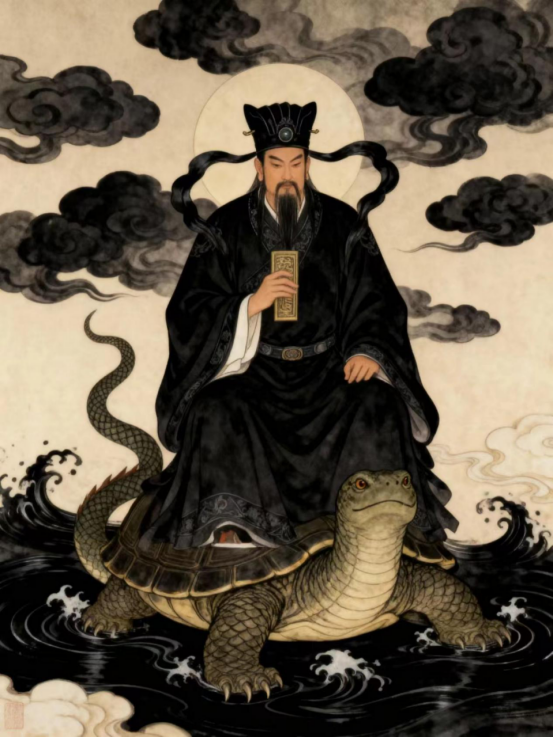
V. The Dark Primordial Mysterious Elder, Lord of the Five Qi of the North
Direction and Symbolism
He guards the Northern Realm, corresponding to Water in the Five Elements, and presides over storage, containment, and wisdom. His symbolic color is black (mysterious dark), his associated vital energy is the Mysterious Qi, his corresponding season is winter, his celestial body is the Inner Star (Mercury), and his sacred mountain in the mortal world is Mount Heng, the Northern Great Mountain.
Divine Nature and Functions
He symbolizes the power of profound concealment, downward nourishment, and cyclical renewal of beginnings and endings. He governs rivers, lakes, seas, ice, snow, dew and rain, and also presides over the cycle of birth, death and reincarnation as well as the netherworld. In Taoist cultivation practice, the Mysterious Qi of the North is believed to nourish the kidneys, consolidate the root and cultivate the primordial vitality, symbolizing the latent potential and regeneration of life.
Cultural Connections
In the ethical system, the North corresponds to the virtue of zhi (wisdom); in the human body, it is associated with the kidneys and essence (jing). Taoist doctrines such as “the highest good is like water” and “refining elixirs with mysterious water” are both derived from the virtues embodied by this direction.
Common Characteristics of the Five Elders of the Five Directions
Key to Cosmic Genesis
The Five Elders are regarded as the first sovereign rulers of the five directions to emerge after the separation of heaven and earth, laying the foundation for the order of space and matter (the Five Elements).
Hub of the Heaven-Human Correspondence
Their system of the Five Elements, Five Colors, Five Qi, and Five Directions is closely correlated with the five zang-organs of the human body, five virtues, four seasons, and celestial constellations. It serves as the core model of the Taoist concept of “resonance between heaven and humanity”.
Core of Cultivation and Rituals
In Taoist practices such as visualization, elixir refinement, talismanic magic, and fasting rituals, the Five Elders of the Five Directions act as important intermediaries for communicating between heaven and earth, and harmonizing yin and yang energies.
The belief in the Five Elders is not only an integral part of the Taoist pantheon, but also a sacred summary of the structure of the universe and the laws of life in ancient Chinese philosophy. It has exerted a profound influence on various traditional cultural fields such as Traditional Chinese Medicine (TCM), feng shui, and the calendar system.
Core Functions
They are the founders of cosmic order, each governing the qi of one of the Five Elements, regulating the rotation of the four seasons, and overseeing the generation and restriction of all things. In some Taoist scriptures, they are also regarded as the early transmitters of Taoist sacred teachings, who once imparted esoteric texts to the Supreme Lord of the Numinous Treasure.