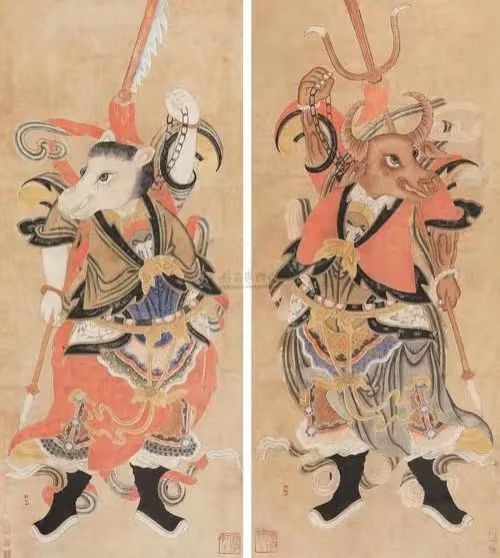
Black and White Impermanence
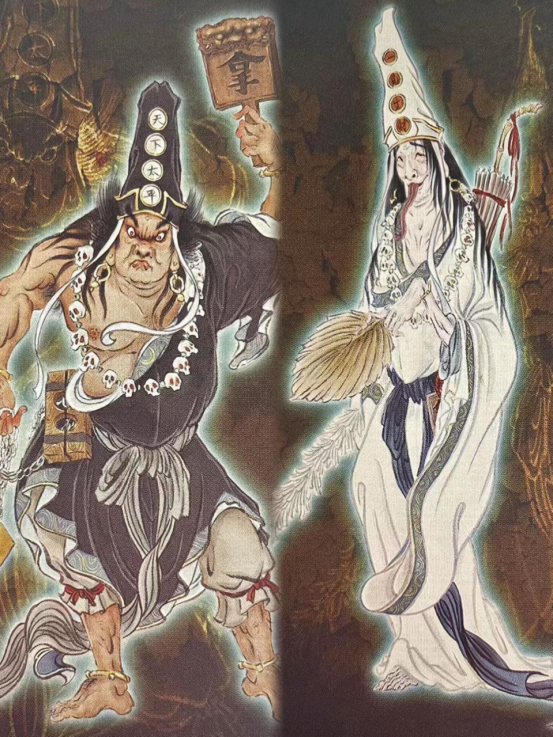
In the Taoist underworld system, the Black and White Ghosts are the professional spirit-catching envoys under the command of the God of Fengdu and the Ten-Daughter Kings, with a higher status than Niu Tou Mahai. They are also known as “Uncle No-Chang” and are divided into “Black Ghost” and “White Ghost”. They always accompany each other and are responsible for apprehending the souls of those who have exhausted their earthly life or have committed sins. They escort them to the underworld for judgment. They are the core ghost messengers connecting the earthly world and the underworld.
Identity and Titles
In Taoist scriptures and folk legends, the Black and White Ghosts have their own specific names and origins:
White Ghost: Name is Xie Biaonian, meaning “rewarding the gods will be safe”. It is said that he was a scholar from the mortal world who, due to a promise with his companions, refused to keep the appointment in the rain and eventually drowned. After death, his soul was enshrined by the underworld, and his image was fair-skinned, tall and thin, wearing a long hat with “Seeing You Will Make Money” or “You Are Also Here” written on it. His personality was gentle, and he was responsible for guiding the souls of those who had a good death. It is believed that encountering the White Ghost would bring good fortune.
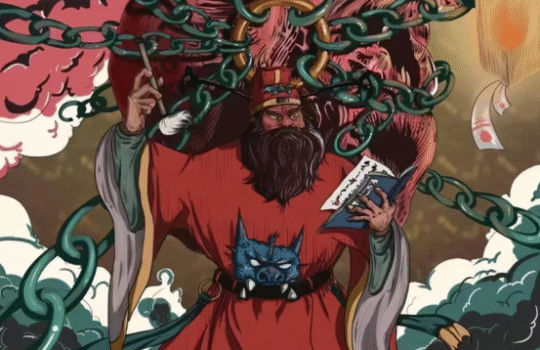
Black Ghost: Name is Fan Wuxiu, meaning “committing crimes will have no salvation”. It is said that he was the companion of Xie Biaonian and, when he found Xie Biaonian drowned in the rain, he felt remorse and committed suicide. Together with Xie Biaonian, they were enshrined as spirit-catching envoys. His image was dark-skinned, with bulging eyes, holding iron chains and shackles, and walking with a heavy step. His personality was fierce and serious, and he was responsible for apprehending the souls of those who committed crimes and evil spirits. He had a strong deterrent effect on those who committed evil in the mortal world.
Physical Characteristics
The images of the Black and White Ghosts are highly recognizable and are significant figures in the Taoist underworld deities:
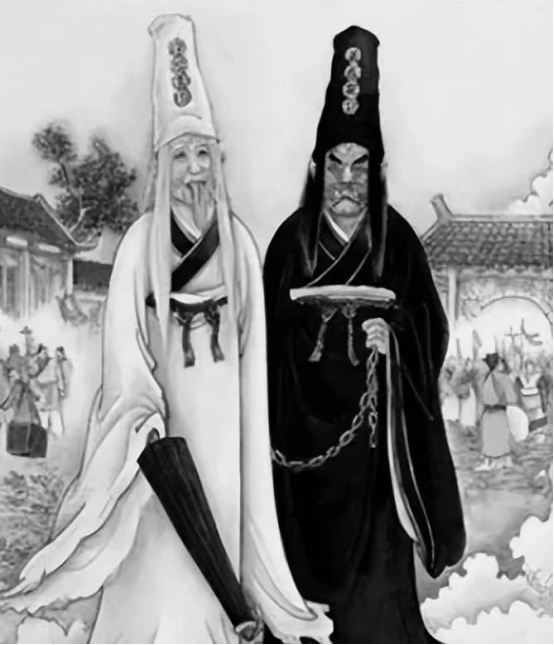
The White Ghost wears a white official robe, has a pale complexion, and often has a strange smile on his lips, holding a crying stick (or summoning banner), and walks lightly, symbolizing the gentle reception of good souls.
The Black Ghost wears a black official robe, has a dark complexion, wide-open eyes, holding iron chains and shackles, and walks with a heavy step, symbolizing the tough apprehension of evil souls and evil spirits. Both wear straw sandals and have hemp ropes tied around their waists. Their appearance combines the solemnity of the underworld officials and the simplicity of the folk ghost messengers, contrasting sharply with the fierce and cruel appearance of Niu Tou Mahai.
Core Functions
Guiding the spirits: This is the core duty of the Black and White Ghosts. They follow the death register given by the judge and, at the moment when the soul’s earthly life is exhausted, go to the mortal world to either apprehend the soul of the criminal or guide the soul of the one who has a good death. They escort the soul through the Yellow River Road, the Bridge of Naihao, and until they reach the Ten-Daughter Kings’ Palace for judgment. They ensure that the soul does not escape or be disturbed by evil spirits throughout the process.
Suppressing evil spirits and driving away evil: In addition to guiding the spirits, the Black and White Ghosts are also responsible for suppressing wandering spirits and evil spirits in the mortal world to prevent them from disrupting the order of the mortal world. It is believed that hanging the images of the Black and White Ghosts or wearing related accessories at home can deter evil spirits and protect the home from disturbances.
Warning the world: The names and images of the Black and White Ghosts carry the meaning of “punishing evil and promoting good”. The “Seeing You Will Make Money” of the White Ghost urges people to be virtuous and accumulate good deeds, while the “You Are Also Here” of the Black Ghost warns people not to commit evil, subtly conveying the Taoist concept of “good and evil have consequences”.
System Positioning and Cultural Integration
In the Taoist underworld system, the Black and White Ghosts have a higher status than Niu Tou Mahai and belong to the “professional spirit-catching envoys”, directly reporting to the judge and the Ten-Daughter Kings. Their tasks are more specialized; while Niu Tou Mahai mainly responsible for patrolling the underworld and guarding the souls of the dead, they belong to the “lower-level prison guards”.
The images of the Black and White Ghosts integrate Taoist concepts of the underworld and folk beliefs. They originated from the ancient philosophical concept of “no constant state” (meaning “the world is constantly changing”), later combined with Buddhist “Nyaksa” culture, gradually evolving into a fixed image of ghost messengers. They became deeply rooted in literature, opera, and folk art during the Tang and Song dynasties and became classic characters in these fields.
Folk Belief and Cultural Implications
The folk belief in the Black and White Ghosts combines reverence and respect, believing that they are “fair messengers” – they never unjustly detain the innocent and only apprehend the souls of those who deserve it. In some areas, they worship the Black and White Ghosts during the Mid-Autumn Festival to pray for their protection of the peace of the mortal world and to help the souls cross over.