I. Taoist Temples
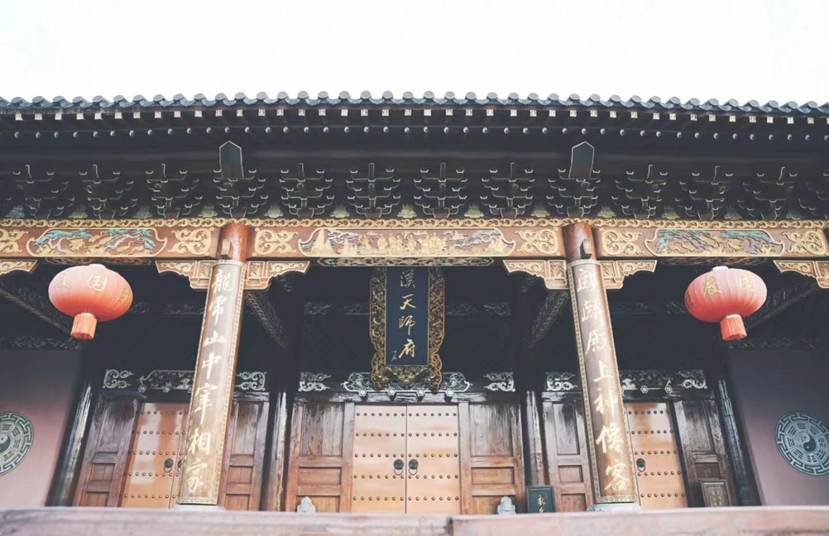
Taoist temples are places where Taoist believers conduct religious activities, practice, and preach. They are also called “gongguan” or “gong”. “Gong” usually refers to larger and more prestigious Taoist temples, often built by emperors; “guan” refers to smaller and more private places of practice for the common people.
1. Core Functions
Religious activities: Conducting rituals and ceremonies (such as praying for blessings, warding off disasters, and saving souls), daily chanting of scriptures, and festival celebrations (such as the Christmas of the Three Pure Ones, the Christmas of the Jade Emperor).
Practice sites: For Taoists to meditate, sit in meditation, conduct alchemy, and study scriptures.
Cultural dissemination: Preserving cultural heritage such as Taoist scriptures, statues, buildings, and music. Some Taoist temples are also open to tourists to popularize Taoist culture.
2. Typical Architectural Layout
Taoist temples often follow the principle of symmetrical alignment along a central axis, combined with Feng Shui concepts for layout. The core buildings usually include:
Front Gate: The entrance of the Taoist temple, symbolizing the opening of the Taoist path. It often has door gods’ statues or plaques.
Lingguan Hall: The first hall inside the front gate, dedicated to Wang Lingguan (the guardian deity of Taoism), guarding the Taoist temple and driving away evil spirits and bringing good fortune.
Sanqing Hall: The core main hall of the Taoist temple, dedicated to the Three Pure Ones, where major ceremonies are held.
Yuhuang Hall: Dedicated to the Jade Emperor. Some Taoist temples may have this hall, extending the Taoist divine system.
Zuoshi Hall: Dedicated to the patriarchs of Taoism, such as Zhang Daoling for the Pure One School and Wang Chongyang for the Full Immortals School.
Quanfang, Zhai Tang: The living and dining places for Taoists.
Dan Fang, Zang Jing Guan: For alchemy practice and the storage of Taoist scriptures.
3. Examples of Famous Taoist Temples
Grand Master of the Pure One School: Luowan Temple in Zhouzhi, Shaanxi (the place where Laozi gave teachings); Chongyang Temple in Huixian, Shaanxi (the burial place of Wang Chongyang).
Grand Master of the Pure One School: Tianshi Mansion in Longhu Mountain, Jiangxi.
Other well-known Taoist temples: Baiyun Temple in Beijing, Tianshi Cave in Qingcheng Mountain, Wu Dao Mountain in Hubei, Zhaoyao Palace in Shuozhou, Hubei.
II. Taoist Priests
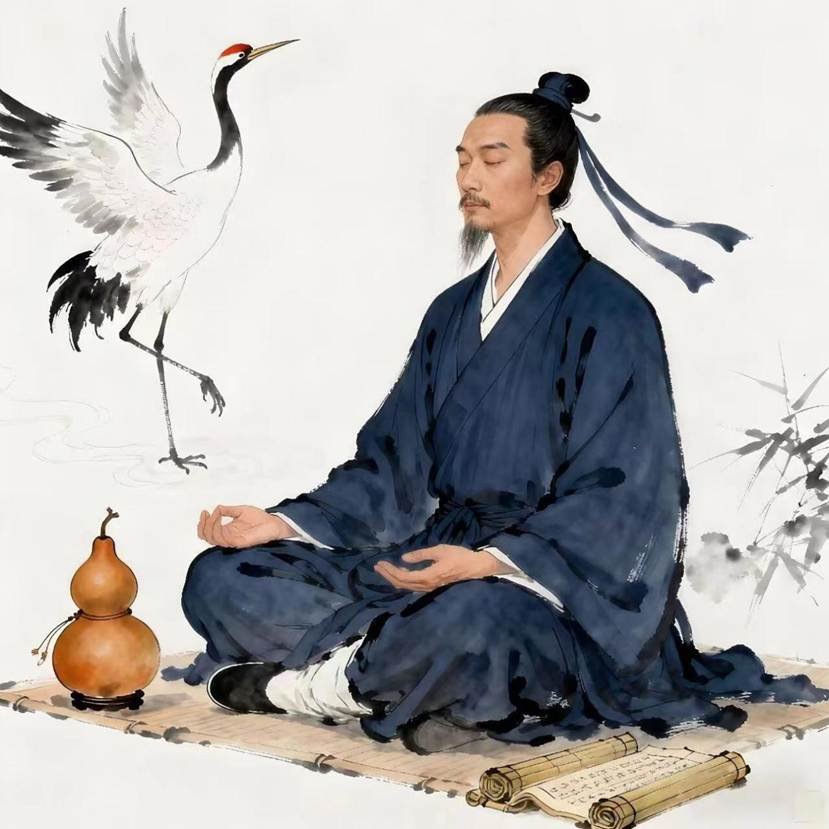
Taoist priests are religious personnel who believe in Taoist doctrines, practice Taoist arts, and engage in Taoist activities. Male priests are called “qian dao”, and female priests are called “kun dao”. Taoist temples where female priests gather are also called “nǚ guàn guān”.
1. Classification by Sects
Pure One School: Practicing at home, using talismans to drive away evil spirits
Origin: Founded by Zhang Daoling (the Celestial Master) in the late Eastern Han Dynasty. It is one of the earliest sects of Taoism.
Characteristics: Taoist priests of the Pure One School can get married and have children. They do not avoid meat and fish (but usually do not eat beef, dog meat, eel, or swan). They can practice at home and have a more secularized lifestyle.
Practicing methods: Mainly through talismans, incense offerings, praying for blessings and warding off disasters, driving away evil spirits and saving souls, and saving the souls of the deceased. In simple terms, it is communicating with deities through drawing talismans and chanting incantations to solve practical problems, such as praying for blessings, driving away evil spirits, and protecting the house.
Representatives: The Pure One School has a significant influence in the folk, and Taoist priests often participate in funeral and blessing ceremonies, closely linked to the lives of the people. Their main ancestral temples are in Longhu Mountain, Jiangxi, Maoshan, Jiangsu, and Gezao, Jiangxi.
Zhuanzhen School: Engaging in monastic life and cultivating both body and soul
Origin: Founded by Wang Chongyang of the Jin Dynasty, it advocated “the integration of the three religions” (Confucianism, Buddhism, and Taoism), emphasizing tranquility and non-action.
Characteristics: Taoist priests of the Zhuanzhen School need to enter monastic life, reside in Taoist temples for cultivation, cannot get married, and cannot consume meat or fish.
Practice methods: The core is internal alchemy cultivation, advocating “cultivating both body and soul”, emphasizing personal spiritual cultivation and physical exercise, and pursuing immortality and longevity. They focus more on meditation, energy cultivation, traveling in the mountains and rivers, and improving personal cultivation.
Representatives: The Zhuanzhen School gave birth to many famous Taoist priests and temples in history. Its ancestral temples are mainly located in Chongyang Temple in Shaanxi Province, Yongle Temple in Shanxi Province, and Baiyun Temple in Beijing.
2. Daily Practice and Duties
Daily Practices: Read scriptures every morning and evening, study Taoist classics such as “Tao Te Ching”, “Nan Hua Jing”, and “Chong Xiu Zhen Jing”, practice meditation and internal alchemy.
Religious Duties: Conduct sacrificial ceremonies and perform blessings for believers; Maintain the order of the Taoist temple, manage the offerings; Pass on Taoist culture and receive disciples for preaching.
Code of Conduct: Adhere to the basic precepts of Taoism, such as not killing, not stealing, not committing adultery, not lying, and not drinking alcohol. Specific precepts vary depending on the sect and the level of ordination.
3. Titles and Etiquette of Taoists
Common Titles: Ordinary Taoists can be called “Daozheng”; Taoists with higher cultivation or status can be called “Zongshi” or “Shenren”; Taoists of the Quanzhen sect will change their surname to “Chang” after entering the monastery, symbolizing “constant purity and tranquility”.
Etiquette: Taoists greet each other with the “kowtow” or “prostration” ceremony; In the Taoist temple, they must follow the rules, maintain silence, and refrain from making noise or playing around.
4. Ways to Become a Taoist
Quanzhen Sect: One needs to apprentice at a Taoist temple, undergo assessment, be ordained, and gradually receive ordination to become a formal Taoist.
Zhengyi Sect: One can become a Zhengyi Taoist by apprenticing and obtaining an “lu” (inscription), with two forms: entering the monastery or living at home. After obtaining the “lu”, they have the qualification to conduct sacrificial ceremonies.