When people think of Taoism and Taoist priests, two very different impressions often come to mind.
Some see them as recluses who have withdrawn from the world, completely detached from human affairs—as if they should have no connection to ordinary life at all.
Others reduce Taoism to fortune-telling, feng shui, divination, and superstition—equating a profound spiritual tradition with mere folk practices.
These misunderstandings have historical roots, but they’ve been deepened by literature and film. So what is the true place of Taoism and its practitioners in the world?
The Tao Is Found in Daily Life
Many people today are unaware of Taoism’s presence because its teachings have long been woven into the fabric of everyday existence. The sages called this “daily use without awareness.” Taoism approaches worldly life with openness, inclusion, and respect.
The Tao itself dwells within all things. Only by attending to the most basic human activities—eating, drinking, resting, moving—can we gradually awaken to its truth. To separate from life is to close the door to the Tao.
—
Between Stillness and Action
Taoism is sometimes called the “Mysterious Teaching.” Its deepest wisdom lies in realizing the realm of non-action (wu wei) within a life of purposeful action.
Because the heart is unattached, it can roam freely. Yet at the same time, Taoism teaches the proactive attitude of “my fate is mine to command”—that we must take responsibility for our own lives, cultivating body and mind to return to original simplicity.
The philosophy of “the state and the body as one structure” holds an important place in Taoist thought. Governing a nation is like governing a body. Only when each person values and cherishes themselves can a nation truly flourish. Taoism’s influence touches every aspect of Chinese life—a manifestation of its “acting without non-action.”
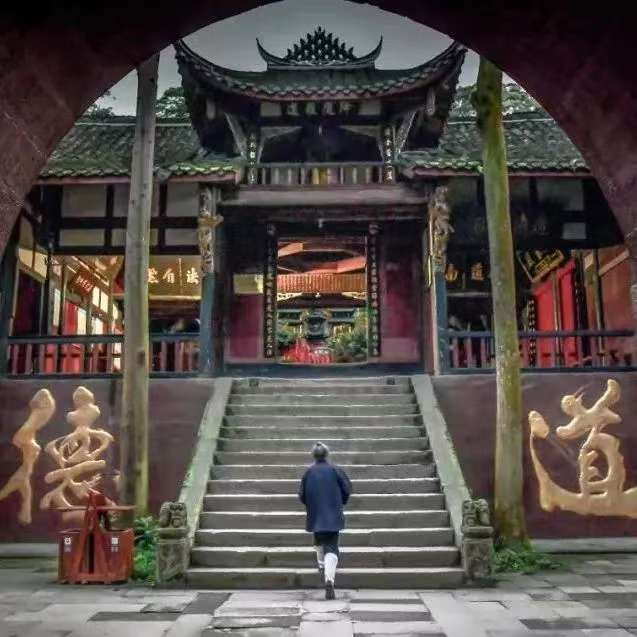
Religion Centered on Humanity
As a religion, Taoism necessarily carries the weight of spiritual guidance. It reveres the teachings of immortals and sages, but in practice, it is fundamentally about people. A religious community that separates itself from society loses its foundation—both its followers and the very meaning of its teachings.
A religion’s foundation is people. Its mission is to transform people. Its ultimate ideal is to transcend ordinary existence—for the sake of human flourishing.
To truly put people first, we must consider each person from three perspectives: as a seeker of the Tao, as a believer, and as a practitioner. Only by honoring all three dimensions can we understand each individual’s needs and values within the religious life.
—
Balance: The Heart of the Tao
Taoist doctrine differs greatly from other religions. While revering the divine, it never denies the validity of human needs—the most basic desires for warmth, sustenance, dignity, love, and self-realization. These are not obstacles to be overcome, but natural aspects of human life to be harmonized.
The Taoist path seeks balance between personal fulfillment and collective good—a relationship of giving and receiving, the dance of yin and yang.
As the I Ching says: “One yin and one yang—that is the Tao.” Separate from balance, the Tao ceases to exist. Why speak of cultivation without it?
—
True Practice: Self and Others as One
Cultivation is not merely personal discipline. It encompasses a broader spirit of compassion. Taoism has always emphasized practice.
Patriarch Wang Chongyang taught that “merit and cultivation must be complete, nature and life-force both cultivated”—guiding us to verify our spiritual attainments through genuine practice.
When Qiu Changchun carried people across rivers at Panxi for six years, or traveled thousands of miles to stop a massacre with a single word—these were acts of teaching through living, awakening the hearts of later generations to the Tao. True cultivation is the simultaneous progression of inner work and outer action.
Taoism teaches “saving oneself and saving others.” There is no before and after, no higher and lower between these—not a matter of “helping the world when successful, cultivating alone when failing,” as worldly wisdom might suggest.
Religious compassion knows no separation between self and other. Those who attain self-salvation do so because they first had the heart and action to save others. Those who can save others have certainly done the inner work. When these two become one, we return to pure, single-hearted sincerity.
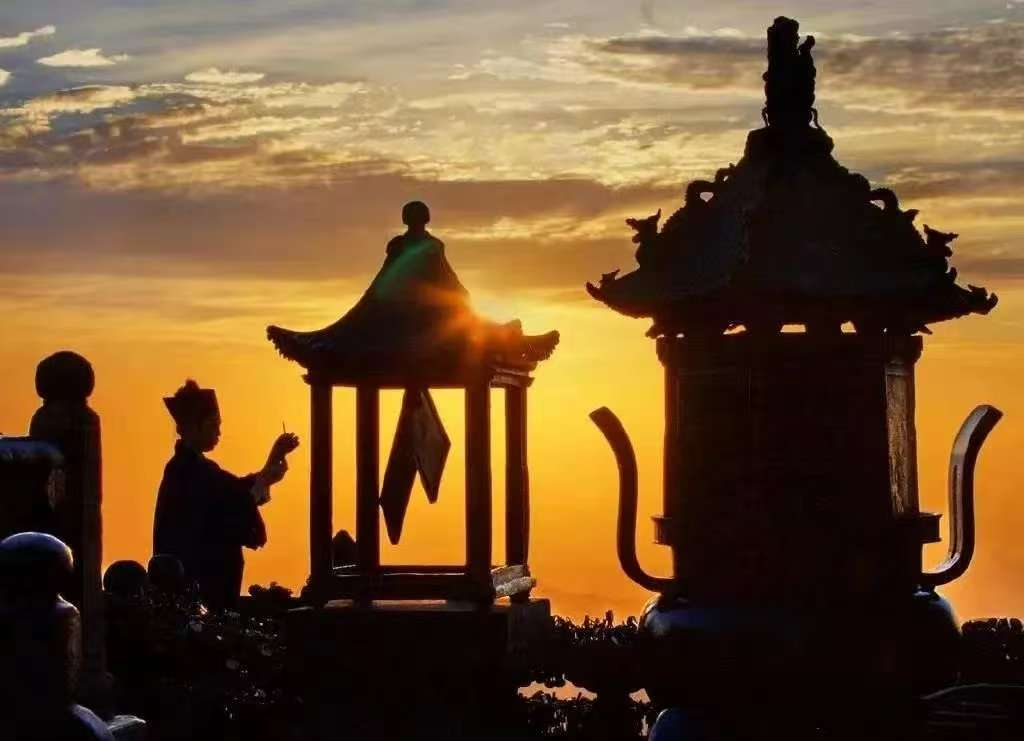
The Great Cultivation Embraces the World
Among the immortals revered in Taoism, every high achiever attained their divine state through great works of compassion—by saving others, they ultimately saved themselves. Any religion or practitioner that abandons the world to exist apart from it is practicing only in the narrowest sense.
True great cultivation must embrace all beings with compassion. It must manifest as loving action within the world. Taoism has paths that lead away from the world and gates that enter it—they are not contradictory. The key lies in whether you can approach worldly matters with a transcendent heart.
Without such practice and merit, what teachings would we have to offer? How could we touch the millions of ordinary hearts seeking the Tao?
—
Only by fully engaging with all things can we transcend them. Closing the door to the world closes the door to the Tao itself.