Wang Lingguan is a highly respected and renowned guardian deity and mountain guardian in Taoism. He is also a celestial general of the Thunder and Fire Divisions and is revered as the “Head of the Five Hundred Spirit Deities” and the “Great Spirit General of the Universal Inspection”. In popular culture, he is the most well-known guardian deity who guards the mountain gate and drives away evil spirits and disasters. His image is commonly found in the mountain gate halls or spirit hall of almost all Taoist temples, exuding a majestic and awe-inspiring presence.
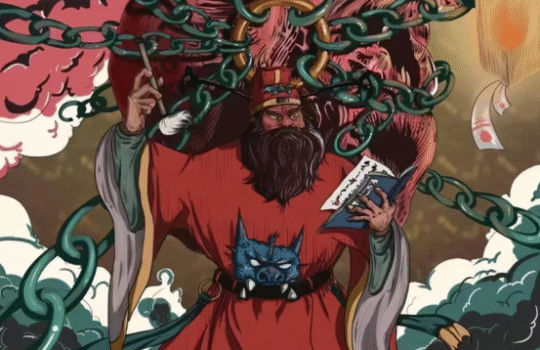
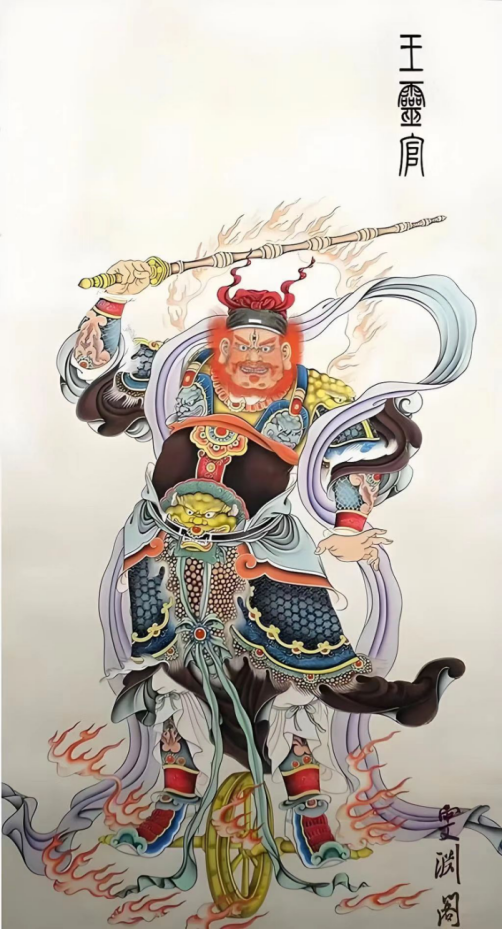
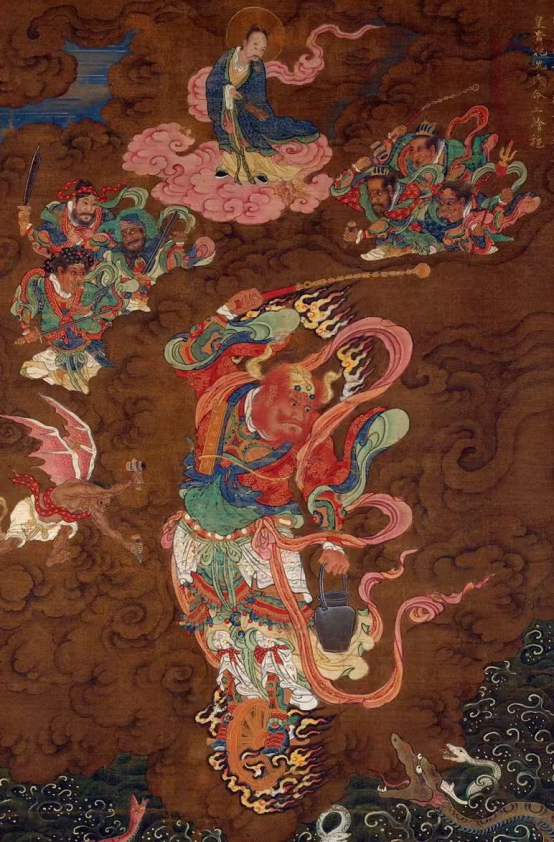
Appearance and Characteristics: Three eyes, red face, golden whip, and fire wheel.
The standard image of Wang Lingguan is extremely powerful and highly recognizable:
Face: Usually a red face with long beard, three eyes wide open (one eye is vertically split on the forehead), with a fierce appearance, symbolizing the ability to perceive all evil spirits in the three realms.
Costume: Wearing golden armor and red robes, standing on a wind and fire wheel, symbolizing his swift movement and powerful magic.
Aid: Right hand holds a golden whip (or golden saber), left hand holds the “Spirit General’s” or a “Red Heart Loyalty” decree. His golden whip is specifically used to strike evil spirits and disloyal and ungrateful people.
This image is filled with a sense of power and intimidation, perfectly embodying his duty of “Three Eyes Can See All Things in the Three Realms, One Whip Can Awaken All People in the World”.
Becoming a deity: From evil god to guardian deity
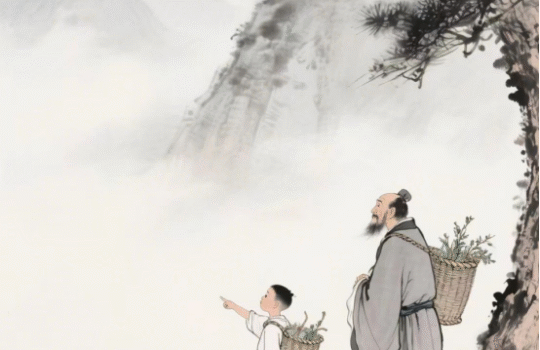
The origin of Wang Lingguan is quite legendary. His most famous story is closely related to Immortal Sa Shoujian (a famous Taoist in the Song Dynasty, an important ancestor of the Shenxiao Sect, and revered as “Sa Zushi” and “Chong En True Lord”). According to the legend, Wang Lingguan originally had the name Wang Wu, and was originally a evil god (or said to be the City God) on the banks of the Xiang River. He enjoyed blood offerings and sacrifices, causing trouble in the area. Immortal Sa traveled here and saw the temple using boys and girls for sacrifices, so he performed thunder magic and burned down the temple. Wang Wu did not accept it and secretly followed Immortal Sa for twelve years, waiting for an opportunity to take revenge. However, during these twelve years, he only saw Immortal Sa’s countless good deeds of internal cultivation of morality, external charity, and saving the world, and could not find a single trace of fault. Eventually, Wang Wu was completely convinced by Sa’s virtue and appeared on the ground to kneel and express his intentions, willing to become Sa’s disciple and repent. Immortal Sa was moved by his sincerity and took him as a disciple, granting him the Tao name “Wang Shan”, meaning “Change Evil to Good”. From then on, Wang Shan made a great vow to protect the Tao and defeat evil, becoming Sa’s personal guardian deity. Due to his loyalty, bravery, and justice in distinguishing good from evil, with complete merit, he was bestowed by the Jade Emperor as “Premature Lord General, Three Five Train Thunder General”, also known as “Universal Inspection Great Spirit General”, commanding all the five hundred spirit deities in the world, becoming the most important guardian deity in Taoism. The core of this story lies in “Moral Influence” and “Change Evil to Good”, giving Wang Lingguan’s image profound moral education significance.
Core duties
Guarding the mountain and protecting the Tao: This is his primary duty. He guards the mountain gate of Taoist temples and is the first barrier to resist all evil spirits invading from outside. Entering the Taoist temple, one should first worship the spirit of Wang Lingguan, which has the meaning of “purifying the mind, repentance, and obtaining entry into the temple”.
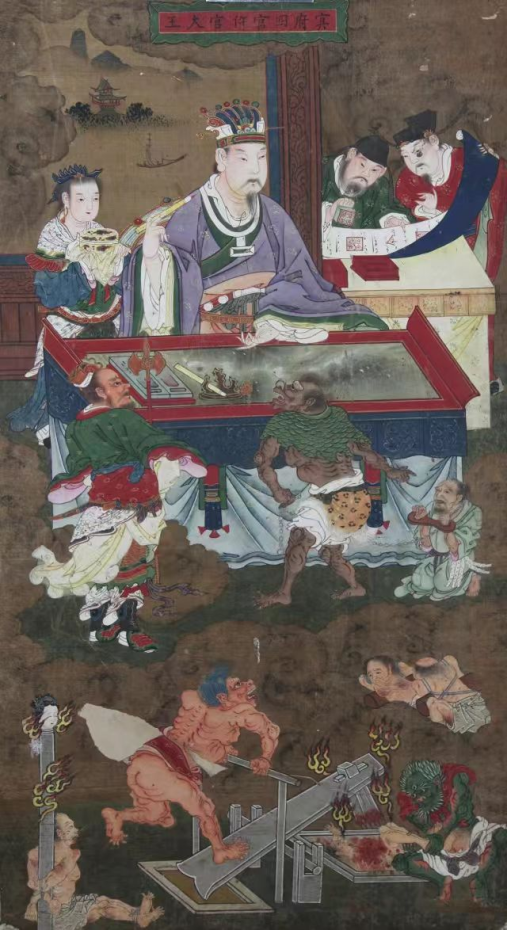
Inspecting the three realms: As the “Universal Inspection Great Spirit General”, he is like the “discipline inspector” and “judicial police” of the heavens, specifically inspecting the good and evil deeds of all deities and creatures in the three realms (heaven, earth, and human), reporting to the heavens and executing heavenly punishments. The third eye on his forehead is the “inspector’s eye”.
Driving away evil spirits and eliminating disasters: He controls the power of thunder and fire, has great abilities, and can drive away plagues, sweep away evil spirits, and eliminate disasters. In popular belief, posting or offering the image of Wang Lingguan’s spirit in the home can protect the house from danger and prevent all evil spirits from invading.
Protecting the cultivation: For practitioners of Taoism, he is a guardian deity, able to clear the obstacles in the cultivation process and protect the Tao and cultivation from advancing.
Religious influence
Standard in temples: There is the saying “If you don’t go up the mountain, first worship Wang Lingguan”. Almost all formal Taoist temples have the first hall (or the first hall behind the mountain gate) as the “Spirit Hall” and Wang Lingguan is worshipped there. This has become a characteristic regulation of Taoism.
Integrated with Sa Zushi belief: Wang Lingguan and Sa Shoujian’s stories are inseparable, and they are often worshipped together. Sa Zushi represents the “inheritance of Tao and law”, while Wang Lingguan represents the “guarding” and “action” of power. Going Deep into the Countryside: In the countryside, he is not only the guardian deity of the Taoist temple, but also regarded as a protective deity who is just, brave, and capable of curing diseases and eliminating disasters. In literary works such as “Journey to the West”, his powerful image also appears.In summary, Wang Lingguan is the personification symbol of the Taoist spirit of “using martial arts to safeguard the Tao and using righteousness to eliminate evil”. His legendary journey from evil to good reflects the Taoist doctrine that “all beings have the nature of the Tao and can become true”. He is not only an authoritative law enforcer and guardian, but his own story is also a vivid moral textbook about repentance, loyalty, and guardianship. Standing at the entrance of the Taoist temple, he not only warns those entering to have reverence in their hearts and discipline their bodies and minds, but also promises to provide the most powerful protection for devout Taoists.