**Di Ya (Mute Earth Attendant)** is the core divine acolyte of **Wenchang Dijun (Emperor Wenchang)**, the Taoist deity of literature and examinations. He is often revered alongside **Tian Long (Deaf Heaven Attendant)** as the right-hand assistant to Emperor Wenchang, forming a tripartite worship system together with the deity. Their primary duty is to guard the **Seal of Wenchang** and keep the celestial secrets of literary fortune strictly confidential, ensuring that information related to academic success and official careers is never disclosed to the outside world.
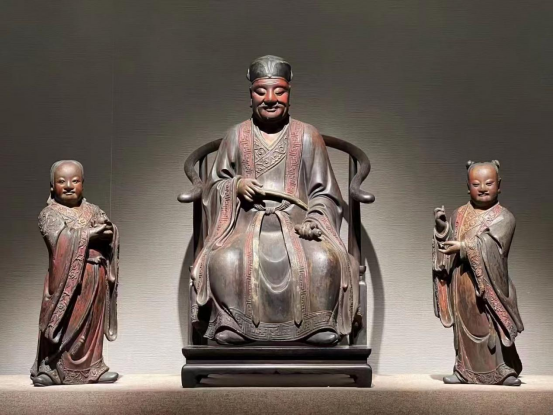
The origin of Di Ya’s image traces back to ancient worship of the Earth Mother, later merging into the belief in Wenchang and becoming established during the Ming and Qing dynasties. Legend holds that he was formed from the spiritual qi of the earth, possessing the ability to discern the virtues and transgressions of mortals, yet he was born unable to speak. This trait embodies the Taoist principle of *”those who can speak shall not know; those who know shall not speak”*, safeguarding the core secrets of literary fortune and official advancement under Emperor Wenchang’s jurisdiction from being leaked. As recorded in *Tongjian of Immortals Through the Ages*, when **Zitong Zhenjun** (another title for Emperor Wenchang) travels, he is always accompanied by two acolytes—Tian Long and Di Ya. Since the deity holds the power over literary destiny, which determines the rank and fortune of all mortals, he keeps mute and deaf attendants by his side to prevent the leakage of celestial secrets. His core divine duty complements that of Tian Long: Tian Long is in charge of recording scholars’ destiny scrolls, while Di Ya verifies and stamps these records with the Seal of Wenchang. One keeps the records, the other affixes the seal—this dual arrangement not only ensures the accuracy and authority of information related to literary fortune, but also prevents leaks through Di Ya’s *muteness*, upholding the fairness and sanctity of imperial examinations and official career paths. Additionally, Di Ya blesses students with the virtues of calmness, restraint, and diligent action over idle words, helping them focus on their studies and accumulate knowledge to qualify for the official ranks determined by Emperor Wenchang. He also supervises mortals in cultivating virtue and performing good deeds, promoting the harmonious integration of literary talent and moral integrity. In iconography, Di Ya is typically depicted as a Taoist acolyte, holding the Seal of Wenchang or an ink slab, standing to the right of Emperor Wenchang. He forms a symmetrical pair with Tian Long, who stands to the left holding scrolls. The symbolic meaning of his muteness runs deep: it not only reflects the Taoist tenet that *”celestial secrets must never be revealed”*, but also serves as a metaphor for the pursuit of knowledge and virtue—emphasizing the need for inner focus, humility, and avoidance of boastful speech. As an important cultural symbol of protecting scholars, safeguarding the inheritance of knowledge, and ensuring fairness in academic success, Di Ya embodies people’s sincere aspirations for smooth literary fortune and just advancement in official careers.