The Four Great Heavenly Masters are four patriarchal True Lords revered as “Heavenly Masters” in Taoist belief, who made groundbreaking and foundational contributions to the establishment and development of Taoism. They are important deities standing between mortal patriarchs and high-ranking immortals—they are both the founders and inheritors of Taoist doctrines, and senior ministers of the Heavenly Court who assist the Jade Emperor and enforce celestial laws. With a fixed membership and lofty status, they are core figures connecting Taoism’s sacred history with its contemporary beliefs. The Four Great Heavenly Masters usually refer to Zhang Daoling, Ge Xuan, Xu Xun, and Sa Shoujian.
I. Zhang Daoling (Heavenly Master Zhang) – Founder of Orthodox Unity Taoism
Historical Identity
A native of Pei State during the Eastern Han Dynasty, originally named Zhang Ling, he is revered as the actual founder of Taoism (especially Zhengyi Dao, also known as Heavenly Master Taoism).
Divine Functions and Contributions
Founding the Way of Orthodox Unity and Imperial AuthorityHe received the Three Heavens Orthodox Law directly from the Supreme Lord Laozi at Heming Mountain in Sichuan, and established a religious order with strict organizational structures, rituals, and precepts—marking the birth of institutionalized Taoism.
Subduing Demons and Evil SpiritsLegend has it that he waged war against the Six Great Demon Kings and the Eight Ghost Generals at Qingcheng Mountain, and set up the “Twenty-Four Preceptories” to govern Taoist parishes, laying the foundation for Taoism’s folk functions of exorcising evil spirits and averting disasters.
Enfeoffment as Heavenly MasterHe was canonized by the Supreme Lord Laozi as the “True Lord of Orthodox Unity and the Three Heavens Law Teacher”. The title of “Heavenly Master” has been inherited by his descendants from generation to generation to this day (i.e., the Heavenly Master Zhang lineage at Dragon and Tiger Mountain).
Position in the Heavenly Court
He holds the title of Heavenly Venerable of Subduing Demons and Protecting the Dao, is generally regarded as the leader of the Four Great Heavenly Masters, presides over Taoist affairs in the mortal world, and participates in the Heavenly Court’s assessment of immortals and mortals.
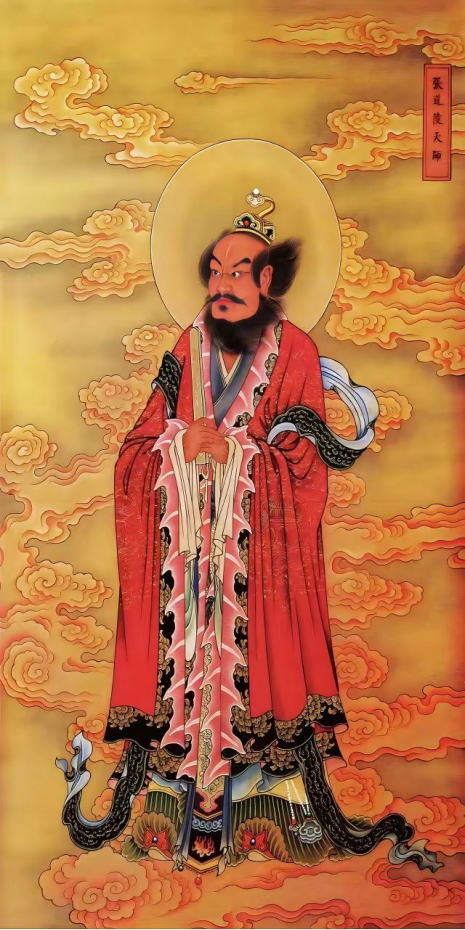
II. Ge Xuan (Heavenly Master Ge) – Founder of the Lingbao Sect and Inheritor of Taoist Scriptures and Talismans
Historical Identity
A native of Danyang during the Three Kingdoms and Eastern Jin periods, he was a renowned Taoist priest and revered as the founding patriarch of the Lingbao Sect.
Divine Functions and Contributions
Inheritance of Lingbao Scripture and Ritual TraditionsLegend has it that he practiced intensive cultivation at sacred sites such as Tiantai Mountain and Gezao Mountain, where he received the Lingbao Scripture series directly from the Supreme Lord Laozi and three True Lords. As the originator of the Lingbao Sect, he shifted Taoism’s focus from a primary emphasis on talismans and magic arts to the prioritization of sacrificial rituals and saving all living beings.
Master of Talismans and RegistersHe was highly proficient in talisman-making and alchemy, with particular expertise in the Lingbao section of the Three Caverns Scriptures and Talismans. He made tremendous contributions to refining and perfecting Taoism’s talisman system.
Ascension to Immortality in Broad DaylightAccording to legend, he rode a crane to ascend as an immortal at Gezao Mountain in Jiangxi Province, leaving behind numerous sacred sites such as “Gexian Mountain” and “Gexian Shrine”.
Position in the Heavenly Court
He held the title of Immortal Duke of the Left Palace of the Supreme Ultimate, presiding over the transmission of scriptures and talismans, as well as the performance of Taoist rituals and ceremonies。
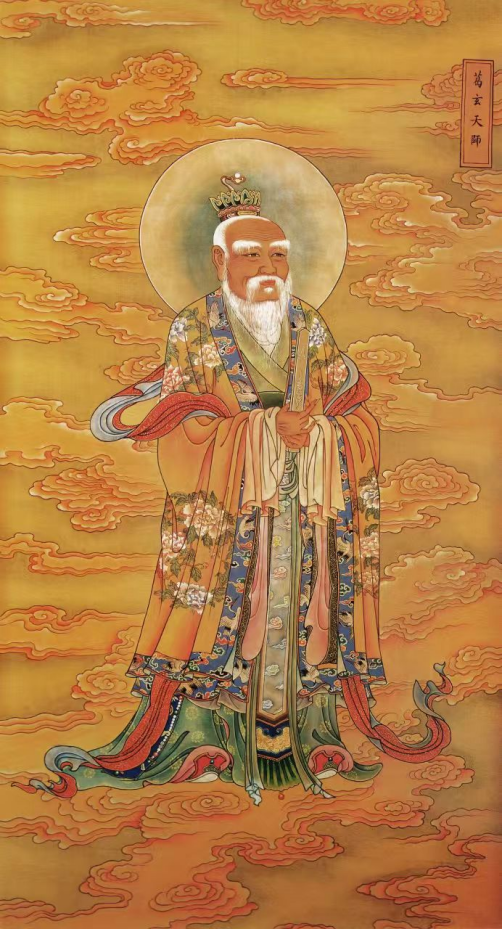
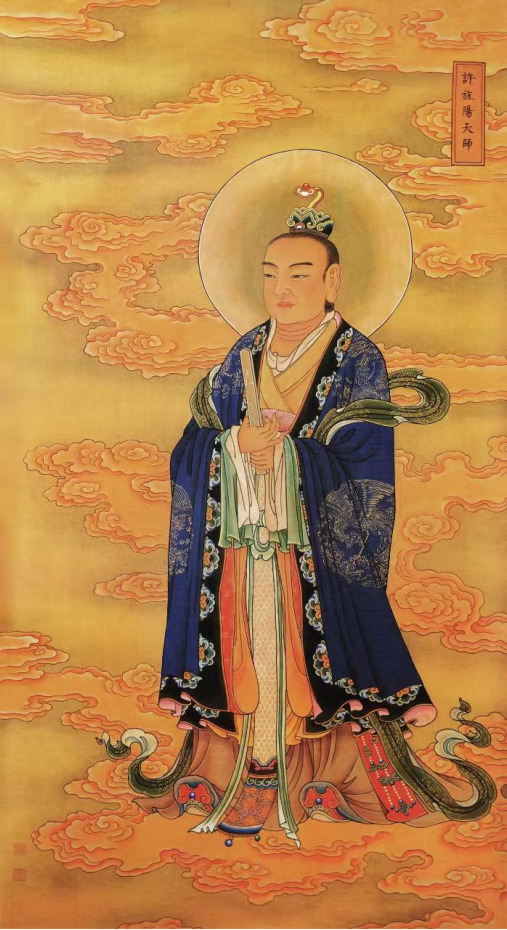
III. Xu Xun (Heavenly Master Xu) – Founder of Jingming Dao, Subduing Flood Dragons and Controlling Waters
Historical Identity
A renowned Taoist priest of the Jin Dynasty, he was born in Nanchang, Jiangxi Province, and is revered as the founding patriarch of Jingming Dao (also known as the Way of Loyalty and Filial Piety).
Divine Functions and Contributions
Subduing Flood Dragons, Controlling Waters and Saving the PeopleHis most famous feat was slaying flood dragons (or giant serpents) and taming water disasters in Jiangxi to eliminate harm for the people, earning him the reverence as a deity of water conservancy and protection. The folk legend of “True Lord Xu Imprisoning the Flood Dragon” has been widely circulated.
Founding Jingming DaoHe emphasized the principle of “loyalty and filial piety as the foundation, revering heaven and honoring the Dao”, integrating the core of Confucian ethics into Taoist cultivation. He advocated that “to cultivate the immortal way, one must first cultivate the human way”, exerting a far-reaching influence.
Ascension of the Entire Family to ImmortalityAccording to legend, he led his entire family of forty-two members to ascend to immortality together with their residence at Xishan in Nanchang (the site of today’s Wanshou Palace), with even the chickens and dogs rising to heaven along with them. This made him a classic representative of the Taoist idiom “when one attains immortality, even their chickens and dogs ascend to heaven”.
Position in the Heavenly Court
He held the title of Supreme Envoy and Imperial Historian of Immortals of the Nine Provinces, presiding over the supervision of merits and demerits, the slaying of demons and evil spirits, and the protection of territories and people。
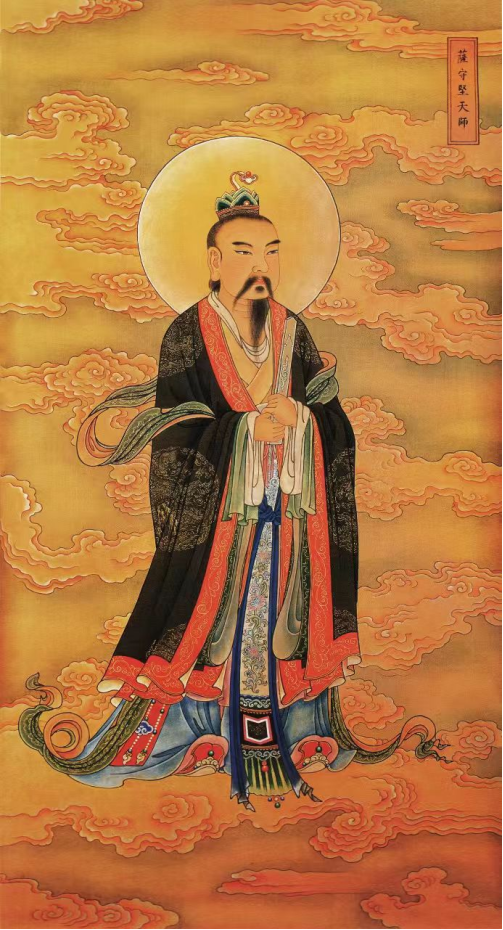
IV. Sa Shoujian (Heavenly Master Sa) – Divine Firmament Thunder Magic, Impartial Heavenly Censor
Historical Identity
A renowned Taoist priest of the Song Dynasty, he styled himself “Sa the Guest from Fenyang” and was an important representative figure of the Shenxiao Sect (Divine Firmament Sect).
Divine Functions and Contributions
Inheriting and Advancing Thunder MagicHe studied under great masters of Thunder Magic such as Zhang Jixian (the 30th Heavenly Master Zhang), Lin Lingsu and Wang Wenqing. He elevated the practice of Thunder Magic to new heights, establishing himself as one of the leading authorities on Shenxiao Thunder Magic.
Impartial and Unyielding, Upholding Justice and Judging Good and EvilHe was famous for his unwavering integrity and vow to punish disloyalty. His most well-known legend tells of him burning down the temple of an evil god (the predecessor of the Divine General Wang Lingguan) and subduing Wang E (later renamed Wang Shan), who then became Taoism’s most celebrated protective deity, Divine General Wang Lingguan. This story underscores his role as a fearless “heavenly censor”.
Healing the Sick and Alleviating SufferingHe was skilled at curing illnesses with talisman-infused water, traveling far and wide to help the common people and do good deeds.
Position in the Heavenly Court
He held the titles of Primeval Heavenly Commander and Marshal of Wind, Fire, Thunder and Lightning (also known as “Benevolent Reward True Lord”). He presided over Thunder Department magic, served as a heavenly censor for the Heavenly Court, and led protective divine generals such as Wang Lingguan.
The combination of the Four Great Heavenly Masters is not merely a simple juxtaposition of four eminent Taoists, but a paradigm representing the different core traditions and spirits of Taoism:
Zhang Daoling represents “establishing the religion and formulating its institutions” — the foundation of organizational structure.
Ge Xuan represents “passing down scriptures and talismans to later generations” — the inheritance of Taoist classics.
Xu Xun represents “promoting loyalty and filial piety to save the world” — the practice and redemption of morality.
Sa Shoujian represents “thunder magic and impartial investigation” — the power of Taoist magic and the authority of celestial laws.
From distinct dimensions, they jointly constructed the complete system of Taoism’s Three Treasures: the Dao, the Scriptures, and the Teachers. Zhang Daoling is the source of the Teacher Treasure; Ge Xuan embodies the manifestation of the Scripture Treasure; Xu Xun and Sa Shoujian reflect the application of the Dao Treasure in saving the world and enforcing celestial laws. In Taoist temples and rituals, the Four Great Heavenly Masters are often enshrined or invoked together. They are not only patriarchal role models for Taoist practitioners, but also important immortal officials in the Heavenly Court who convey mortal prayers and execute the will of heaven. Their deeds and spirits closely integrate Taoism’s theology, ethics, magic and history into a unified whole.