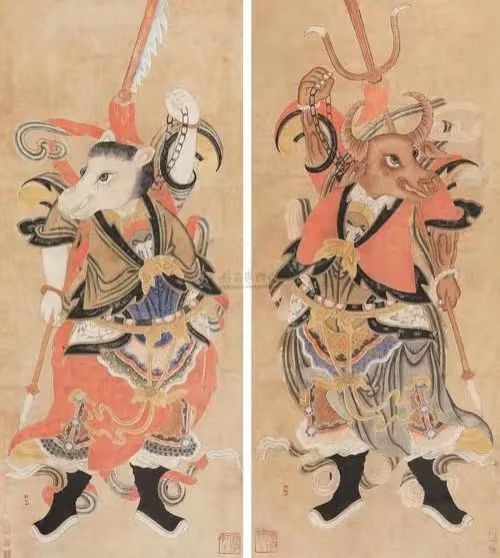
The Four Divine Spirits, also known as the Four Symbols or the Four Celestial Spirits, are four sacred animals in Chinese mythology and traditional culture that guard the four celestial directions, embody the four seasons and the fundamental powers of the Five Elements. They are the Azure Dragon, White Tiger, Vermilion Bird, and Black Tortoise. Originating from ancient astral worship, they later evolved into Taoist protective deities, directional guardians, and symbols of auspiciousness, serving as cornerstone symbols of China’s cosmic worldview and belief system.
Origin of the Four Divine Spirits: From Star Constellations to Divine Beasts
The concept of the Four Divine Spirits first emerged from astronomy during the pre-Qin period. The ancient Chinese divided the starry sky near the ecliptic into the Twenty-Eight Lunar Mansions, which were further grouped into four sets of seven mansions each:
The Seven Mansions of the East: Their combined shape was visualized as a giant dragon, known as the “Azure Dragon”.
The Seven Mansions of the West: Their arrangement was likened to a fierce tiger, known as the “White Tiger”.
The Seven Mansions of the South: Their pattern was associated with a large bird, known as the “Vermilion Bird”.
The Seven Mansions of the North: Their configuration was imagined as a tortoise intertwined with a snake, known as the “Black Tortoise”.
Collectively called the Four Symbols, these four asterism groups were used to mark directions and seasons. After the Han Dynasty, as the theories of harmony between heaven and humanity and the Five Elements gained popularity, the Four Symbols were fully deified into the “Four Divine Spirits” with distinct forms, functions, and divine attributes. They were then adopted by Taoism as important protective deities and directional gods.
Detailed Explanation of the Four Divine Spirits: Functions, Symbols and Cultural Connotations
The Four Divine Spirits are more than just four mythical beasts; they form a complete cosmic system model, each ruling over a celestial direction and embodying profound philosophical significance.
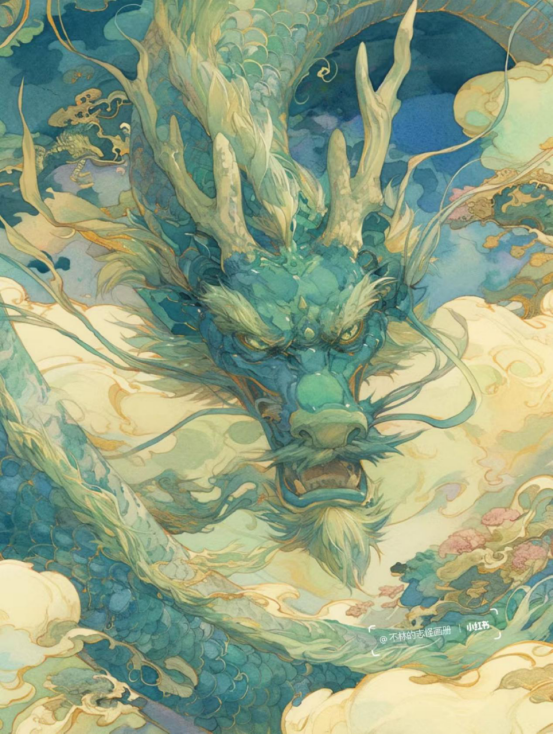
Azure Dragon (also called the Green Dragon)
Symbols: East, spring, the Wood element in the Five Elements, the color cyan, and benevolence.
Appearance: It has the body of a long snake, the head of a mythical qilin, the tail of a carp, long whiskers on its face, deer-like antlers, and five claws, with a majestic and imposing look. It represents vitality, growth, and auspiciousness.
Divine Functions: It guards the eastern celestial realm, governs thunder and rain (dragons are believed to control cloud movements and rainfall), and presides over the germination of all living things. It is a symbol of good fortune and imperial power, also embodying the power of upward progress and advancement. In Taoism, it serves as the protective deity of the East.
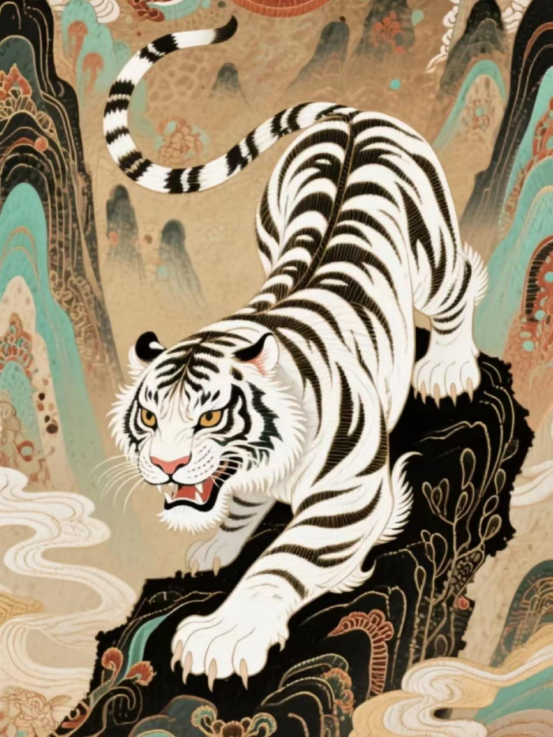
White Tiger
Symbol: West, autumn, the element of metal, the color white, righteousness.
Appearance: Entirely white or with black patterns, fierce and powerful. Represents suppressing and killing, warfare, authority.
Divine Function: Guards the western sky, the lord of killing, weapons, and laws. It is the war god and the god of warding off evil. It also governs wealth (the tiger is the king of mountains, guarding treasures). Ancient armies often used the white tiger flag, and the prison door was often painted with a white tiger to convey its fierce and suppressive meaning. It can defend against external evil, but it also symbolizes danger and needs to be revered.
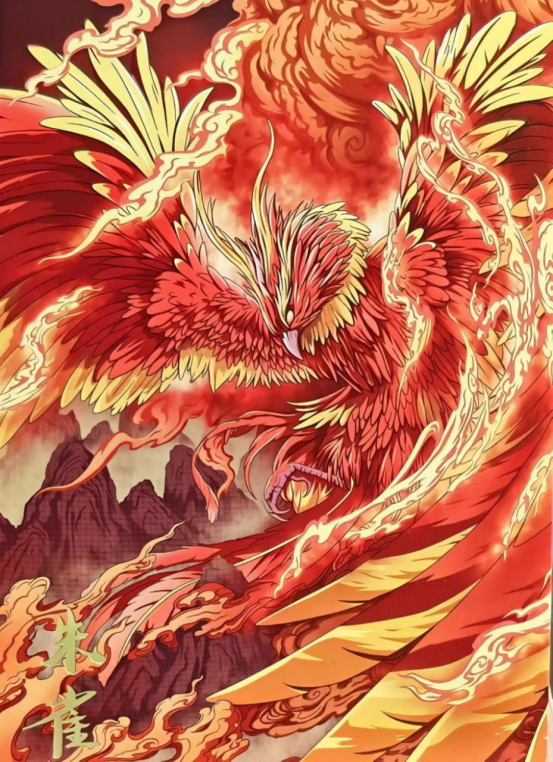
Zhuque (or Zhu Niu)
Symbol: South, summer, fire of the five elements, red color of the five colors, virtue and morality.
Image: Looks like a peacock, covered with flames on its body, with beautiful feathers. It is a kind of phoenix. Represents light, vitality, and immortality.
Divine duties: Guards the southern sky, presides over light, heat, and documents. It is the spirit of the sun, can guide souls to ascend to heaven, symbolizing rebirth and eternity. In Taoism, it is often regarded as the southern guardian, also closely related to the fire element and civilization.
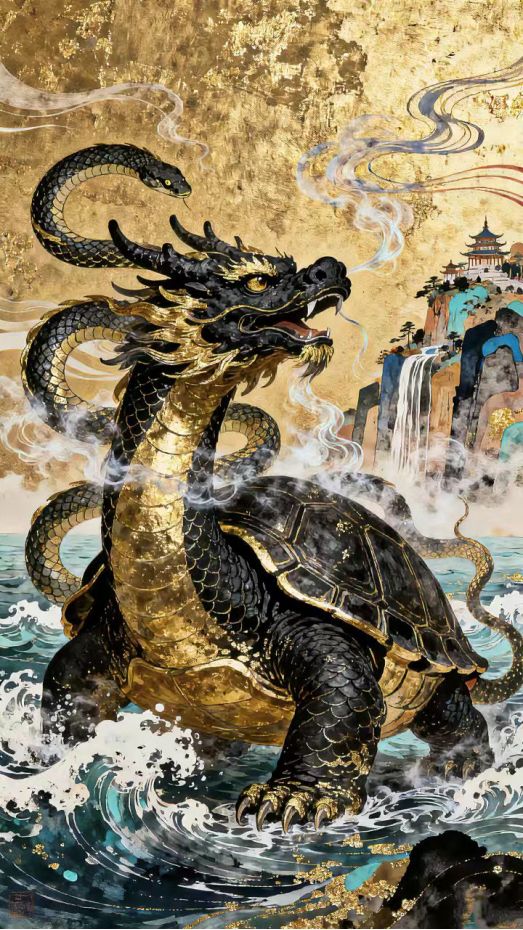
Xuanwu
Symbol: North, winter, water of the five elements, black (Xuan) color, wisdom and virtue.
Image: A combination of a turtle and a snake (the turtle and snake are intertwined). Represents longevity, wisdom, and protection.
Divine duties: Guarding the northern sky, ruling over water, rain, and lifespan. Because the turtle is long-lived and the snake is mysterious, Xuanwu became a symbol of immortality. At the same time, turtle shells were used for divination, so it also ruled over wisdom and prophecy. Later, in Taoism, Xuanwu became an independent deity, ascending to the status of True Wu Emperor, and became the supreme war god that dominated the north.
The widespread application of the Four Spirit Belief
Feng Shui and Landscaping: In architectural and burial fengshui, the most ideal layout is “left Qinglong (the dragon), right Baihu (the tiger), front Zhujue (the rooster), and back Xuanwu (the turtle)”. That is, the east side (left) has water or roads as Qinglong, the west side (right) has long paths or low mountains as Baihu, the south side (front) has ponds or open areas as Zhujue, and the north side (back) has mountains or buildings as Xuanwu. This is regarded as a perfect geographical form that can retain the wind and gather the energy, and is considered to bring family prosperity.
Military and State Affairs: In ancient military formations, the Four Spirits’ flags were often used to indicate directions, such as Qinglong flag and Baihu banner. The layout of palaces and capitals also corresponded to the Four Spirits, such as the south gate (Zhujue Gate) and the north gate (Xuanwu Gate).
Taoism and Occultism: The Four Spirits are important guardian gods and talismanic deities in Taoism. In spells, talismans, and seals, the power of the Four Spirits is often summoned for protection, setting up altars, and driving away evil spirits. The arrangement of the altar in Taoist rituals and ceremonies also strictly follows the directions of the Four Spirits.
Literature and Art: The Four Spirits are classic themes in ancient literature, painting, sculpture, and clothing (such as the official robe collar). They are eternal symbols of power, auspiciousness, order, and cosmic harmony.