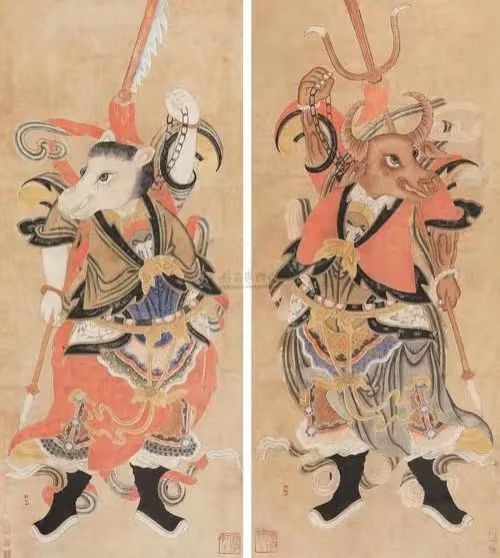
Tian Tong is the core attendant of the Chinese Emperor of Literature, Shangdi. He is often mentioned along with Di Ya, and together they are regarded as the left and right assistants of Shangdi, forming a “trinity” worship system. Their core function is to guard the celestial secrets of the literary fortune and keep the information of life records confidential.
Core Identity and Origin
The image of Tian Tong originated from the combination of ancient star worship and the belief in Shangdi. In the Song Dynasty, the two celestial officials, Gui Lu, who were on the left side of Shangdi, were its predecessors. During the Ming and Qing Dynasties, the belief gradually took shape. According to legend, he was created by the thunderbolt breath of the Heavenly Emperor, and he has golden eyes that can perceive the celestial tracks and human misfortunes and blessings, but he is born deaf and unable to hear speech. This setting is precisely to ensure “those who can know cannot speak”, protecting the core celestial secrets of the literary fortune and achievements that Shangdi governs from being leaked.
Duties and Functions
The core responsibility of Tian Tong is to manage the records of scholars and their fortunes. He records the talents, virtues, merits and demerits, as well as the fortune and career prospects of students and scholars. At the same time, he assists Shangdi in determining the official records, rewarding achievements and promoting ranks. He cooperates with Di Ya on the right side, who holds the Great Seal of Shangdi. The former is in charge of “records” and the latter is in charge of “seals”. One record and one seal ensure the accurate recording of information related to the literary fortune and guarantee that the information is not leaked through the “deafness” and “muteness” setting. This also maintains the fairness and sanctity of matters related to the examination and career paths, such as fate and destiny.
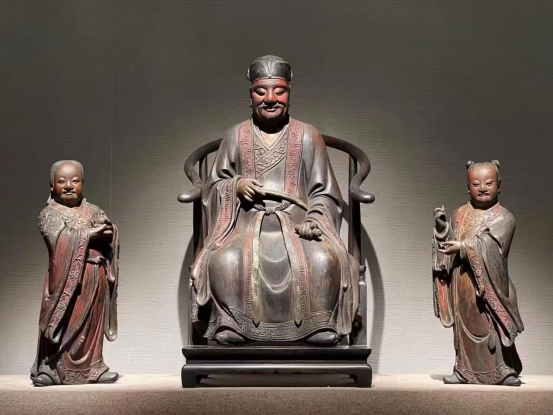
Image and Cultural Implications
The statues of Tian Tong are mostly in the form of Taoist children, often holding books or scrolls, standing on the left side of Shangdi, and forming a symmetrical layout with Di Ya on the right who holds the seal. The symbolic meaning of his “deafness” is profound. It not only embodies the Taoist concept of “the celestial secrets should not be leaked”, but also implies that studying and cultivating virtue require maintaining inner restraint and concentration, not showing off easily or speaking randomly. As an important part of Taoist belief, Tian Tong carries people’s beautiful expectations for a smooth literary fortune and promising achievements. He is an important cultural symbol that protects scholars and students, and guards the inheritance of knowledge and wisdom.