I. Opening Ceremony: Establishing the Sacred Space
The purpose of this stage is to purify the altar and the participants themselves, transforming the mundane place into a “sacred realm” that can communicate with the deities.
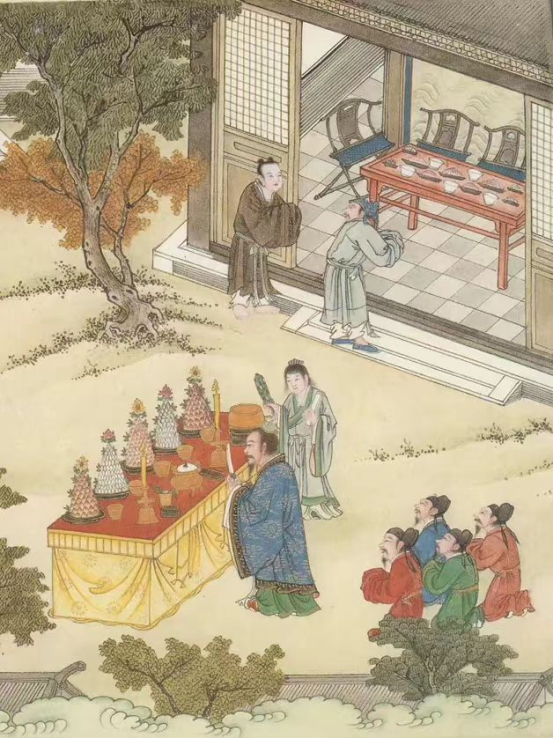
Setting up the altar/arrangement:
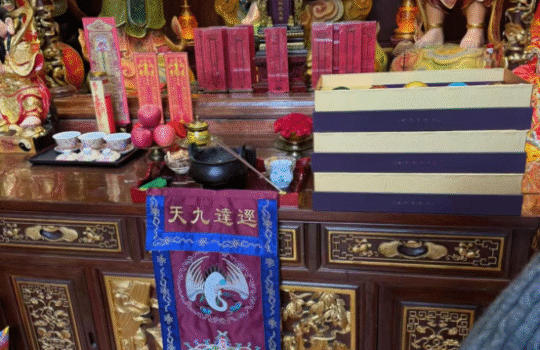
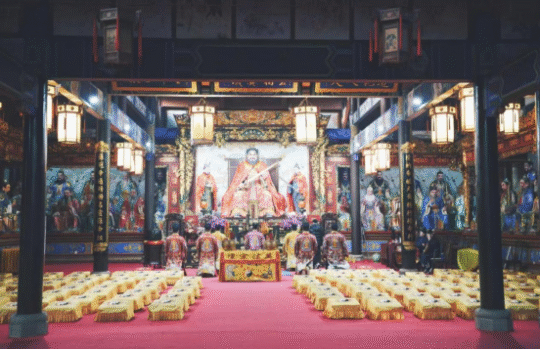
Set up the “sacred altar”, hang the statues, banners, and canopy, and arrange the incense table, offerings (five offerings: incense, flowers, lamps, water, fruits), ritual objects, and scrolls. The layout of the altar strictly follows the ritual.
Washing and purifying the altar:
The high priest holds a water basin (or ritual object) and recites the “Pure Mantra” and other mantras. Using willow branches or martial arts symbols, he sprinkles the sacred water around the altar.
Meaning: Removing the impurities inside and outside the altar, sweeping away the evil, and delineating the sacred boundary.
Appointing the teacher/inviting the teacher:
The priest silently cultivates and contemplates, internalizing the “transformation of the deity” (conceiving oneself as the deity being worshipped), while burning incense and bowing, connecting with the ancestors, and respectfully inviting the successive ancestors and the celestial deities of the sect to protect and support.
Meaning: Obtaining the “power authorization” from the ancestors, which is the key to the efficacy of the ceremony.
Offering incense/Reporting:
The high priest of the main altar leads the believers to perform a three-knee nine-bow ceremony to the supreme deities such as the Three Kings and the Jade Emperor, offering incense and reporting.
Meaning: Officially reporting that the ceremony is about to begin, like “submitting an application report”.
II. Core Rituals: Welcoming the Deity, Communication and Prayer
This is the main part of the ceremony, communicating with the deities through various forms.
Starting the furnace/Summoning generals:
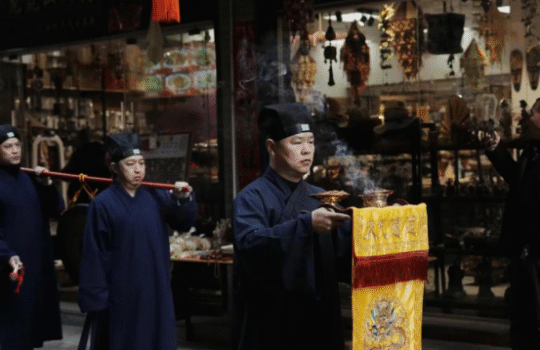
The high priest performs incantations and recitations (such as the “Starting Furnace Mantra”), ignites the incense burner in the altar, symbolizing communication between heaven and earth. At the same time, he summons the subordinate deities such as the magistrates, charm agents, and generals, and transmits the message to the celestial court.
Meaning: Opening the communication channel with the deity realm, dispatching “messengers”.
Reciting scriptures/believing and repenting:
The believers chant relevant scriptures together (such as the “Three Officials Mantra” for blessing, the “Beacon Mantra” for salvation). Or perform worship and repentance rituals (such as the “Ascending Heaven Confession” and the “Jade Emperor Confession”).
Meaning: Accumulating merit through chanting sacred scriptures, repenting of sins, and expressing sincerity.
Presenting scrolls/Submitting documents:
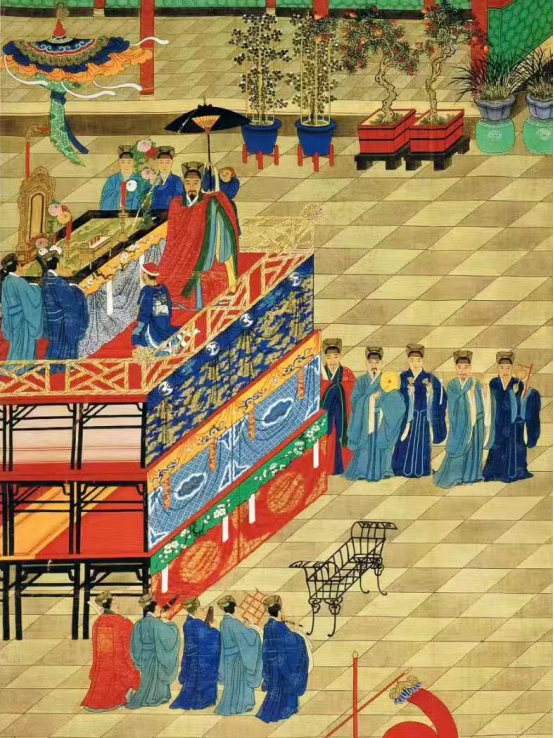
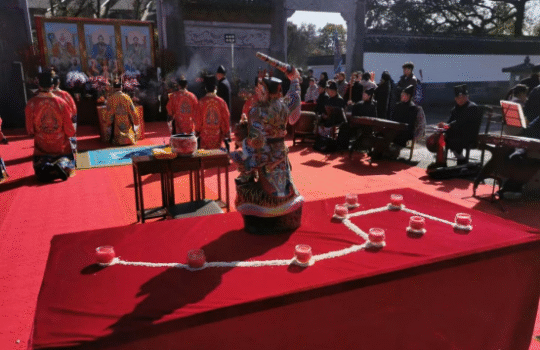
This is one of the most core parts of the ceremony. The high priest on the altar presents the scroll document (scroll text) with the believers’ prayer content and list through incense burning, contemplation, and the steps of the compass and the battle pattern, with great reverence, to the deities.
The steps of the compass and the battle pattern: The priest steps on the pattern of the Big Dipper, symbolizing ascending to the celestial court and meeting the deity.
Meaning: Officially submitting the “prayer application form”, which is the concrete expression of the entire ceremony’s prayer.
Presenting offerings:
Offer various offerings to the deities and chant the offering mantras. Besides material offerings, it emphasizes “heart incense” and “heart offerings” as spiritual contributions.
Meaning: Expressing reverence and offering to the deities, making good connections, and increasing blessings and wisdom.
III. Dismissing the Altar: Expressing Gratitude and Thanking the Deity, Completing the Ceremony
After the ceremony, it is necessary to escort the deities and restore normality.
Appreciating the teacher/sending the deity:
Burning incense and bowing, thanking the ancestors, all deities, magistrates, and generals for their arrival and hard work. Reciting the praise or edict for sending the deity or respectfully sending all the personnel back to the palace.
Returning and directing:
The high priest on the altar presents the scroll text (scroll text) with the believers’ prayer content and list to the deities through incense burning, contemplation, and the steps of the compass and the battle pattern, with great reverence.
The steps of the compass and the battle pattern: The priest steps on the pattern of the Big Dipper, symbolizing ascending to the celestial court and meeting the deity.
Meaning: Officially submitting the “prayer application form”, symbolizing the completion of the work.
Completing the thanksgiving of the altar:
The high priest announces the completion of the ceremony, the believers bow, and remove some of the altar arrangements. Sometimes, a “sweeping blessings” ceremony is held, distributing the offerings to the believers to share the blessings.
Important characteristics and concepts
High priest, scripture master, musician: The ceremony is led by the high priest (the main priest, the core), the chief lecturer (the person in charge of the ceremony), and the supervisor of the kitchen (the person in charge of the food preparation). The scripture master chants, and the musician accompanies.
Contemplating and transforming the deity: Throughout the process, the priest continuously performs complex visualizations, believing that he is the incarnation of the deity, which is the internal foundation for the efficacy of the ceremony.
Symbols:
Symbol: The written secret text used for summoning deities and dispatching generals. Key: The gestures formed by the fingers communicate the internal energy with the external deities.
Gong: Step the Eight Trigrams and the Sixty-Four Palaces, simulating the cosmic star map and flying to the nine heavens.
Music and Praise: Taoist music (divided into “rhyme patterns” and “musical pieces”) runs throughout, used to enhance the sacred atmosphere and express emotions, being an important means of “communicating with the divine through music”.
In summary, the Taoist ritual assembly is a comprehensive sacred drama that integrates physical movements (worship, stepping the Eight Trigrams), language art (recitation, incantations), visual symbols (runes, altars), and sacred contemplation. Its core lies in achieving the connection and communication between humans and deities through strict forms.