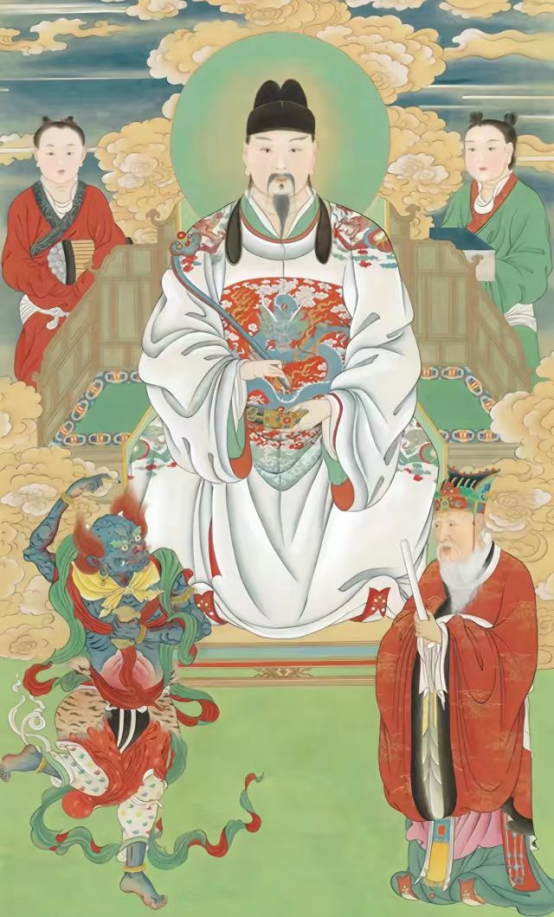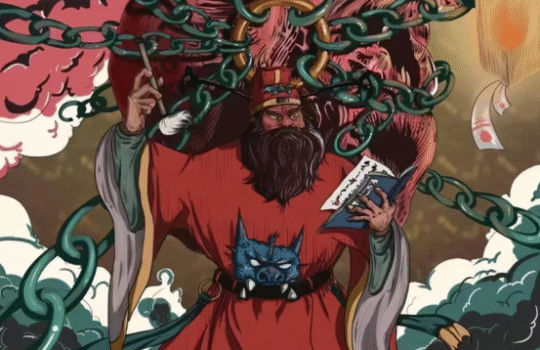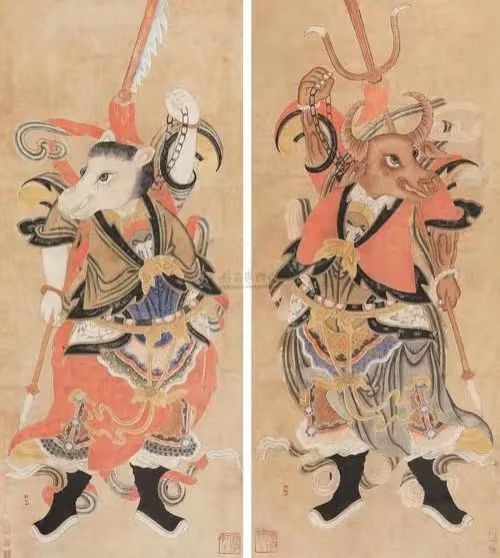
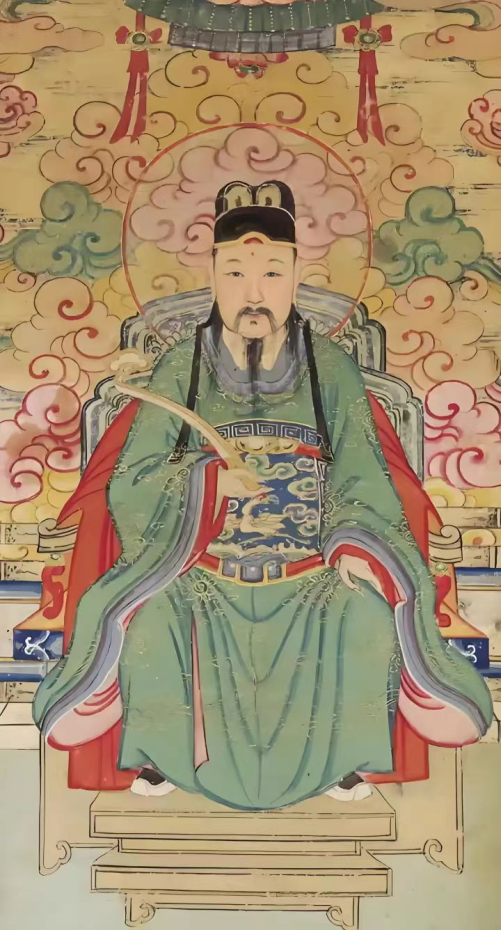
Emperor Wenchang Emperor Wenchang is the supreme deity in Taoism and folk belief who presides over fame, fortune, official career prospects, and success in imperial examinations. Revered universally by scholars, civil officials, and literati as the **”Lord of Literary Heritage”** and **”God of Imperial Examinations”**, his worship exerts an extremely far-reaching influence across the cultural sphere of China. ## Origin and Syncretism The divine status of Emperor Wenchang was formed by the fusion of the worship of the **Wenchang astral deity** and the local belief in the **Zitong God**. 1. **Astronomical Origin**: Originally, Wenchang referred to a star name—the “Six Stars of Wenchang” located above the Big Dipper. The ancient Chinese believed these stars governed “literary fortune” and “official rank and destiny”. 2. **Human-God Origin**: Its core origin traces back to the Zitong God, a local tutelary deity in Sichuan Province. The deity is believed to have been modeled after Zhang Yazi (or Zhang Yu), a filial son and loyal minister of the Jin Dynasty. After his death, he was enshrined as the local god of Zitong and reputed for his extraordinary divine efficacy. 3. **Syncretism in the Song and Yuan Dynasties**: Against the backdrop of the flourishing imperial examination system, these two beliefs converged. The imperial court officially conferred the title of “Emperor Wenchang” upon the Zitong God. Since then, this deity has become the state-recognized supreme god who dominates literary fortune and imperial examination success across the nation. ## Iconography and Divine Functions Emperor Wenchang is typically depicted as an elegant, wise sovereign or a refined civil official with a long beard, holding a jade tablet or an ruyi scepter. He is always attended by two acolytes standing beside him—**Tian Long (Deaf Heaven Attendant)** and **Di Ya (Mute Earth Attendant)**—symbolizing that the celestial secrets of examination questions and results must never be disclosed. His primary divine functions include: 1. **Dominating Fame, Fortune and Official Positions**: He oversees imperial examinations, academic promotions, literary merit, and official career paths in the mortal world. Scholars pray to him for sharp wit and success in exams, while officials beseech his blessing for smooth progress in their official careers. 2. **Governing the Rise and Fall of Literary Fortune**: He not only takes charge of individual literary destiny but also dominates the cultural ethos, the continuity of literary heritage, and the prosperity of education in a region and even an entire country. 3. **Recording Good and Evil Deeds**: As the presiding deity of the “Wenchang Palace”, he is said to have a “Wenchang Office” under his command that keeps records of the virtues and transgressions of scholars and literati worldwide. He determines their fame, fortune, and official positions based on these records, thus exhorting people to do good deeds and accumulate merits, and to respect and cherish written words. ## Belief Practices The worship of Emperor Wenchang constituted a core part of the ancient education system. **Wenchang Palaces, Wenchang Pavilions, and Wenchang Pagodas** were widely built across the country.
Before every imperial examination, candidates and their parents would inevitably burn incense and pray before statues of Emperor Wenchang. His birthday—the third day of the second lunar month—is an important cultural festival known as **”Wenchang Festival”**, on which scholars would hold “Wenchang Gatherings” for sacrificial ceremonies and celebrations. Taoism also boasts renowned moral-instructive texts such as *The Treatise on the Hidden Virtues of Emperor Wenchang*, which emphasizes that “accumulating hidden virtues will resonate with the heavens”, meaning that only by amassing concealed merits can one attain academic success and divine blessings. ## Cultural Status Emperor Wenchang stands as the supreme divine embodiment of the Confucian ideal that “those who excel in studies may enter officialdom”. Combining the principles of “heaven rewards diligence” and “divine blessing”, he provided countless scholars who endured years of diligent study in poor conditions with spiritual sustenance and supernatural hope. Together with **Confucius, the “Sage of Literature”**, he formed the dual pillars of belief for ancient literati: Confucius was the mortal master of education and paragon of morality, while Emperor Wenchang was the supernatural ruler of destiny and bestower of success. In summary, Emperor Wenchang represents the perfect integration of knowledge, culture, the imperial examination system, and the concept of moral retribution. He is not only the “Exam God” whom students pray to for success in the imperial examinations but also a sacred symbol that upheld the core value of ancient society—”All occupations are inferior to scholarly pursuit”. His worship profoundly embodies the profound philosophy of traditional Chinese culture that “literary attainments connect to heaven, and moral conduct moves the gods”.