Fast
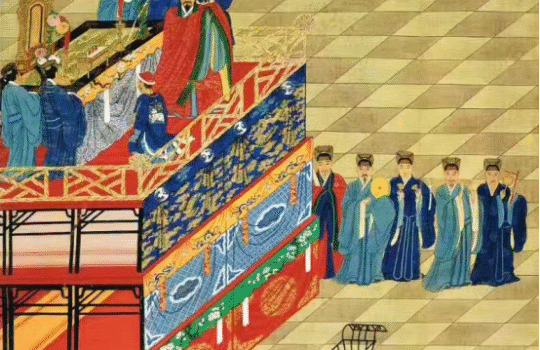
The original meaning of “fast” refers to order and purity. Later, it came to mean fasting and purification. It indicates that before a sacrifice, one must bathe, change clothes, refrain from eating meat and alcohol, and not stay in the inner chambers to show solemnity and sincerity. The act of “performing a fast” initially meant “accumulating virtue and expiating sins”, and later it meant “harmonizing with the gods to prolong life”, and then “special path”, “joyful path”, “unified path”, which is “practicing the path”. This is the highest level of performing a fast. Therefore, Taoism attaches great importance to performing a fast and has formulated a complete set of fasting rules. According to its scale and function, it can be divided into: Inner Fast (Ultimate Path): including mental fasting, forgetting oneself, and contemplation (see “Dong Nei Lun”); Outer Fast (Relief): including the Three Clauses and Seven Grades, where the Three Clauses refer to the Golden Clauses Fast, Jade Clauses Fast, and Yellow Clauses Fast; and Seven Grades refer to the Three Emperors’ Fast, Nature’s Fast, Upper Clear Fast, Instructional Fast, Turmoil and Persecution Fast, True Truth Fast, and Three Yuan Fast (see “Dong Xuan Lingbao Xuanmen Da Yi”). Various fasting methods have different meanings. For example, the Golden Clauses Fast “overcomes natural disasters and protects the emperor”, the Jade Clauses Fast “rescues people and asks for blessings and forgiveness”, and the Yellow Clauses Fast “pulls down the suffering in hell and nine hells”.
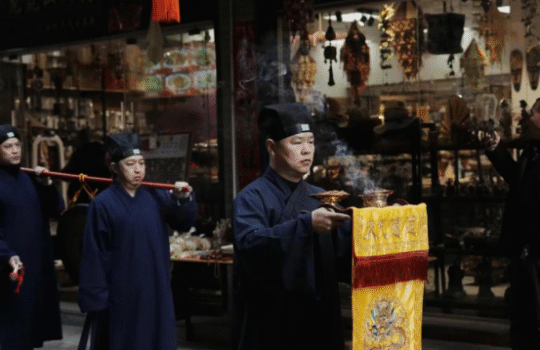
Taoist priests of the Full Immortals School abstain from eating meat, while Taoist priests of the Pure Ones School must eat vegetarian food on the first day of the month, the fifteenth day, or on other religious festivals, all of which are to perform a fast to worship the gods.
Jiao
The original meaning of “jiao” is sacrifice, which was an ancient ritual. According to “Shuowen Jiezi”, it is one of the ceremonies of marriage and the rituals of sacrifice. Taoism inherited and developed the sacrificial aspect of “jiao”, using this method to communicate with the gods. “Jiao” also has the meaning of “jiao method”, referring to the procedures, rituals, and rules of jiao rituals. “Jiao” has many names, and whatever people need, there will be a corresponding jiao name. For example, the Nine Dragons Jiao for praying for rain, the Pure Ones Transmission Jiao, the Roaring Heaven Jiao, etc.
Jiao Rituals and Ceremonies
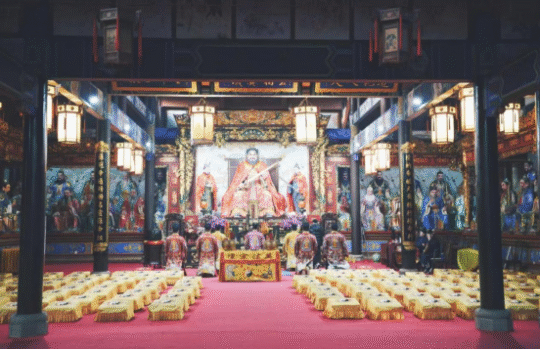
The fasting and jiao rituals are different. Later, they merged and became “jiao and fasting” after the Sui and Tang dynasties. Since then, “jiao and fasting” have been used as the common name for Taoist rituals.
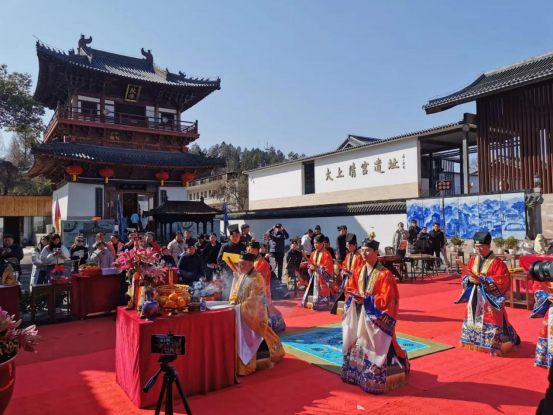
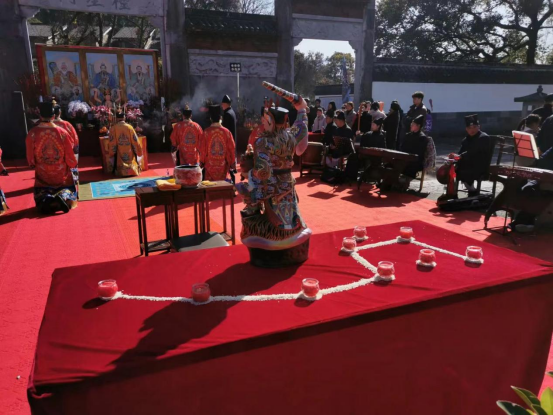
“Jiao Rituals and Ceremonies” refers to the certain regulations based on which jiao prayers are conducted. Generally, there are two types: Yang rituals and Yin rituals, that is, clear jiao and dark jiao. Clear jiao includes praying for blessings and gratitude, curing diseases and prolonging life, wishing for national prosperity and auspiciousness, praying for rain and sunshine, eliminating disasters and misfortunes, wishing for longevity and celebration, etc., belonging to the peace jiao type of rituals. Dark jiao includes summoning the souls of the deceased, bathing and crossing the bridge, breaking prisons and lakes, refining and feeding, etc., belonging to the relief jiao rituals for the souls of the deceased. Taoist believers in temples and monasteries hold ceremonies such as celebrating longevity and celebration on the new moon and full moon days, important festivals, and the birthday of the patriarch, which are common rituals under the category of jiao rituals.