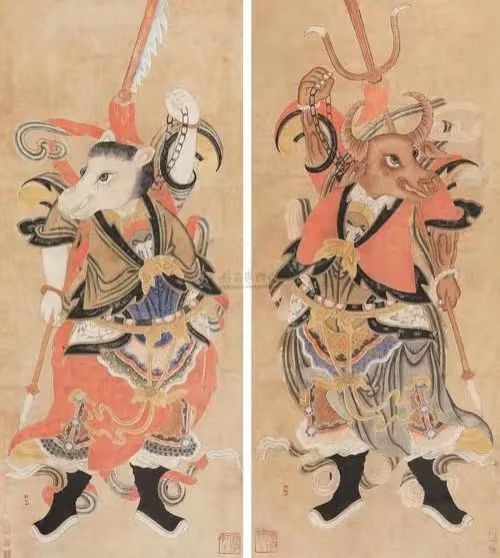
The Great Emperors of the Five Great Mountains
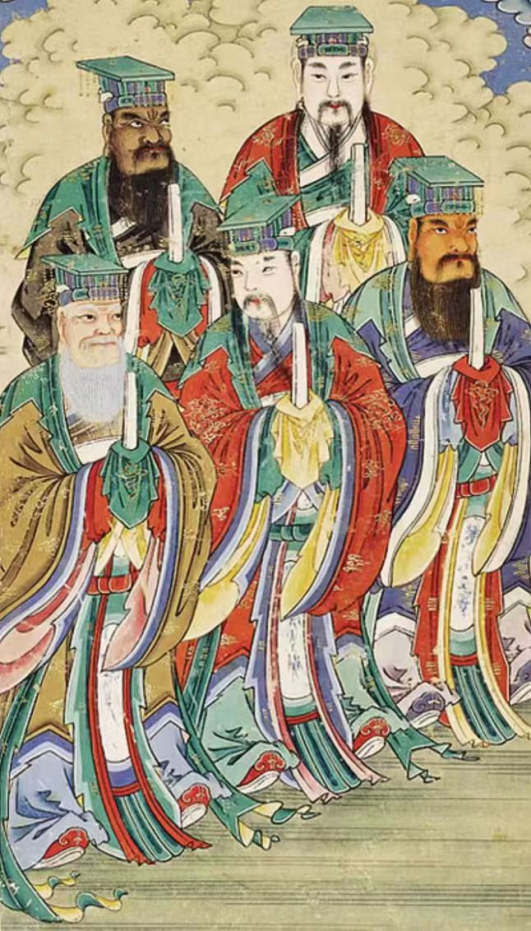
The Five Great Mountains and Five Emperors form the core component of the Taoist mountain deity system. They refer to the five mountain deities (the Five Great Mountain Emperors) corresponding to the five major mountains (the Five Great Mountains). These are important guardian deities revered by Taoism and are in charge of the mountains, rivers, and fields in their respective jurisdictions, as well as auspiciousness, misfortune, and good fortune. They embody both natural worship and humanistic beliefs. The Five Great Mountains are geographical markers of the Chinese land, and the Five Emperors are their deified symbols, carrying the ancient people’s reverence for mountains and rivers and their wishes for longevity, health, and prosperity. In Taoist culture and folk beliefs, they hold significant positions.
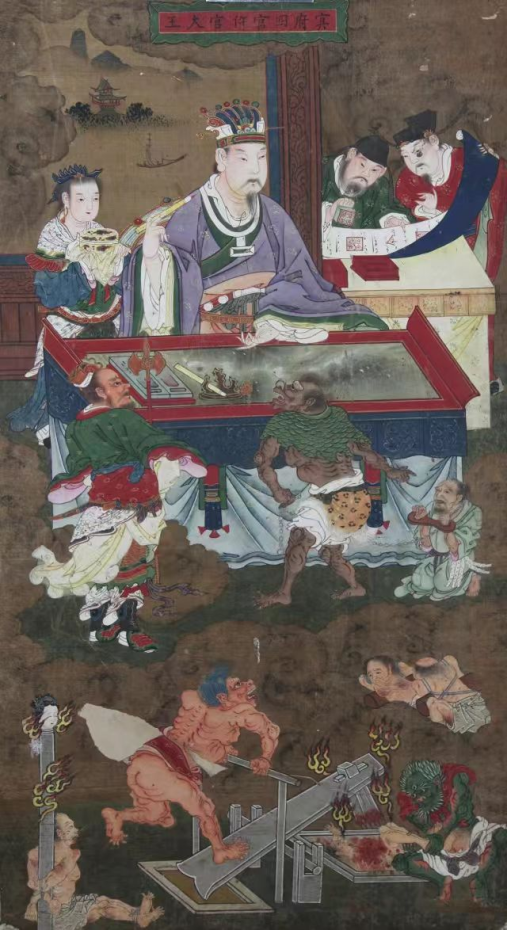
The East Mountain, Mount Tai, is located in Tai’an, Shandong Province, and is known as “the first of the Five Great Mountains” and “the greatest mountain in the world.” The corresponding East Mountain Emperor is officially called “East Mountain Tianqi Daisheng Rensheng Emperor.” He is the highest-ranking among the Five Great Mountain Emperors. His main duties include governing human life and death, honor and disgrace, and life and death, as well as supervising the underworld and the eighteen levels of hell. Folkly, “Mount Tai governs ghosts,” believing that the souls of the deceased are under the jurisdiction of Mount Tai. It is said that the East Mountain Emperor is a descendant of Pangu or an incarnation of Emperor Huangdi. Taoism regards him as “East Mountain Emperor King” and is one of the “Five Great Mountain Emperors.” He is in charge of the rewards and punishments of good and evil in the world and the blessings and official positions. He is the most widely worshipped mountain deity by the people, and Mount Dai Temple is his main Taoist temple. The birthday of the East Mountain Emperor is on March 28th of the lunar calendar. Many emperors have performed sacrificial ceremonies to honor him.
The South Mountain, Mount Heng, is located in Hengyang, Hunan Province. The corresponding South Mountain Emperor is officially called “South Mountain Shizheng Zhaosheng Emperor” (founded by Emperor Zhenzong of Song). His duties include governing human longevity, academic achievements, and the regulation of mountains and climate. It is said that his original form was Fire God Zhu Rong. In ancient times, he was in charge of fire affairs and matters in the south. He was revered as the mountain deity of the South Mountain. Taoism endowed him with the core meaning of “presiding over longevity,” and folk wisdom says “longevity surpasses the South Mountain” (referring to Mount Heng). Therefore, the South Mountain Emperor is also regarded as the god of longevity. His image is often a dignified elder, wearing imperial attire, holding a jade scepter, symbolizing the continuity of blessings and prosperity. Mount Nan Mountain’s South Mountain Emperor Temple is its main Taoist temple. The birthday of the South Mountain Emperor is on the first day of the eighth lunar month. Many believers go there to pray for longevity and academic success.
The West Mountain, Mount Hua, is located in Huayin, Shaanxi Province, and is renowned for its “the most perilous among all mountains.” The corresponding West Mountain Emperor is officially called “West Mountain Jintian Shunsheng Emperor.” His duties include governing military affairs, weapons, and the metals, as well as supervising the geography of the west and the growth of all things. It is said that his original form was the Son of Shaohe, an ancient ruler in charge of the west. He was in charge of the celestial phenomena and metal smelting in the west. As the “West Mountain,” Mount Hua symbolizes the element of metal, so the West Mountain Emperor is also regarded as the “metal god,” in charge of military affairs, punishment, and wealth (the benefits of metals). His image is often a stern and dignified emperor, holding a water-pattern jade rod, symbolizing guarding the palace, stabilizing the country, and favorable weather. The Huayin Suspension Temple and the West Mountain Temple are his Taoist temples. The birthday of the West Mountain Emperor is on the sixth day of the eleventh lunar month. Folk beliefs say that sacrificing to the West Mountain Emperor can pray for peace, avoiding disasters, and a prosperous career, especially in northern regions. The West Mountain Emperor is regarded as the “guardian deity of the palace” by military officers and entrepreneurs.
The Central Mountain, Mount Song, is located in Dengfeng, Henan Province, in the heartland of China. The corresponding Central Mountain Emperor is officially called “Central Mountain Zhongtian Chongsheng Emperor.” His duties include governing the center of the universe and the key link of all things, as well as supervising the land, the growth of grains, and the proliferation of clans. According to legend, its prototype was Emperor Chung Bo of the Yellow Emperor’s court, or another incarnation of the ancient fire god Zhu Rong. Mount Tai, as the “middle of heaven and earth”, symbolizes the earth-moving energy and is the foundation for the growth of all things. Therefore, the Great Emperor of Mount Tai is regarded as the “center of protection for the household”, presiding over the stability of human affairs and the prosperity of families. His image is mostly that of a seated emperor, wearing a yellow dragon robe (symbolizing the earth element), holding the land and granary map, symbolizing the balancing of the middle and the generation of all things. The main temples for worship of the Five Great Emperors are the Songshan Shaolin Temple and the Mount Tai Temple. Their birthday is on the 10th day of the third lunar month. The folk believe that worshipping the Great Emperor of Mount Tai can pray for a stable household, continuous descendants, and prosperous fortune.
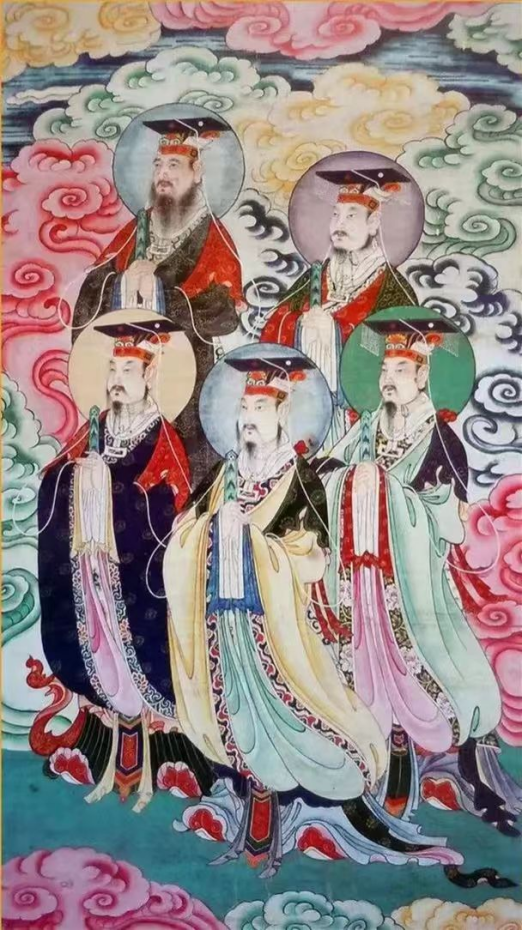
The core belief of the Five Great Emperors and Five Great Mountains stems from the Taoist thought of “harmony between heaven and man”. The Five Great Mountains correspond to the five elements (East Mountain belongs to wood, South Mountain to fire, West Mountain to metal, North Mountain to water, and Central Mountain to earth), and the Five Great Emperors are the spiritual manifestations of the five elements’ energies. Together, they form the “five-directional mountain guardian system” that protects the land of China. In Taoist rituals and ceremonies, the Five Great Emperors and Five Great Mountains are often summoned to descend and pray for national peace, favorable weather, and the elimination of disasters and misfortunes. The folk also closely combine them with daily life, such as praying to the South Mountain for longevity, to the East Mountain for official positions, to the North Mountain for peace, to the West Mountain for wealth, and to the Central Mountain for a stable household. This has formed rich religious customs.From a cultural perspective, the Five Great Emperors and Five Great Mountains are not only symbols of natural mountains and rivers, but also the spiritualbailment of the Chinese nation for “eternal mountains and rivers and peaceful life”. Their images and meanings deeply influence traditional art, architecture, and accessory design fields – such as hand bracelets and pendants with Five Great Mountain themes, which are often endowed with the meanings of “five-directional guardianship and five blessings in the door”.