The Thirteen Classics of Taoism are a collection of thirteen core scriptures of Taoism, covering the philosophical thoughts, practice methods, and moral norms of Taoism. They are the fundamental scriptures for Taoists to study and inherit Taoist culture. The number of chapters in the “Thirteen Classics” varies slightly in different historical periods, and the mainstream version is based on the chapters included in the Qing Dynasty’s “Collection of Taoist Scriptures”. The specific list is as follows:
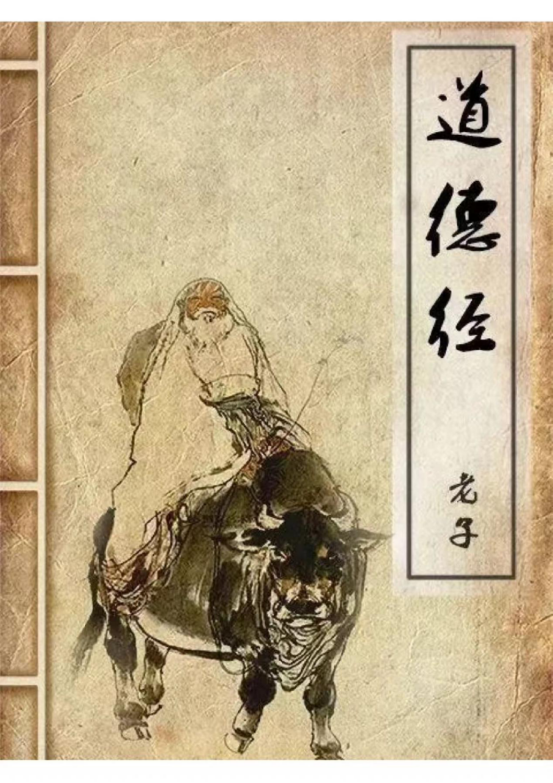
“The Tao Te Ching” (also known as “The Laozi”) is the fundamental scripture of Taoism, believed to have been written by Laozi. The entire book centers around “Tao”, expounding on the philosophical ideas of “Tao giving birth to all things” and “non-action governance”, as well as the principles of self-cultivation and governance of the state. It is the cornerstone of the Taoist philosophical system.
“The Nanhua Ching” (also known as “The Zhuangzi”) was written by Zhuangzi and his followers during the Warring States period. It further elaborates on the “freedom” and “equality” ideas of Taoism, advocating following nature and transcending worldly constraints, having a profound influence on Taoist beliefs in immortals and internal alchemy practice.
“The Chongxu Zhenjing” (also known as “The Liezi”) is said to have been written by Li Duikou. Its content is mostly composed of fables and philosophical stories, promoting the “principle of valuelessness” idea, emphasizing the need to follow the natural nature and pursue spiritual freedom, supplementing the content of the philosophy of Lao and Zhuang.
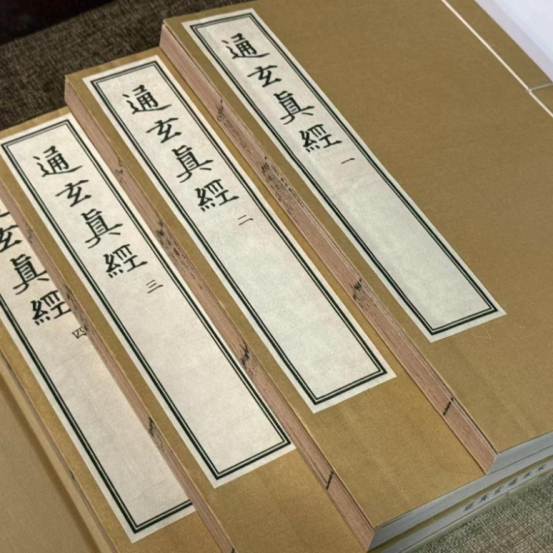
“The Tongxuan Zhenjing” (also known as “The Wenzi”) is said to have been written by Laozi’s disciple Wenzi. It mainly focuses on explaining the “Tao Te Ching” and integrates Confucian and Legalist thoughts, discussing the essence of “Tao” and methods of governing the state and self-cultivation, having a significant influence on Taoism’s political ethical view.
“The Taiping Zhenjing Shengjun Mishi” is a Taoist classic work. The original title is attributed to Qingdao’s Chongtongjun, and the author is unknown. According to Wang Ming’s “Compilation of Taiping Zhenjing”, this book may have been compiled by Taoist闾丘 Fangyuan from the late Tang Dynasty by excerpting “Taiping Zhenjing”, and in the “Yuzhong Transmission”, it is said to record the method of keeping one’s essence intact. The current version is included in the “Correctness Taoist Canon” in the Taiping section.
“The Taiping Zhenjing” is an early Taoist classic from the Eastern Han Dynasty, being the main scripture of the Taiping Dao. Its content covers heaven and earth, yin and yang, the five elements, health preservation, governance, etc., advocating “peaceful times and harmonious governance”, emphasizing accumulating virtue and doing good deeds, playing a crucial role in the development of early Taoism.
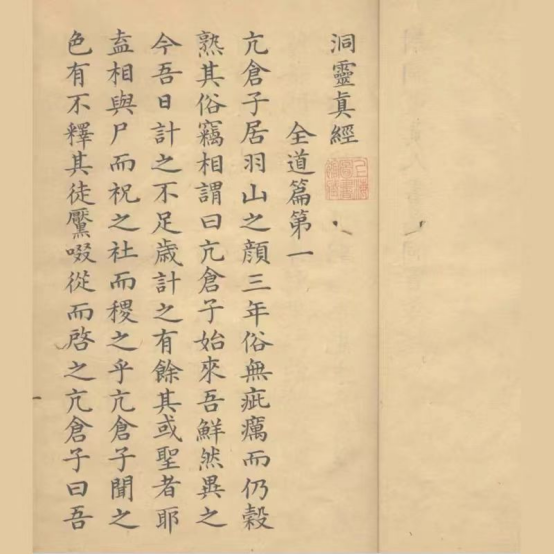
“The Dongling Zhenjing” (also known as “The Kangzangzi”) was written by Wang Shiyuan of the Tang Dynasty. It was compiled by excerpting ancient books and texts, falsely attributed to the warlord Gongduzi. During the Tianbao period of the Tang Dynasty, it was specifically one of the four true scriptures of Taoism.
“The Wenshi Zhenjing” (also known as “The Guan Yinzi”) is attributed to Guan Yinxi of the Spring and Autumn period. It expounds on the “Tao’s” profound and mysterious nature, advocating “attaining the true self through the Tao”, emphasizing achieving the state of unity with the Tao through inner enlightenment, having a profound influence on Taoist cultivation theories.
“The Baopu Zi Neipian” was written by Ge Hong of the Eastern Jin Dynasty, an important scripture of the Taoist elixir school. The entire book systematically discusses beliefs in immortals, elixir preparation, talismans and magic arts, and health preservation and longevity, being an important document for studying Taoism during the Wei, Jin, and Southern and Northern Dynasties.
“The Du Ren Jing” (also known as “The Taishang Dongxuan Lingbao Wumian Shangpin Miaojing”) is the core scripture of the Lingbao school of Taoism. It is said to have been spoken by the First Heavenly Emperor. Its content aims at “unlimited salvation”, promoting the great law of the Lingbao, emphasizing the merits and virtues of rituals and ceremonies, and is an important scripture for Taoist rituals.
“The Yuangong Zhenjing” (also known as “The Gao Shang Yuangong Benxing Ji Zhenjing”) is a popular scripture after the Song Dynasty, centered around the miracles and teachings of Yuangong the Great Emperor. It promotes loyalty to the monarch and filial piety, emphasizes the merits and virtues of rituals and ceremonies, and also contains the idea of internal alchemy cultivation. It is an important scripture for Taoist beliefs in immortals.
“The Qingjing Zhenjing” (also known as “The Taishang Laojun Shuo Changqingjing”) is an important scripture of the Quanzhen school of Taoism. It is a short scripture with core thoughts of “clearing the mind and eliminating desires”, advocating achieving the state of “constant clarity” through “constant clarity”, and is a must-read scripture for Taoists to recite daily.
“The Xin Yin Zhenjing” (also known as “The Taishang Laojun Neidian Zhenjing”) is the full name of “The Taishang Laojun Neidian Yuwen Zhenjing”. It is a scripture for internal alchemy cultivation of Taoism, short in length, concise in expression, and elaborates on the core secrets of internal alchemy cultivation, emphasizing the cultivation path of “transforming essence into qi, transforming qi into spirit, and returning spirit to emptiness”.