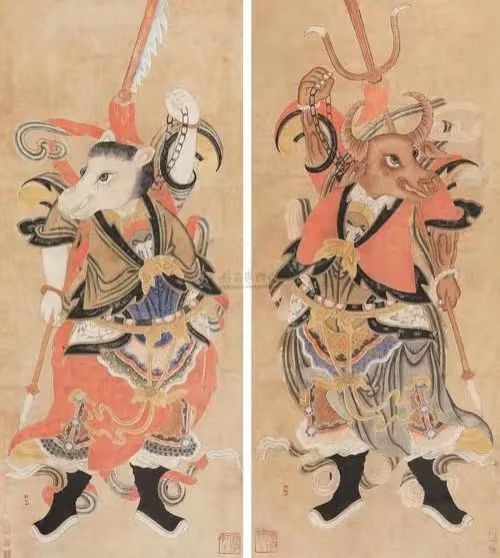
The “Thirty-Two Heavenly Emperors” are the core rulers of the supreme cosmic space-time structure elaborated in The Supreme Numinous Treasure Scripture of Limitless Salvation for All Beings (abbreviated as Scripture of Salvation), a classic text of the Lingbao Sect of Taoism. Unlike ordinary immortals, they are the sovereign rulers of the Thirty-Two Celestial Realms, embodying and manifesting the “Dao” across different dimensional realms of space and time, and together they form a vast, orderly, and sacred system of cosmic governance.
I. The Blueprint of the Cosmos: The Structure of the Thirty-Two Celestial Realms
The “Thirty-Two Celestial Realms” constitute a vertical cosmic model, divided from the lowest to the highest into the Three Realms (encompassing Twenty-Eight Celestial Realms) and the Four Humanist Celestial Realms (also known as the Four Brahma Realms), totaling thirty-two tiers of overlapping heavens. The higher the realm, the closer it is to the primordial source of the Dao.
Six Desire Realms: The lowest tier, where all beings still possess physical forms, desires, need sustenance, and are bound by sensory attachments, yet enjoy extremely long lifespans. Examples include the Heavenly Realm of Supreme Imperial Yellow Tranquility and the Heavenly Realm of Supreme Bright Jade Perfection.
Eighteen Form Realms: The middle tier, where beings retain physical forms but are free from carnal desires, abiding in the bliss of meditation. This realm includes the Heavenly Realm of Void Transcendence and Balance and the Heavenly Realm of Supreme Polarity and Misty Obscuration.
Four Formless Realms: The higher tier, where beings transcend all physical forms and appearances, existing solely as pure spiritual consciousness. Examples are the Heavenly Realm of Luminous Court and Ethereal Transcendence and the Heavenly Realm of Profound Unity and Mystic Caverns.
Four Humanist Celestial Realms (Four Brahma Realms): The four supreme realms situated above the Three Realms and below the Three Pure Ones. Transcending the cycle of birth and death, these realms are the ultimate pure lands for Taoist cultivation, inhabited exclusively by sages and true immortals. They are namely: the Heavenly Realm of Eternal Harmony, the Heavenly Realm of Jade Prosperity, the Heavenly Realm of Brahma Purity, and the Heavenly Realm of Jia Yi.
The Thirty-Two Heavenly Emperors serve as the supreme ruler of each of these celestial tiers. Their titles are typically derived from the names of the realms they govern, such as the “Heavenly Emperor of Supreme Imperial Yellow Tranquility” and the “Heavenly Emperor of Supreme Bright Jade Perfection”.
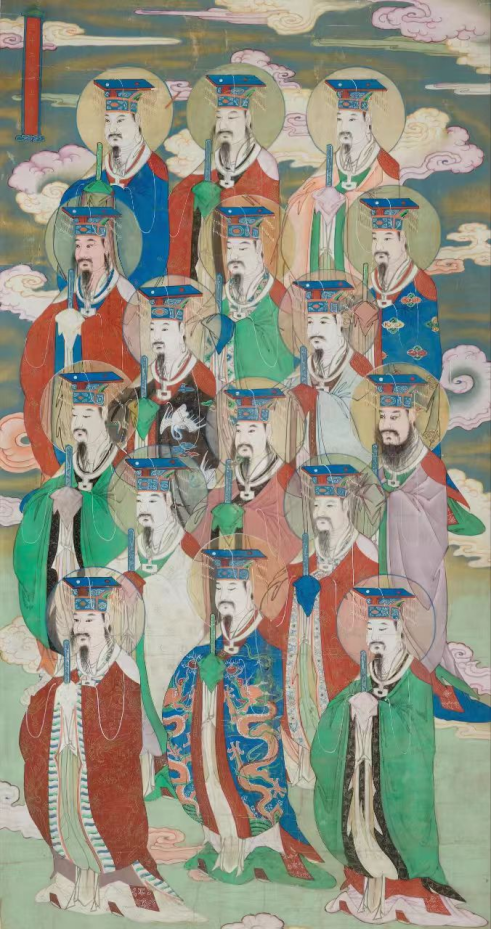
II. The Divine Nature and Functions of the Thirty-Two Heavenly Emperors
Fractals of the Dao, Incarnations of the Heavens: Each Heavenly Emperor is not an independent anthropomorphic deity, but rather the condensation and manifestation of the “Dao Qi” (the life force of the Dao) within their respective celestial realm. They embody the very laws of their realm, upholding its operation and cosmic order.
Teachers of Enlightenment and Salvation: In the Scripture of Salvation, the Thirty-Two Heavenly Emperors are revered as “Teaching Lords of the Scripture”. From their celestial palaces, they expound the Scripture of Salvation and other supreme Taoist teachings to the inhabitants of their realms and the enlightened practitioners of the lower worlds, guiding all beings to transcend the cycle of samsara and escape the Three Realms.
Overseers and Recorders of Karmic Merit: Each Heavenly Emperor also keeps meticulous records of the merits and transgressions of all beings within their jurisdiction (including the subordinate worlds). They act as high-ranking “archivists” and “inspectors” in the cosmic system of life management.
Supreme Deities for Ritual Communication: During the highest-ranking Taoist rituals such as the Yellow Register Grand Retreat and the Celestial Net Grand Sacrifice, high-ranking Taoist priests can employ esoteric methods—including burning talismans, reciting scriptures, and practicing visualization—to “dispatch memorials to the heavens”, delivering their petitions directly to the Thirty-Two Heavenly Emperors and even the Three Pure Ones, imploring their compassionate salvation and the dispelling of calamities and misfortunes.
III. The Exalted Status in the Taoist Pantheon
Ranking Below the Three Pure Ones and Above the Jade Emperor: Within the framework of the “Thirty-Two Celestial Realms”, the Jade Emperor is generally regarded as residing in either the “Heavenly Realm of the Jade Emperor of Vairocana Diamond Firmament” or the “Heavenly Realm of the Jade Emperor of Vairocana Golden Firmament”—one of the highest realms within the Three Realms—yet his abode still falls beneath the Four Humanist Celestial Realms. As the Thirty-Two Heavenly Emperors govern the entire cosmos, both within and beyond the Three Realms (including the realm where the Jade Emperor resides), their divine rank and jurisdiction are theoretically superior to that of the Jade Emperor. They serve as the direct assistants to the “Great Lords of the Dao” or the Three Pure Ones, acting as the pillars of cosmic order.
Relationship with the Four Sovereigns: The Four Sovereigns are the administrative aides to the Jade Emperor, primarily responsible for overseeing specific affairs (such as celestial bodies, lifespans, warfare, and the earth). In contrast, the Thirty-Two Heavenly Emperors are the rulers of the cosmic structure itself, functioning as administrators of higher-dimensional space and time. These two groups operate on entirely distinct levels of cosmic governance.
IV. Religious Significance and Practical Implications
The Ultimate Embodiment of Cosmic Worldview: The belief in the Thirty-Two Heavenly Emperors represents Taoism’s most sophisticated and elaborate philosophical depiction of the cosmic structure. It conceptualizes the universe as a living organism—hierarchical, ordered, and governed by divine sovereigns.
The Ultimate Goal of Cultivation: The ultimate objective of Taoist monastic practice is to transcend the Twenty-Eight Celestial Realms of the Three Realms, attain enlightenment in the Four Humanist Celestial Realms, and ultimately return to the Great Luo Heaven (the sacred abode of the Three Pure Ones). The realms ruled by the Thirty-Two Heavenly Emperors thus serve as “advanced waystations” and the “ultimate pure lands” along the path of spiritual cultivation.
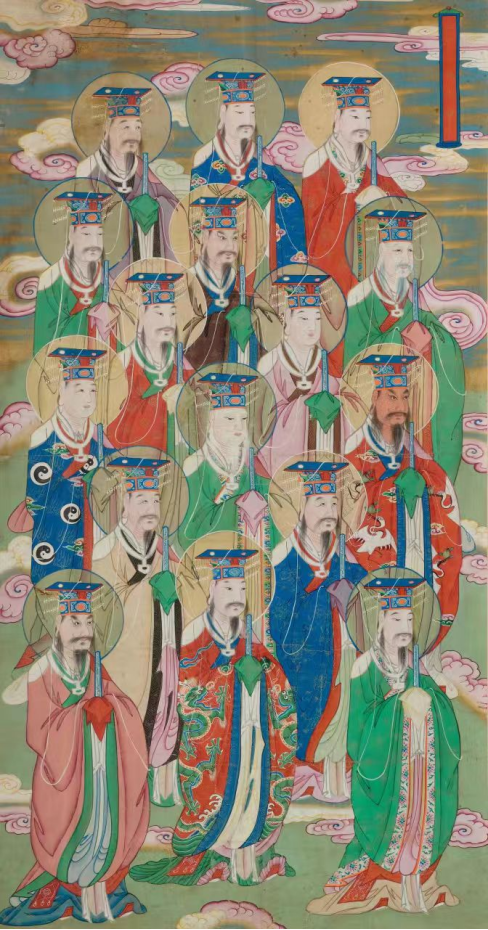
The Core Sacredness of the Classic Text: The Scripture of Salvation is revered as the “source of all Taoist teachings” precisely because it details how the Thirty-Two Heavenly Emperors expound the scripture across different celestial realms, endowing it with a sacred mandate that permeates all Thirty-Two Celestial Realms and originates from the very source of the cosmos. Reciting this scripture is believed to enable direct communication with these thirty-two supreme cosmic rulers, receiving their blessings and protection.
The Thirty-Two Heavenly Emperors stand as the pinnacle of Taoism’s endeavor to fully theologize and systematize its philosophical cosmology. Unlike secular deities invoked for wishes of wealth or offspring, they are supreme beings—incarnations of cosmic laws—that constitute the sacred order of the universe. To understand them is to comprehend the grand, hierarchically structured, and divinely ordained cosmos as perceived by Taoism. They represent the ultimate authority over space and time itself, transcending the scope of mortal emperors and even the imagination of ordinary celestial deities. Faith in them is not intended to satisfy worldly desires, but to seek the ultimate liberation of life and the return to the cosmic source—embodying the most profound and transcendent essence of Taoism.