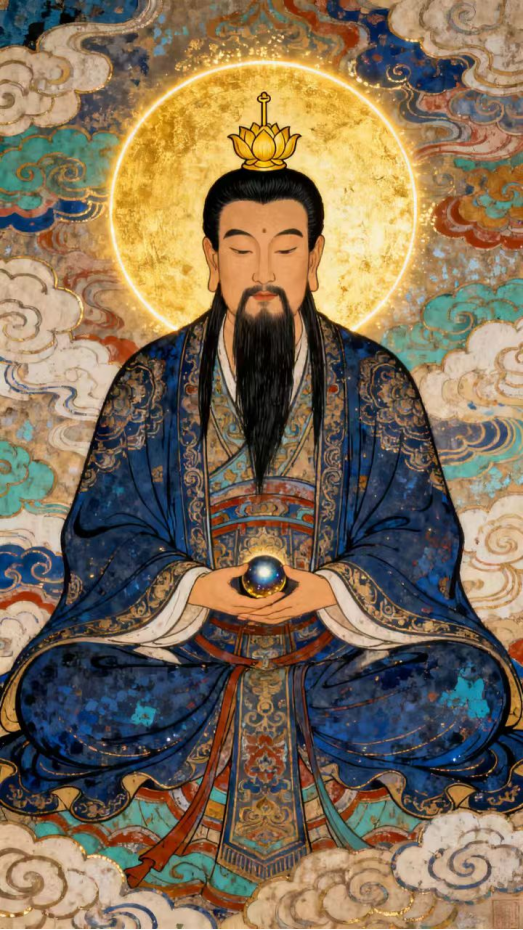
The “Three Pure Ones” in Taoism refer to the three highest-ranking deities in Taoism, collectively known as “Xu Wú Zì Rén Dà Luó Sān Qīng Sān Jìng Sān Bǎo Tiān Zūn”. They are respectively the Jade Clear Supreme Deity, the Upper Clear Spirit Treasure Deity, and the Great Clear Moral Deity. They reside in the Jade Clear Holy Realm, the Upper Clear True Realm, and the Great Clear Celestial Realm respectively, and are collectively referred to as the “Three Pure Ones Realm”.
I. Origin and Development
Early Taoism and the Supreme Elder: When Taoism was founded by Zhang Daoling in the late Eastern Han Dynasty, Laozi (the Supreme Elder) was regarded as the highest deity. As the founder of the Taoist school, Laozi’s thoughts were absorbed and deified by Taoism.
The formation of the “Three Pure Ones” concept: The first appearance of the “Three Pure Ones” prototype was in the “True Spirit Position Diagram” compiled by Tao Hongjing in the Southern Dynasties. However, the order of the “Three Pure Ones” was not yet fully determined at that time. It was not until the Tang Dynasty that the “Three Pure Ones” system was finally established and became the highest deities of Taoism.
II. Specific Introduction of the Three Pure Ones
1. Jade Clear Supreme Deity, also known as the Yuan Shi Tianzang, is one of the “Three Pure Ones” deities in Taoism. It holds the highest position among the “Three Pure Ones”. In the “Zhen Zhong Shu” (also known as “Yuan Shi Shang Zhen Zhong Xi Ji”) by Ge Hong of the Eastern Jin Dynasty, the concept of “Yuan Shi Tianzang” was first proposed, referring to the primordial deity before the universe was divided, residing in the Jade Clear Realm, and being the ancestor of all deities. This was the prototype of the Jade Clear Supreme Deity. The “Lü Shi Xian Tong Jian” called it “the ancestor presiding over the celestial realm”, symbolizing the origin of the universe and the chaotic beginning. He was one of the earliest deities to appear and was regarded as the embodiment of “Tao”.
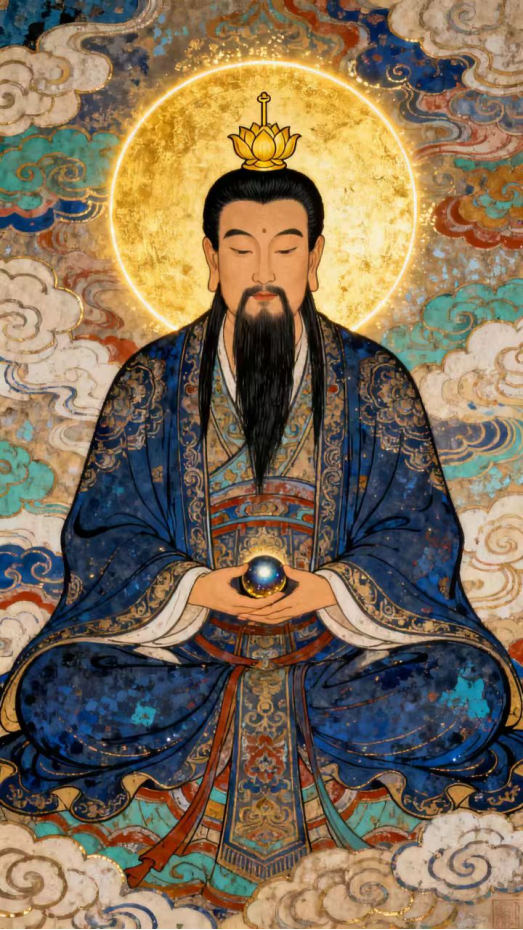
2. The Celestial Lord of Lingbao: During the Northern and Southern Dynasties period, the Lingbao School of Buddhism emerged. In the scriptures, the image of “Tai Shang Daishen” (the predecessor of the Lingbao Heavenly Lord) was created. It was stated that he was born from the primordial qi of Yuanzheng Tianshen and resided in the upper realm, governing the Lingbao Great Law and responsible for educating all beings. Symbolizing the period of the initial formation of chaos and the clear distinction of yin and yang, he controlled the operation of the universe and was one of the important leaders of Taoism.
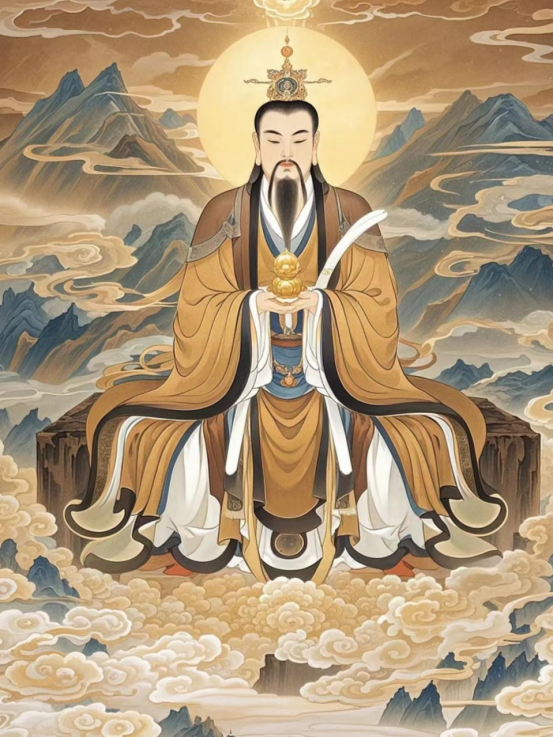
3. Taiqing Daoist Celestial Lord (Taoist Supreme Lord): This figure symbolizes the period when the universe was formed and all things came into existence. He is the divine manifestation of Laozi, representing the practice of the Tao and its role in educating all beings. He transforms the esoteric principles into worldly laws, and represents the process of “two births, three births, and then all things come into being”.
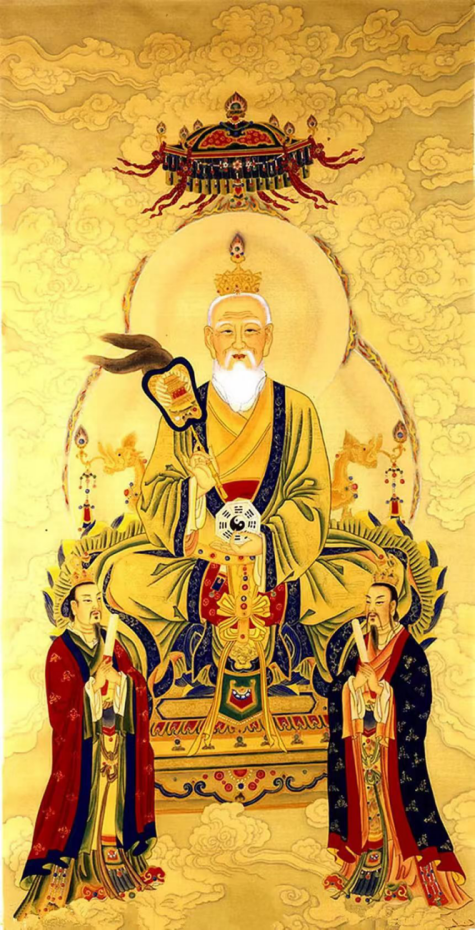
During the Tang and Song dynasties, Taoist priests sought to explain the unity of the Three Pure Ones by proposing the theological viewpoint of “One Qi Giving Rise to the Three Pure Ones”. They believed that the Three Pure Ones were essentially the three aspects of the “Dao” – Yuanzheng Tianshuang symbolized the essence of the “Dao”, Lingbao Tianshuang symbolized the evolution of the “Dao”, and Zhezhe Tianshuang symbolized the practice of the “Dao”. These three were of the same origin but had different names, perfectly aligning with the philosophical logic of Taoism that “The Dao gives birth to all things”. During this period, Taoist temples commonly established “Three Pure Ones Hall”, with Yuanzheng Tianshuang placed in the center, Lingbao Tianshuang on the left, and Zhezhe Tianshuang on the right for worship. This regulation has continued to this day.