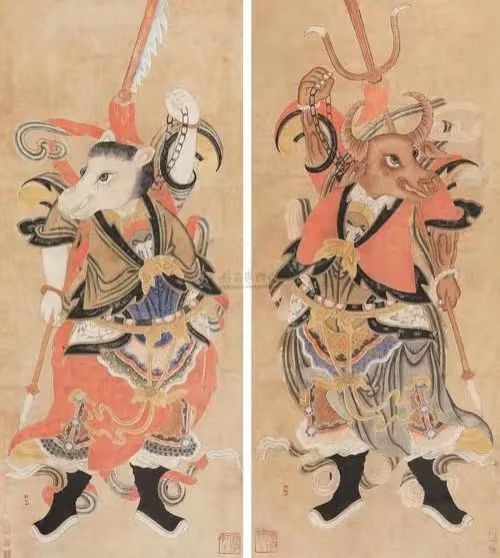
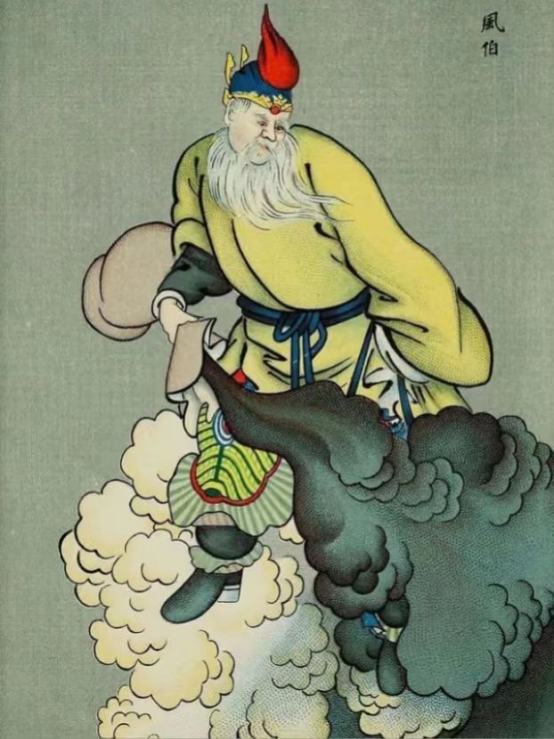
Fengbo, also known as Fengshi, Feilian, or Ji Bo, was a wind god in ancient Chinese mythology. He was responsible for conveying the information of the eight winds and regulating the climate of the five seasons. In the Taoist pantheon, he was referred to as “Fengbo Fangtianjun” and shared authority with Leigong, Yushi, and Dengmu in governing the weather. He was an important deity in the Thunder Department.
Duties and Abilities
Supervising the Eight Winds
“Receive the information of the eight winds and communicate the climate of the five seasons.” He was responsible for controlling the movement of the winds in the east, south, west, north, southeast, southwest, northwest, and northeast, regulating the climate changes throughout the four seasons.
Guardian of the Order of Heaven and Earth
When the Heavenly Emperor made his tours, Fengbo served as the vanguard, responsible for clearing obstacles on the road (Fengbo swept the ground, Leigong opened the way, and Yushi sprinkled water).
Harmonizing Yin and Yang and promoting the growth of all things (“Beat with thunder and lightning, moisten with rain and wind, nurturing all things”)
In Taoist thunder magic, Fengbo often cooperated with Yushi and provided wind force support for the magicians’ rituals.
Controlling Wind Disasters
He could restrain violent winds, protect the peace of the human world, especially being regarded as the controller of wind disasters in folk beliefs, capable of stopping hurricanes, typhoons, and other natural disasters.
Image Characteristics
The image of Fengbo evolved with the times and presented diversity:
Ancient times image:
Lion-like body with leopard patterns, a bird-like head with a snake tail, with strange horns growing on his head, resembling a monster (recorded in ancient books such as “Shan Hai Jing”)
A divine beast with a bird-like body and a lion-like head or a bird-like head and a lion-like body, capable of flying with the wind (annotated in “Chu Ci”)
Taoist classic image:
An old man with white hair, holding a wind wheel in his left hand and a fan (or bamboo shoot) in his right hand, with a gentle and dignified expression, known as “Fengbo Fangtianjun”
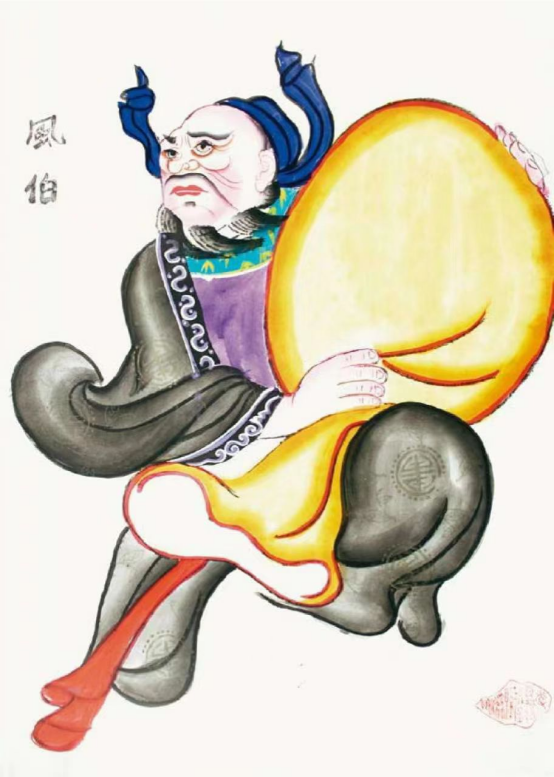
Sometimes holding a wind bag, symbolizing the power of “rousing the wind in the sky and nurturing all things” (the wind bag of Hanzhi Xian in “Feng Sheng Yan Jing” originated from this)
Cultural Significance
Guardian of the Agricultural Civilization
The belief in Fengbo reflects the ancestors’ reverence and reliance on natural forces, especially being crucial for agricultural production. In “Zhou Li”, Fengshi and Yushi were listed as the objects of state sacrifices: “Offer incense to the officials of the central hall, the god of fate, Fengshi, and Yushi”, showing their important status.
Folk Belief and Customs
In Taoist temples, Fengbo was often worshipped together with Yushi, Leigong, and Dengmu in the Thunder Grandfather Hall or the Five Winds and Ten Rainy Days Hall. When encountering wind disasters in folk beliefs, Fengbo was often worshipped to pray for the cessation of the disaster and the protection of bountiful harvests of grains.