
Taoism and Emotional Attachment: How to Stop Being Controlled by External Things
Introduction
Every day, countless things have the power to disturb our emotions.
A careless remark from a stranger, criticism from a colleague, an unanswered message, a failed opportunity, or even someone else’s success can instantly change the way we feel. Modern life often encourages us to believe that peace depends on controlling these external circumstances. If people would simply understand us, appreciate us, or treat us differently, then perhaps we could finally feel at ease.
Taoism offers a completely different perspective.
Instead of asking,
“Why did this happen to me?”,
it asks a far more important question:
“Why did this move my heart?”
According to Taoist philosophy, external events are often only the surface of our suffering. What truly creates emotional pain is our attachment to the ideas, expectations, identities, and desires that we hold within ourselves. The stronger the attachment, the easier our emotions are shaken by the outside world.
This article explores how Taoism understands emotional attachment, why awareness is the first step toward inner freedom, and how learning to observe our own minds can gradually lead us from emotional reaction to lasting peace.
What Emotional Reactions May Reveal About Attachment
What Moves Your Heart Also Reveals Your Attachment

One of the most profound insights in Taoist philosophy is this:
Whatever has the power to disturb your emotions is often the very thing to which you have become attached.
This does not mean that emotions are wrong, nor does Taoism ask us to suppress them. Joy, sadness, fear, anger, and disappointment are all natural parts of being human. The question is not whether an emotion appears, but why it appears with such intensity.
Imagine two people hearing exactly the same criticism. One quickly lets it go, while the other thinks about it for days. The event is identical, yet the emotional response is completely different.
The difference lies not in the words that were spoken, but in what those words touched within each person.
Perhaps it was a desire to be accepted. Perhaps it was pride, fear of failure, or the need to always be seen as capable. The stronger the attachment, the more easily the mind is shaken.
From a Taoist perspective, external events rarely create suffering by themselves. Instead, they reveal where our minds have become attached. In this sense, every emotional reaction becomes an invitation to know ourselves more deeply.
Rather than immediately blaming the outside world, Taoism encourages us to pause and ask:
“What within me has been touched?”
That single question marks the beginning of genuine self-understanding. Instead of seeing emotions as enemies, we begin to recognize them as mirrors—quietly reflecting the attachments we have yet to notice.
Inner Observation
Looking Beyond the Emotion to Its Root

Awareness allows us to notice our emotions.
Inner observation allows us to understand them.
Many people stop at the first step. They recognize that they are angry, anxious, jealous, or disappointed, yet they never ask why these emotions appeared in the first place. Taoism invites us to continue looking inward.
Every emotion has a story beneath it.
Anger may be protecting wounded pride.
Anxiety may be hiding a fear of uncertainty.
Jealousy may reveal a longing to feel worthy.
The emotion itself is rarely the problem. It is often only the surface expression of something much deeper.
Through inner observation, we gradually stop fighting our emotions and begin listening to what they are trying to reveal.
This process requires honesty. It asks us to look beyond excuses and external circumstances, and instead examine the beliefs we continue to hold about ourselves and the world.
Sometimes we discover that what hurts us is not another person’s words, but our own desire to always be accepted.
Sometimes we realize that what we fear is not failure itself, but the possibility that failure might change how we see ourselves.
The deeper we observe, the more clearly we begin to recognize the attachments hidden beneath our emotional reactions.
In Taoism, inner observation is not about criticizing ourselves. It is about understanding ourselves with clarity and compassion. Only when we see the true source of our suffering can we begin to free ourselves from it.
Seeing Beyond Attachment
When Understanding Dissolves Attachment

As inner observation deepens, something remarkable begins to happen.
We no longer see only the emotion—we begin to see the attachment beneath it.
This is the beginning of what Taoism describes as seeing beyond appearances. It does not mean rejecting the world or pretending that emotions no longer exist. Instead, it means recognizing that much of our suffering comes not from reality itself, but from the stories, expectations, and identities we have unconsciously attached to it.
A person may believe, “I must always succeed.” Another may think, “Everyone has to approve of me.” These beliefs often feel like unquestionable truths, yet through careful observation we begin to realize that they are simply ideas we have carried for years.
The moment we see them clearly, they begin to lose their power.
This is not because the outside world has changed, but because our relationship with it has changed.
The attachment gradually dissolves.
The mind becomes lighter.
You begin to realize that other people’s opinions are simply opinions. No sentence, no criticism, and no careless remark can ever define the fullness of who you are. A complete human life can never be reduced to someone else’s passing judgment.
Something else begins to change as well.
When thoughts arise—especially the repetitive patterns that often lead to overthinking—or life presents unexpected situations, you no longer feel compelled to immediately label them as good or bad. Instead of constantly judging every experience, you simply allow yourself to live it. Each moment comes and goes like water flowing through a river.
With time, you discover something even more profound.
You are no longer merely watching the water flow.
You have become the water itself.
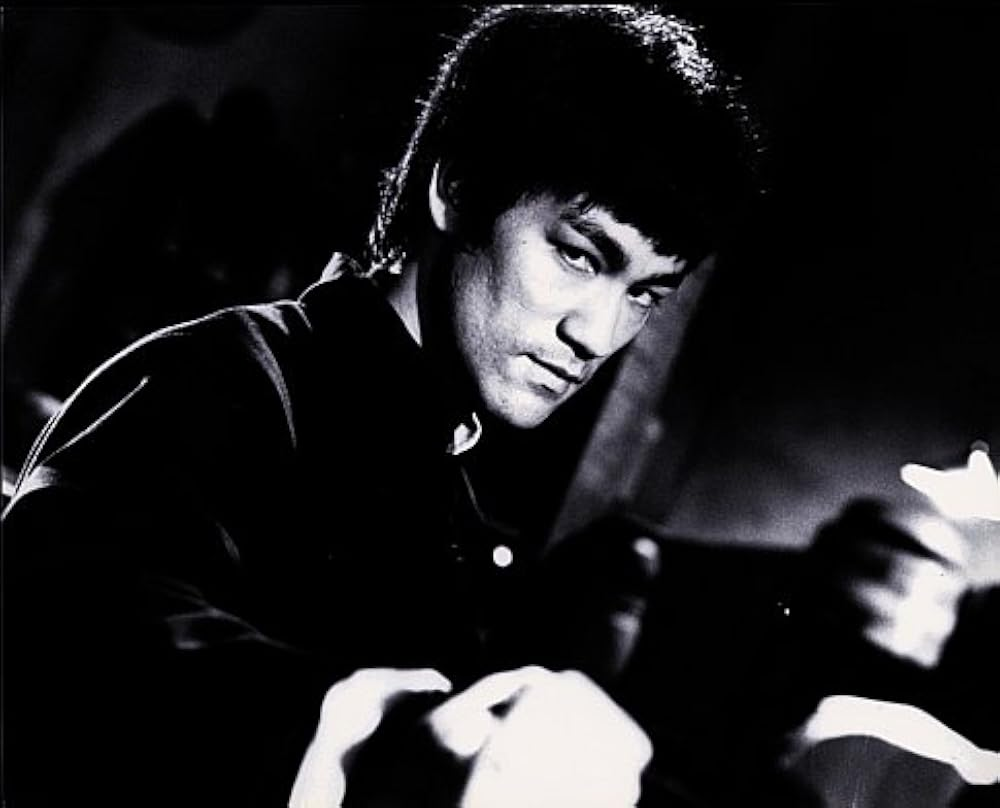
As Bruce Lee famously said,
“Be water, my friend.”
Not because life has become easier, but because you have stopped resisting every current that passes through it.
In Taoism, true freedom is not found by controlling the world. It is found by understanding ourselves so deeply that the world no longer controls us.
This is the beginning of real transformation.
The mind no longer clings to passing appearances or remains trapped by its own attachments. When the heart becomes still, peace is no longer something to search for—it quietly reveals itself.
Final Thoughts
Returning to Yourself
Throughout life, there will always be people who misunderstand you, criticize you, reject you, or fail to see your worth. There will be unexpected setbacks, uncertain futures, and moments when the world feels completely beyond your control.
Taoism does not promise that these experiences will disappear.
It offers something far more valuable.
It teaches us that freedom is not found by changing every circumstance around us, but by understanding the mind that experiences those circumstances.
The more we observe ourselves, the more we begin to recognize our attachments.
The more clearly we recognize our attachments, the less power they have over us.
This same principle — that clarity comes from observing the mind rather than fighting it — runs through much of Taoist wellness practice, from letting go of forced effort to staying present amid daily anxiety. For a broader look at how these ideas connect, see our guide to Taoist Wisdom for a Calmer Mind: How to Stop Forcing, Overthinking, and Living Present.
Eventually, we stop demanding that life conform to our expectations and begin allowing it to unfold according to its own nature.
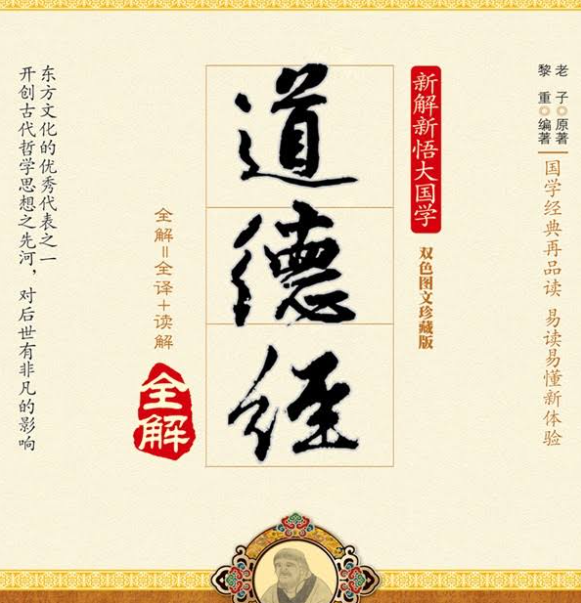
As the Tao Te Ching reminds us:
“Man follows the Earth. Earth follows Heaven. Heaven follows the Tao. The Tao follows what is natural.”
Perhaps peace is not something we need to create.
Perhaps it has always been present beneath the layers of fear, attachment, judgment, and resistance.
When we are no longer trapped by appearances or bound by our own attachments, the mind naturally becomes still.
And when the mind becomes still, peace is already there.
FAQ
Taoism teaches that emotional attachment itself is not the enemy. The real source of suffering arises when we cling too tightly to expectations, identities, or outcomes. By observing these attachments instead of being controlled by them, we gradually cultivate greater inner peace and emotional freedom.
No. Taoism does not teach emotional suppression. Emotions are considered a natural part of human life. Instead of resisting or denying them, Taoist practice encourages awareness, allowing emotions to arise, be understood, and naturally pass without becoming attached to them.
Awareness is the ability to notice your thoughts and emotions as they arise. Inner observation goes a step further by asking why those emotions appeared in the first place. It helps reveal the deeper beliefs and attachments that shape our reactions.
From a Taoist perspective, other people’s words only become painful when they touch an attachment within us—such as the desire for approval, fear of failure, or concern for our identity. By understanding these attachments, we become less dependent on external judgment.
Letting go does not mean giving up responsibility or becoming indifferent. It means releasing unnecessary attachment to outcomes that cannot be fully controlled, while continuing to act sincerely and wisely in the present moment.
Start by pausing whenever strong emotions arise. Instead of reacting immediately, ask yourself: “What within me has been touched?” With consistent self-reflection, you gradually recognize your attachments, understand their origins, and respond to life with greater clarity and peace.
Comments & Reflections (0)