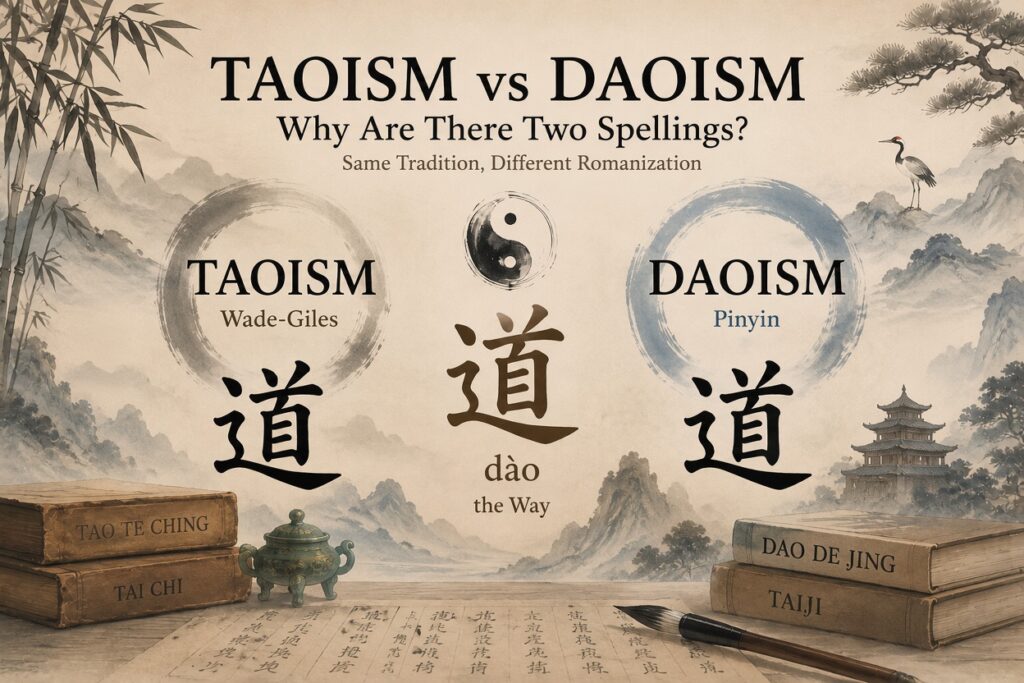
Introduction When people first start reading about Chinese philosophy, they often encounter both “Taoism” and “Daoism” — sometimes in the very same article — and reasonably wonder whether these refer to two different traditions, two different schools of thought, or simply a spelling inconsistency. The confusion is understandable. The explanation, however, has little to do […]
Author Archives: Jackson
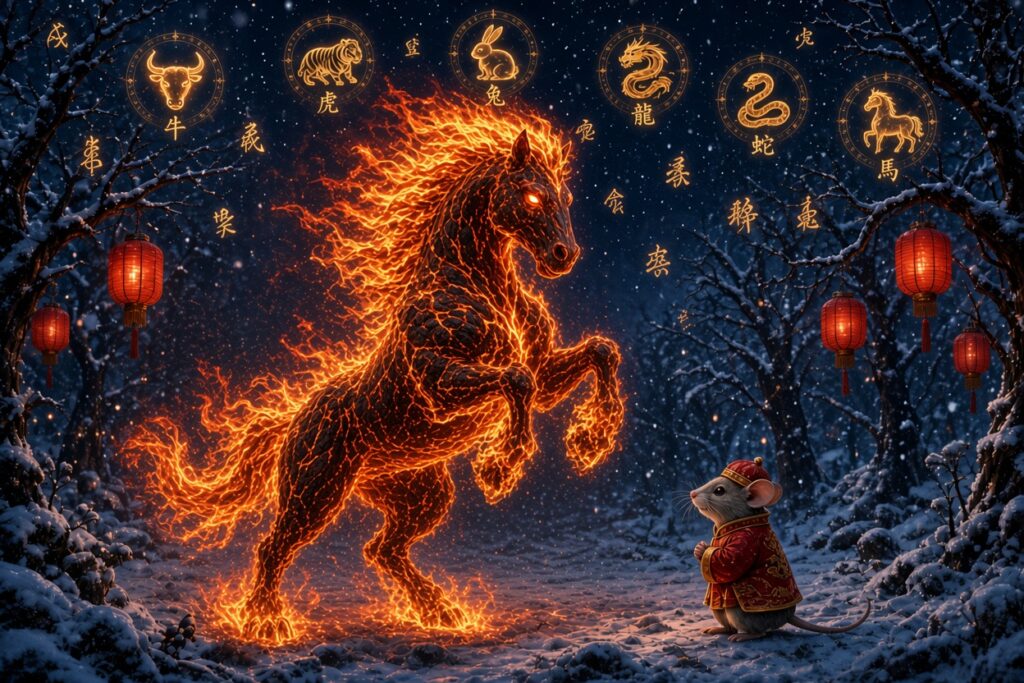
The Horse zodiac sign portrayed in a traditional Chinese ink landscape for the 2026 Fire Horse year. Introduction For people born in the Year of the Horse, 2026 carries a particularly significant meaning. It is not only the Year of the Horse itself, but also a year traditionally associated with both Zhi Tai Sui (值太岁) […]
Introduction For people born in the Year of the Rabbit, 2026 is traditionally associated with Po Tai Sui (破太岁), a relationship often translated as a “break” or “destructive interaction.” Unlike the direct opposition experienced by the Rat or the more subtle harm relationship associated with the Ox, Po is generally described as a less overt […]
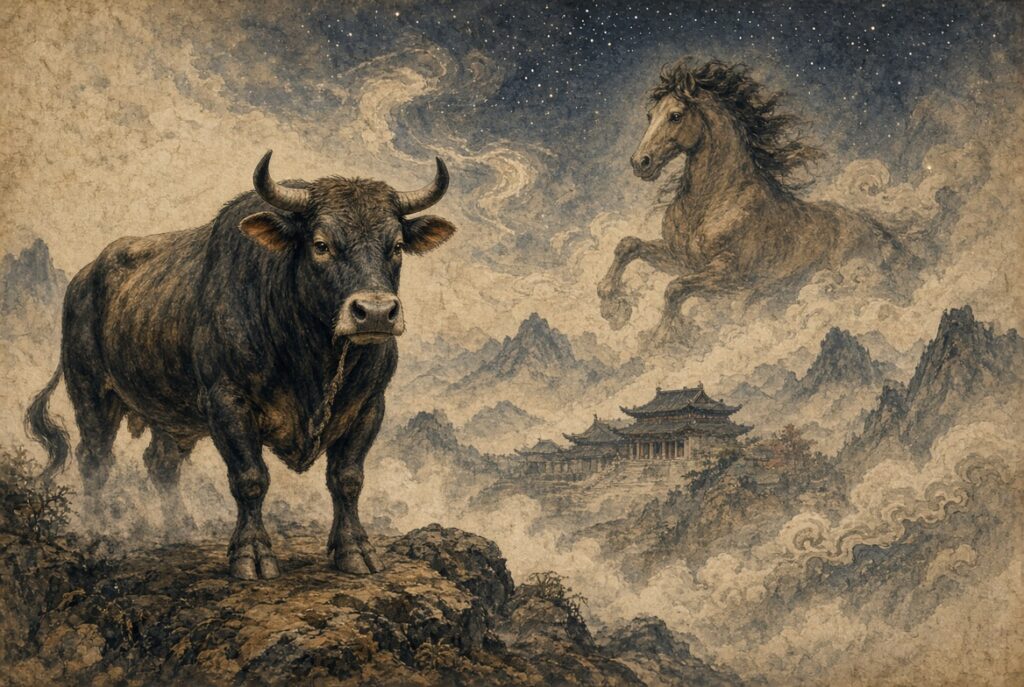
Introduction The Ox horoscope for 2026 is often discussed through the relationship between Chou (丑), the Ox’s Earthly Branch, and Wu (午), the Horse’s branch. The 2026 Chinese lunar year is Bing-Wu (丙午), conventionally called the Fire Horse year. In the traditional branch system, Chou and Wu form one of the Six Harms (Liu Hai, […]
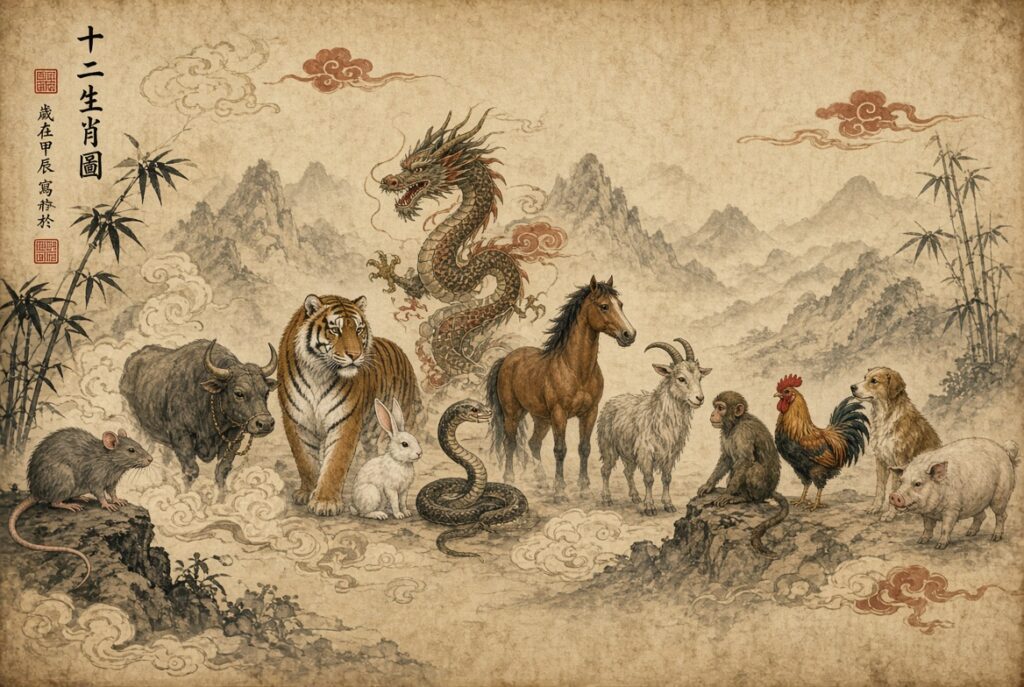
Introduction When people first learn their Chinese zodiac animal, it is often treated as a fun fact — something to mention alongside a Western star sign. But the Chinese zodiac is much more than a personality system. It is part of a traditional framework for understanding time, personality, compatibility, and the recurring cycles of Chinese […]
Introduction When people born in the Year of the Rat first learn that 2026 is the Year of the Horse, they may wonder whether the change in zodiac energy has any particular significance for them. In traditional Chinese astrology, it does. The Rat corresponds to Zi (子), while the Horse corresponds to Wu (午), and […]
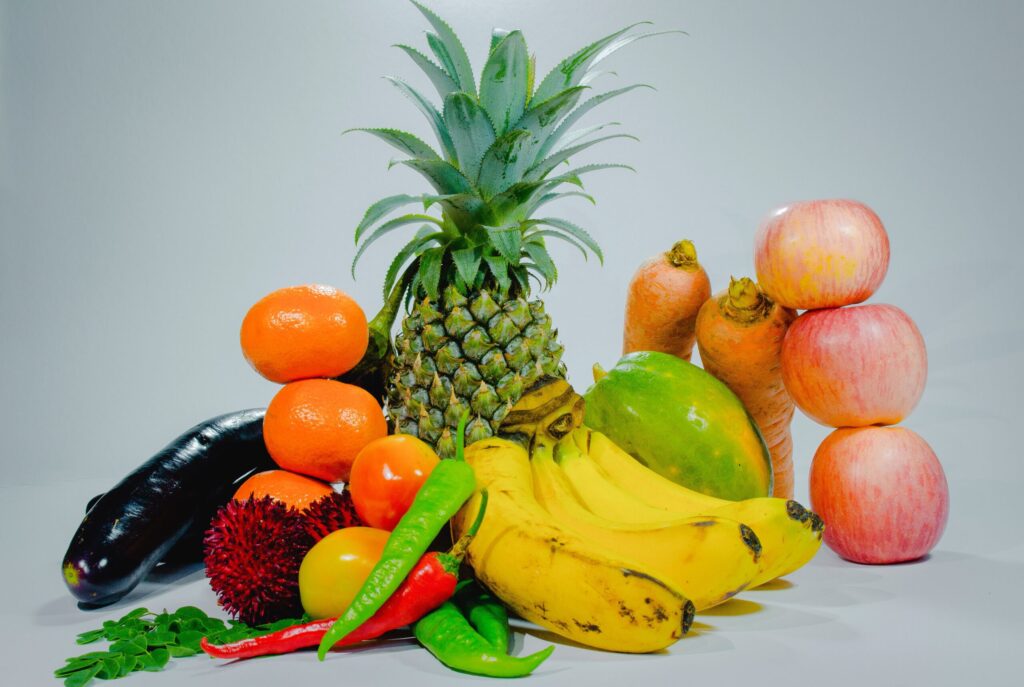
Introduction When people first hear that Taoist tradition connects food to the Five Elements, they often expect a rigid list of foods to eat and foods to avoid. What they usually find instead is something more flexible: a framework for noticing balance, not a strict set of dietary rules. The Taoist approach to diet is […]
Introduction When people first hear that a house number can be considered “lucky” or “unlucky,” it’s easy to dismiss the idea as harmless superstition — a quirky cultural belief with no real-world consequence. What’s less well known is that this belief has been measured, studied, and shown to have a genuine, quantifiable effect on real […]
Introduction When people first try to apply Feng Shui to their home, they often start with symbolism — placing a specific object in a specific corner, hoping for a specific result. What’s frequently skipped is the very first step in compass-based Feng Shui: determining which direction the home faces. However, measuring a house’s direction is […]
Introduction When people first hear about Chinese face reading, they often picture something close to fortune-telling — a practitioner looking at someone’s face and immediately predicting their future. While this is certainly part of how Mian Xiang (面相) has been understood, the tradition is broader and more complex than a simple form of fortune-telling. Mian […]