
Introduction
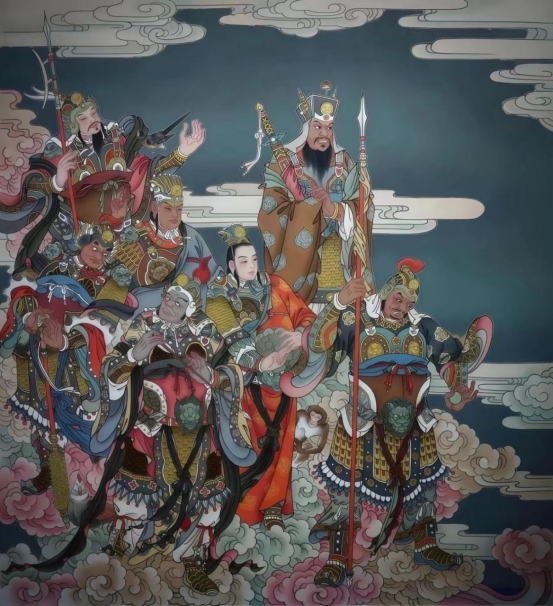
The Twenty-Eight Mansions (Ershi Ba Xiu) form the foundational star system of ancient Chinese astronomy, astrology, mythology, and Taoist cosmology. More than a celestial coordinate system, they became a complete cultural framework connecting timekeeping, divine order, astrology, feng shui, ritual magic, and spiritual belief.
The word “Xiu”宿 means “lodging place,” referring to the celestial regions where the moon appears to rest during its roughly twenty-eight-day journey across the night sky. Ancient Chinese astronomers divided the heavens into twenty-eight star regions, creating one of the oldest and most influential astronomical systems in East Asia.
The Structure of the Twenty-Eight Mansions
The Twenty-Eight Mansions are organized through the ancient system known as the “Four Symbols and Seven Mansions.”
The sky is divided into four major celestial directions:
- East
- West
- South
- North
Each direction is represented by one sacred guardian beast and contains seven lunar mansions, creating a total of twenty-eight celestial divisions.
These four directional guardians became the famous cosmic protectors known in Taoist tradition as Four Symbols in Taoism.
Each mansion contains its own group of stars, symbolic meaning, mythological stories, and astrological functions.
The Four Symbols and Their Seven Mansions
Azure Dragon of the East
The eastern celestial region represents spring, vitality, and the Wood element. Its seven mansions symbolize growth, renewal, and rising life force.
The Azure Dragon later became one of the most important protective deities in Taoist cosmology and feng shui traditions.
White Tiger of the West
The western region governs autumn, military authority, justice, and the Metal element. The White Tiger symbolizes power, discipline, and protective force against evil influences.
Vermilion Bird of the South
The southern heavens correspond to summer, fire, light, and spiritual transformation. The Vermilion Bird represents brilliance, civilization, and celestial vitality.
This southern star region also connects symbolically with longevity traditions found in Six Lords of the Southern Dipper.
Black Tortoise of the North
The northern celestial region represents winter, wisdom, endurance, and the Water element. The Black Tortoise, often depicted with a serpent, symbolizes longevity, spiritual depth, and cosmic stability.
Astronomical and Calendar Functions
The Twenty-Eight Mansions served as one of ancient China’s most important astronomical timing systems.
By observing which mansion appeared in the southern sky at dusk, astronomers could determine:
- Seasonal transitions
- Agricultural cycles
- Solar terms
- Celestial movements
This system became deeply integrated with the Twenty-Four Solar Terms and traditional Chinese agricultural life.
Ancient sayings such as “When the Dipper points east, spring arrives under heaven” reflect the connection between celestial observation and earthly timekeeping.
The Twenty-Eight Mansions in Taoism
In Taoist belief, every mansion is governed by its own celestial official or Star Lord. These deities oversee various aspects of cosmic and earthly order, including:
- Weather
- Longevity
- Wealth
- Wind and rain
- Protection rituals
- Spiritual judgment
Taoist priests invoke the power of the Twenty-Eight Mansions during ceremonies involving talismans, star rituals, healing rites, and exorcism practices.
One important ritual practice is the “Twenty-Eight Mansion Step,” where priests walk symbolic celestial patterns corresponding to the mansion directions.
The mansion system also influenced Taoist celestial protection traditions connected with Three Terraces Lords, which govern personal destiny and protective blessings.
Astrology, Divination, and Feng Shui
The Twenty-Eight Mansions became a central component of Chinese astrology and metaphysical systems.
They are widely used in:
- Feng Shui
- Bazi (Four Pillars of Destiny)
- Date selection
- Ziwei Dou Shu
- Omen interpretation
- Directional fortune analysis
The movements of planets and stars through specific mansions were believed to indicate fortune, disasters, political change, and shifts in cosmic balance.
Certain celestial alignments were viewed as highly auspicious, while others warned of danger or instability.
Literary and Cultural Influence
The Twenty-Eight Mansions appear throughout Chinese literature, mythology, architecture, and visual art.
Examples include:
- Ancient poetry
- Taoist temple murals
- Imperial architecture
- Bronze artifacts
- Mythological novels such as Journey to the West
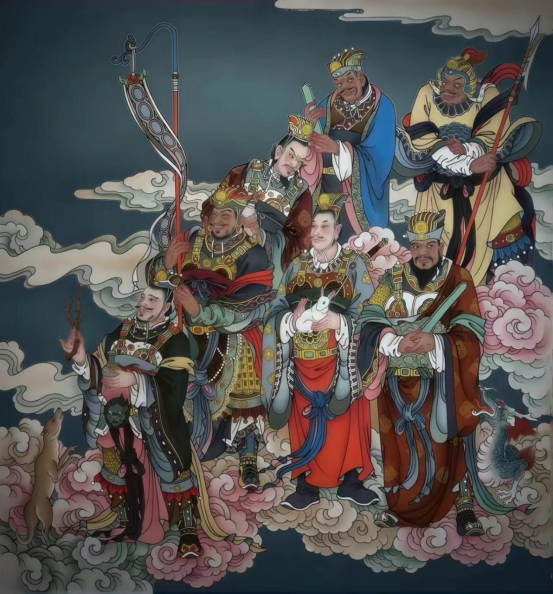
In Taoist mythology, the Twenty-Eight Mansion Star Lords often appear as celestial generals or protective officials descending from heaven to assist divine missions.
Their imagery symbolizes cosmic order, heavenly authority, and the interconnectedness of heaven and humanity.
Comparison with the Western Zodiac
Although the Twenty-Eight Mansions and the Western Zodiac both track celestial movement near the ecliptic, their systems differ significantly.
Twenty-Eight Mansions
- Based on the moon’s movement
- Uneven celestial divisions
- Focus on lunar observation and star backgrounds
Western Zodiac
- Based on the sun’s yearly cycle
- Twelve equal divisions
- Focus on solar movement along the ecliptic
Both systems represent different cultural interpretations of the same night sky.
Cultural Significance of the Twenty-Eight Mansions
The Twenty-Eight Mansions are far more than an astronomical model. They represent a complete sacred map of the universe within traditional Chinese thought.
This system united:
- Astronomy
- Religion
- Astrology
- Politics
- Timekeeping
- Taoist ritual
- Philosophy
For ancient Chinese civilization, the heavens were not distant or empty. The stars formed an active celestial government constantly interacting with the human world.
The Twenty-Eight Mansions remain one of the clearest expressions of the traditional belief in harmony between heaven and humanity.
Related Posts
Four Symbols in Taoism: Azure Dragon, White Tiger, Vermilion Bird and Black Tortoise
The Four Symbols, also known as the Four Divine Spirits or Four Celestial Spirits, are [...]
Dec
The Seventy-Two Earth Fiends in Taoist Mythology and Magic Arts
The Seventy-Two Earth Fiends are one of the most mysterious and multifaceted groups of deities [...]
Dec
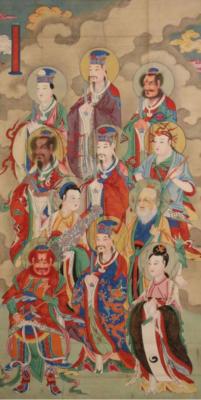
Eleven Luminaries True Lords in Taoism
Introduction to the Eleven Luminaries True Lords The Eleven Luminaries True Lords are important celestial [...]
Dec