
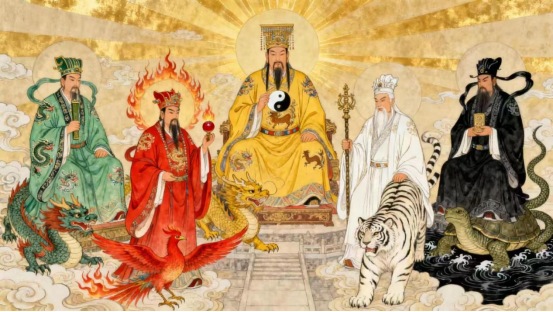
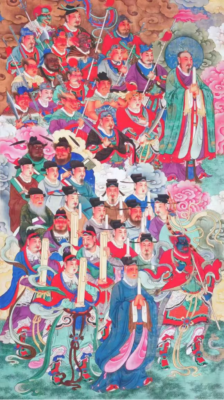
The Five Elders of the Five Directions are among the highest celestial deities in the Taoist pantheon. They govern the five cosmic directions—East, South, Center, West, and North—and embody the origin and transformation of the Five Elements. Their belief system combines ancient Chinese cosmology, yin-yang philosophy, celestial worship, and Taoist theology, forming one of the foundational structures of traditional Chinese spiritual thought.
In Taoism, the Five Elders regulate the circulation of qi throughout heaven and earth, maintain the balance of the seasons, and harmonize the relationship between humanity and the cosmos. Their divine system also became an important theoretical foundation for Traditional Chinese Medicine, feng shui, ritual practice, and internal alchemy.
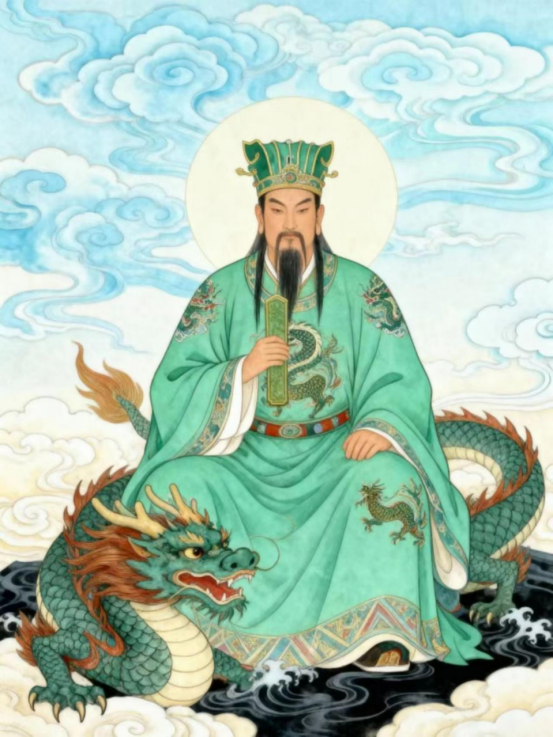
The Azure Primeval Elder of the East
Direction and Symbolism
The Azure Primeval Elder governs the Eastern Realm and corresponds to the Wood element. His symbolic color is azure or green, representing spring, growth, renewal, and vitality. His celestial body is Jupiter, while his earthly sacred mountain is Mount Tai.
Divine Functions
The Eastern Elder symbolizes the awakening force of life and the beginning of yang energy. Taoist teachings associate the Azure Qi of the East with spiritual awakening, vitality, and the flourishing of nature.
In Taoist cultivation, practitioners visualize the descending eastern qi to purify the spirit and restore inner harmony.
Modern discussions on Taoist cosmology also connect the Five Directions system with broader concepts of energy circulation and spiritual balance, as explored in this discussion of Taoist directional cosmology.
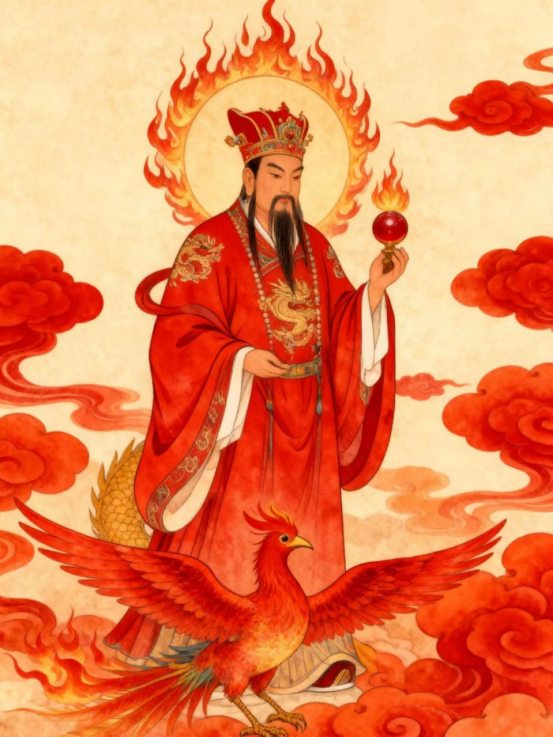
The Vermilion Primeval Elder of the South
Direction and Symbolism
The Vermilion Primeval Elder governs the Southern Realm and corresponds to the Fire element. His symbolic color is vermilion red, representing heat, brightness, summer, and spiritual illumination. His celestial body is Mars.
Divine Functions
The Southern Elder governs sunlight, transformation, and the flourishing power of fire. Taoist traditions also associate southern fire qi with spiritual clarity and ritual purification.
The cosmic role of southern fire energy is deeply connected to Taoist systems described in Fire Ministry Emperor, where divine fire regulates transformation, purification, and celestial authority.
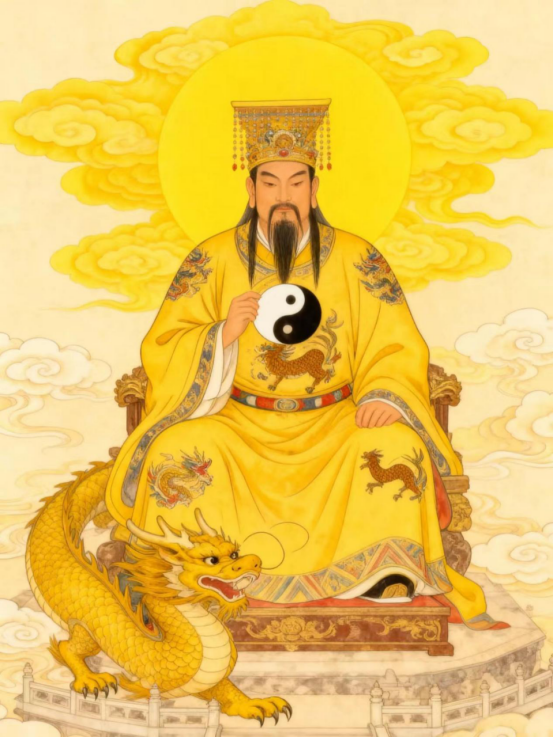
The Yellow Primordial Elder of the Center
Direction and Symbolism
The Yellow Primordial Elder governs the Central Realm and corresponds to the Earth element. His symbolic color is yellow, representing balance, harmony, nourishment, and stability. His sacred mountain is Mount Song.
Divine Functions
The Central Elder serves as the balancing force among the five directions. Taoist cosmology regards the Center as the convergence point where the qi of heaven and earth harmonize together.
His role reflects the Taoist understanding of cosmic order and energetic balance found throughout Taoist philosophy and ritual systems.
In many Taoist teachings, the relationship between cosmic harmony and moral order also appears in doctrines preserved within Tao follows nature.
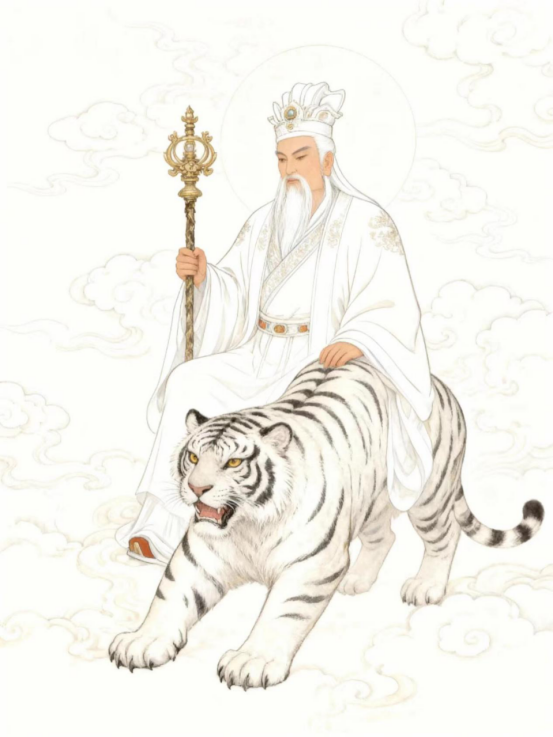
The White Primordial August Elder of the West
Direction and Symbolism
The White Primordial Elder governs the Western Realm and corresponds to the Metal element. His symbolic color is white, representing purification, restraint, autumn, and transformation. His celestial body is Venus.
Divine Functions
The Western Elder governs purification, harvest, and spiritual refinement. Taoist internal alchemy often associates western metal qi with the lungs, the corporeal soul, and the transformation of the physical body into refined spiritual essence.
The symbolism of purification and cosmic transformation also appears within Taoist heavenly structures connected to Xiwangmu, whose immortality traditions influenced many Taoist cultivation systems.
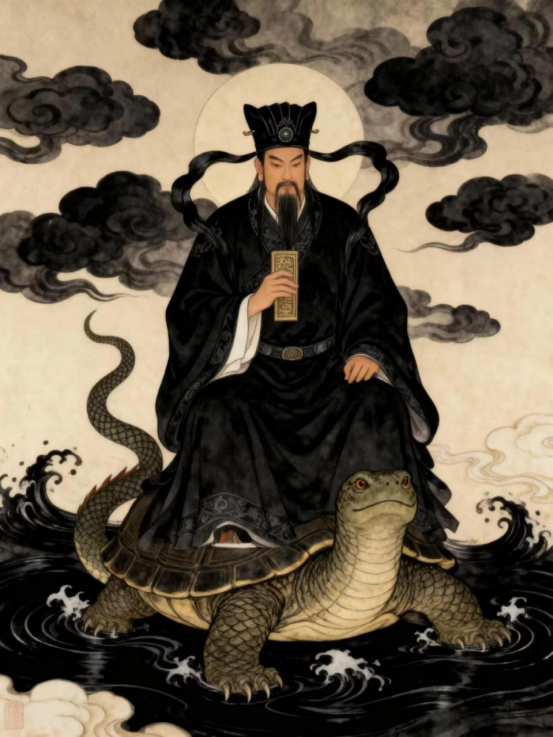
The Dark Primordial Mysterious Elder of the North
Direction and Symbolism
The Dark Primordial Elder governs the Northern Realm and corresponds to the Water element. His symbolic color is black or dark mysterious blue, symbolizing winter, concealment, wisdom, and regeneration. His celestial body is Mercury.
Divine Functions
The Northern Elder governs rivers, oceans, rain, snow, and the cyclical transformation between life and death. Taoist cultivation practices associate northern water qi with nourishing the kidneys and preserving primordial vitality.
His role also reflects the Taoist understanding of cyclical transformation between life, death, and rebirth throughout the cosmos.
Founders of Cosmic Order
According to Taoist cosmology, the Five Elders emerged after the separation of heaven and earth. They established the spatial order of the universe and regulated the interaction of the Five Elements.
Connection Between Heaven and Humanity
The Five Elders form the foundation of the Taoist concept of resonance between humanity and the cosmos. Their systems connect the five directions, five colors, five virtues, seasons, organs, celestial bodies, and elemental qi.
Central Role in Taoist Cultivation
In Taoist rituals, meditation, internal alchemy, talismanic arts, and fasting ceremonies, the Five Elders act as intermediaries between heaven and earth. Taoist priests invoke their qi to harmonize yin and yang energies and restore spiritual balance.
Cultural Influence of the Five Elders
The Five Elders of the Five Directions represent one of the most complete expressions of Chinese cosmology and Taoist metaphysics. Their influence extends beyond religion into medicine, philosophy, astronomy, ritual practice, feng shui, and traditional Chinese ethics.
Their divine system reflects the ancient Chinese pursuit of harmony between natural law, spiritual cultivation, and cosmic balance.
Related Posts
Five Qi True Lords in Taoism
The Five Qi True Lords are important Taoist deities who govern the primordial qi of [...]
Dec
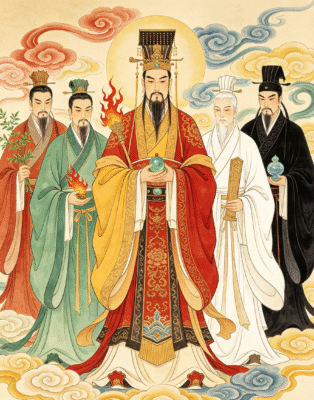
The Deities of the Five Directions in Taoism: The Five Elemental Gods of Wood, Fire, Metal, Water, and Earth
The Five Elemental Deities of Wood, Fire, Metal, Water, and Earth are central figures in [...]
Dec
The Seventy-Two Earth Fiends in Taoist Mythology and Magic Arts
The Seventy-Two Earth Fiends are one of the most mysterious and multifaceted groups of deities [...]
Dec