
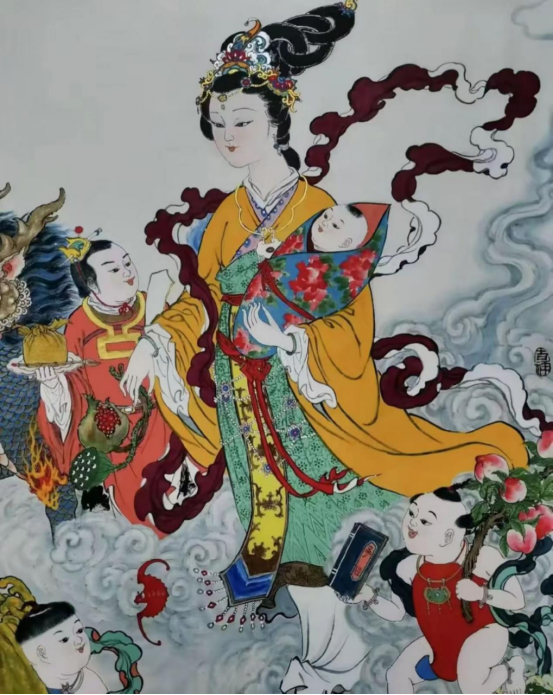
The Celestial Supervisor of Births is an important deity in Chinese Taoism and folk belief, closely associated with childbirth, pregnancy protection, and the healthy growth of children. She is widely worshipped by families seeking children, safe childbirth, and blessings for newborns.
In Taoist belief, the Celestial Supervisor of Births not only protects mothers and infants, but also oversees the destiny and vitality connected with human life.
Divine Functions of the Celestial Supervisor of Births
Goddess of Childbirth and Fetal Protection
The primary responsibility of the Celestial Supervisor of Births is to safeguard pregnancy and childbirth. Many believers pray to her for smooth deliveries, healthy pregnancies, and protection from complications during childbirth.
In Taoist folk practice, pregnant women often seek her blessings together with other protective deities associated with family safety and spiritual harmony.
Guardian Deity of Children
The Celestial Supervisor of Births is also regarded as a guardian deity for infants and young children. People believe she can protect children from illness, misfortune, and harmful spiritual influences.
This protective role resembles the nurturing aspects found in Taoist traditions connected with the Nine Heavens Creator of Spirits, where divine beings oversee the origin and continuation of life.
Recorder of Human Destiny
In Taoist mythology, the Celestial Supervisor of Births is believed to participate in recording birth information and overseeing the beginning of human destiny. The word “Supervisor” in her title symbolizes divine observation over the cycle of life from birth onward.
Origins of the Belief
Taoist Religious Tradition
Within the Taoist pantheon, the Celestial Supervisor of Births is sometimes associated with heavenly deities connected to life creation, fertility, and spiritual protection.
Certain Taoist scriptures mention heavenly offices responsible for supervising childbirth and preserving fetal safety, reflecting the importance of life within Taoist cosmology.
Folk Religious Syncretism
Over time, local folk traditions merged the Celestial Supervisor of Births with other fertility and childbirth goddesses. In many regions of southern China and Taiwan, she is worshipped alongside deities connected with family blessings and childbirth rituals.
Beliefs surrounding childbirth protection also share similarities with traditions dedicated to the Four Heavenly Masters in Taoism, where divine intervention and protection of human society are emphasized.
Iconography of the Celestial Supervisor of Births
The Celestial Supervisor of Births is commonly portrayed as a dignified and compassionate female deity.
Typical visual features include:
- Holding a birth register or sacred document
- Carrying a ruyi scepter or peach branch
- Holding or accompanying an infant
- Wearing celestial robes symbolizing heavenly authority
Her peaceful appearance reflects maternal protection, fertility, and the continuation of life.
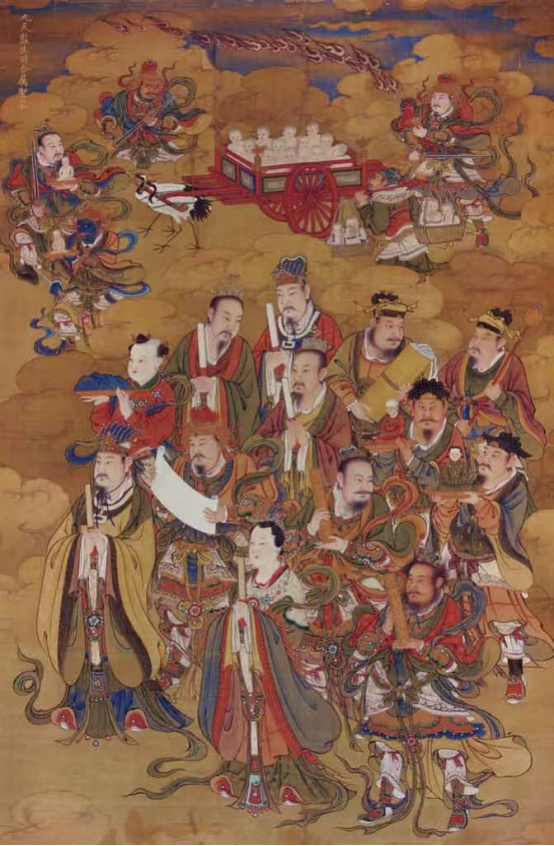
Worship and Sacrificial Customs
Prayers for Children
Families seeking children commonly offer incense, flowers, and fruit to pray for fertility and healthy offspring.
Fulfillment of Vows
After a safe childbirth, believers often return to the taoist temple with offerings or children’s clothing to express gratitude for divine protection.
Protective Talismans
In some folk customs, people wear special childbirth talismans believed to safeguard pregnancy and protect unborn children from harmful influences.
These protective traditions connect closely with Taoist beliefs regarding heavenly guardianship and spiritual balance.
Cultural Significance in Taoism
The Celestial Supervisor of Births represents the Taoist understanding of life as a sacred process governed by heavenly order and spiritual qi. Her worship reflects the deep importance placed on family continuity, maternal safety, and the protection of children within Chinese religious culture.
For many believers, she symbolizes compassion, fertility, and the divine care that accompanies human life from birth onward.
Related Posts
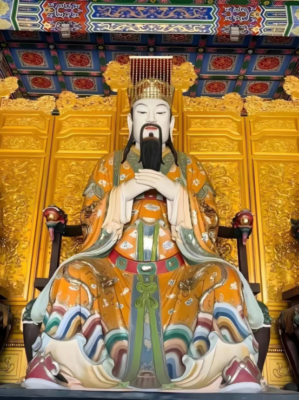
The Jade Emperor in Taoism: Supreme Ruler of Heaven and Cosmic Order
The Jade Emperor, whose full honorific title is “The Supreme Sovereign of the Heavenly Golden [...]
Dec
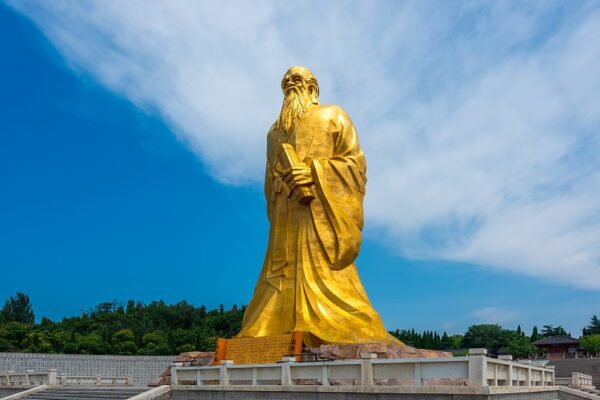
Folk Immortals in Taoism (Part II): Taoist Masters, Celestial Scholars, and Guardians of Blessings
Xu Xun — Leader of the Jingming Dao Xu Xun was a renowned Taoist priest [...]
May
The Five Water Deities in Taoism: Guardians of Seas, Rivers, and Sacred Waters
The Five Water Deities are among the most important water gods in Taoist belief. They [...]
Dec