

Introduction
When people first learn that they may be “offending Tai Sui” in a particular year, the natural next question is simple: what can actually be done about it?
Understanding What Is Tai Sui? The 60 Guardian Deities Explained is only the first step. Traditional Tai Sui belief is also accompanied by a range of worship practices, temple ceremonies, offerings, and personal customs intended to show respect to the deity associated with the year.
However, there is no single universal Tai Sui ritual followed by every Taoist temple or every community. Practices can differ according to regional customs, temple traditions, family beliefs, and individual religious practice. Some people participate in a formal An Tai Sui (安太歲) ceremony at a temple, while others observe a simpler practice at home.
Tai Sui worship is especially common around the beginning of the lunar year. Some people seek protection because their zodiac sign is traditionally considered to be in conflict with the year’s Tai Sui, while others worship Tai Sui simply as an annual expression of respect.
This guide explores how Tai Sui is traditionally worshipped and appeased, including:
- what An Tai Sui means and when it is performed
- how Tai Sui worship differs between temples and home practice
- common offerings and protective customs
- everyday practices associated with a Fan Tai Sui year
- what traditional believers are advised to approach with greater caution
Important: Tai Sui practices are part of Chinese religious and folk traditions, and exact procedures vary between temples, regions, and lineages. The practices described below are common examples rather than a single standardized Taoist ritual.
Why Do People Worship Tai Sui?
Before looking at specific rituals, it helps to understand why Tai Sui worship developed in the first place.
According to traditional belief, Tai Sui refers to a cycle of 60 Tai Sui generals, corresponding to the sixty combinations of the Heavenly Stems and Earthly Branches. Each year has its own presiding Tai Sui, commonly called the Liu Nian Tai Sui (流年太歲) or the Tai Sui of the current year. This sixty-year correspondence is also reflected in temple traditions that honor the full group of Tai Sui deities.
Because the system follows the sexagenary cycle, a person’s birth year and the current year’s Tai Sui can have different traditional relationships. Some zodiac signs may be described as being in direct conflict, while others may be considered to have different forms of unfavorable interaction.
This is the background behind the expression Fan Tai Sui (犯太歲), commonly translated as “offending Tai Sui.”
Worship is generally practiced for two related reasons.
The first is precautionary respect. Some people visit a temple at the beginning of the year to pay their respects to the year’s Tai Sui regardless of whether their zodiac sign is considered to conflict with it.
The second is active appeasement. People who believe their zodiac sign has an unfavorable relationship with the year’s Tai Sui may participate in an An Tai Sui ceremony and seek protection or a smoother year.
Tai Sui worship therefore does not necessarily begin with fear. For many practitioners, it is a ritual way of acknowledging the year’s spiritual symbolism and approaching the coming year with greater awareness.
What Is An Tai Sui?
An Tai Sui (安太歲) literally refers to the practice of “settling,” “pacifying,” or “appeasing” Tai Sui.
It is one of the best-known annual rituals associated with Tai Sui worship.
The basic idea is relatively simple: a practitioner formally presents themselves before the year’s Tai Sui, expresses respect, and asks for peace, protection, and a smoother passage through the year.
Temple traditions may involve registering one’s name and birth information, honoring the current year’s Tai Sui, lighting a Tai Sui lamp, receiving a talisman, or participating in a larger ritual service.
For example, Pu-Tien Temple in Hsinchu describes An Tai Sui as a common lunar-January practice and lists both Tai Sui talismans and Tai Sui lamps among its associated services.
The exact ceremony, however, should not be assumed to be identical everywhere.
Some temples conduct elaborate communal rites, while others provide a simpler registration and worship service.
When Should You Worship Tai Sui?
Tai Sui worship is most commonly associated with the beginning of the lunar year, particularly the first lunar month.
This timing makes symbolic sense within the tradition because the new year marks the transition to a new annual Tai Sui.
In Taiwan and other Chinese communities, temples commonly begin accepting Tai Sui worship registrations around Lunar New Year. The Taiwanese Gods cultural overview, for example, describes people visiting temples around Lunar New Year to perform An Tai Sui and seek a smooth year ahead.
There is no single date that every temple follows.
Some temples establish their own registration periods, while others organize ceremonies according to their religious calendar.
For this reason, if you intend to participate in a formal ceremony, the best approach is to check the schedule and requirements of the specific temple rather than relying on a universal date.
Some traditions also include a later Xie Tai Sui (謝太歲) practice, or “thanking Tai Sui,” toward the end of the year. This creates a symbolic cycle of beginning the year with prayer and concluding it with gratitude.
How to Worship Tai Sui at a Temple
For those who want to participate in a more formal practice, visiting a temple with a dedicated Tai Sui hall is usually the most straightforward approach.
Exact procedures vary, but a temple-based ceremony may include several of the following steps.
1. Register Your Personal Information
The temple may request information such as:
- your name
- date of birth
- address or place of residence
- zodiac sign
- a personal prayer or wish
This information allows the temple to identify the person participating in the ceremony.
Historical reporting on Taoist temple practices has also documented worshippers providing names, birthdays, addresses, and wishes when registering for annual religious services.
2. Honor the Tai Sui Deities
Some temples maintain dedicated Tai Sui halls containing representations of the 60 Tai Sui generals.
Worshippers may first pay respects to the broader assembly of Tai Sui deities before focusing on the current year’s Liu Nian Tai Sui.
Some traditions may also recognize the Tai Sui associated with a person’s birth year.
The exact order depends on the temple.
3. Participate in the An Tai Sui Ceremony
The temple may conduct chanting, offerings, prayers, incense rituals, or other formal religious procedures.
In some temples, participants may also register for a Tai Sui lamp or receive a consecrated talisman.
These practices demonstrate how Tai Sui worship can extend beyond a single act of bowing: the ceremony can become part of a larger temple-based religious service.
4. Complete the Ceremony According to Temple Instructions
Some temples may instruct worshippers to burn offering papers, return at a particular time, or participate in a later thanksgiving ceremony.
These procedures should always follow the instructions of the temple conducting the ritual.
There is no need to combine practices from different temples simply because they appear online. When participating in a formal religious ceremony, following the tradition of the specific temple is generally the most respectful approach.
How to Worship Tai Sui at Home
Not everyone lives near a temple with a dedicated Tai Sui hall, and some people prefer a quieter personal practice.
A simplified home practice may involve creating a clean and respectful space, preparing modest offerings, lighting incense, and expressing one’s wishes or prayers.
The exact details vary widely.
A simple approach may include:
- cleaning the worship area beforehand
- preparing fresh fruit or tea
- lighting incense
- facing the household altar or a designated sacred image
- stating your name and birth information
- respectfully expressing your intention or prayer
- completing the practice with gratitude
Some practitioners also use a red paper or written representation of the year’s Tai Sui as part of their home worship.
However, there is no universal rule requiring every household to create a special Tai Sui altar.
For people who are uncertain about the appropriate procedure, visiting a temple or consulting an experienced religious practitioner is generally preferable to combining instructions from unrelated online sources.
Common Tai Sui Offerings
Offerings are an important part of many Chinese religious traditions, but they do not need to be extravagant.
Common offerings may include:
Fresh Fruit
Fruit is frequently used as a clean and respectful offering.
Different temples and families may have their own preferences regarding the number or type of fruit, so there is no single universal combination that every practitioner must follow.
Tea
Tea is another simple offering frequently found in Chinese religious practice.
Its simplicity makes it suitable for a modest home worship setting.
Incense
Incense is traditionally used as part of communication and worship within many Chinese religious traditions.
The number of incense sticks and the exact procedure can vary depending on the temple or lineage.
Flowers
Fresh flowers may also be offered as a symbol of respect and purity.
Tai Sui Talisman or Lamp
Some temples provide Tai Sui talismans or offer Tai Sui lamp services as part of their annual ceremonies.
Pu-Tien Temple, for example, specifically lists both Tai Sui talismans and Tai Sui lamps among its An Tai Sui services.
The most important principle is not the monetary value of an offering.
For many practitioners, sincerity and respect are more important than extravagance.
Everyday Fan Tai Sui Remedies
Formal worship is only one aspect of how people respond to a Fan Tai Sui year.
A number of everyday customs are also associated with the practice.
Wearing Red
Red has long carried auspicious and protective symbolism in Chinese culture.
During a Fan Tai Sui year, some people choose to incorporate red into their clothing or accessories, such as:
- red bracelets
- red clothing
- red cords
- red accessories
These practices are better understood as traditional customs rather than guaranteed spiritual protections.
Wearing red is meaningful because of its cultural symbolism, but it should not replace sincere religious practice or responsible behavior.
Carrying a Tai Sui Amulet
Tai Sui talismans and amulets are another common feature of annual protection practices.
Some temples provide talismans after a person participates in an An Tai Sui ceremony. These may be carried in a wallet, placed at home, or worn according to the instructions of the temple or practitioner.
The important distinction is that a talisman associated with a specific religious tradition should not automatically be treated as interchangeable with any generic lucky charm.
Its meaning comes from the religious context in which it is produced, consecrated, and used.
This connects closely with our guide to How Are Taoist Ritual Implements Consecrated? A Guide to Traditional Taoist Consecration Rituals, which explains why consecration is traditionally understood as more than simply decorating or blessing an object.
Being Mindful of Direction
Tai Sui is traditionally associated with a particular direction each year.
Because of this, some practitioners pay attention to the year’s Tai Sui direction when arranging their homes or planning major physical changes.
Traditional advice may include avoiding unnecessary disturbance of the Tai Sui sector through major renovation, digging, or construction.
However, these practices should not be interpreted as a universal prohibition against normal life.
A person should not assume that moving furniture, walking through a particular room, or facing a certain direction will automatically cause misfortune.
The traditional idea is better understood as an expression of ritual caution and respect for the year’s symbolic direction.
This approach also fits with the broader relationship between directional symbolism and the Five Elements discussed in The Five Elements Theory in Taoism and Chinese Philosophy.
What to Avoid During a Fan Tai Sui Year
Traditional advice often emphasizes caution rather than fear.
Depending on the tradition, practitioners may choose to pay additional attention to several areas.
Avoid Unnecessary Major Disturbances
Some people avoid unnecessary renovation, excavation, or major structural work in the year’s Tai Sui direction.
If major construction is genuinely necessary, it should not automatically be interpreted as a spiritual disaster.
Approach Major Decisions Carefully
Some traditional practitioners prefer to approach major life decisions — such as marriage, relocation, or significant financial commitments — with additional caution during a Fan Tai Sui year.
This does not mean that such events are universally forbidden.
Rather, it reflects a traditional preference for greater deliberation during a year believed to carry increased challenges.
Treat Religious Objects With Respect
If you receive a consecrated Tai Sui talisman or another religious object from a temple, follow the instructions provided by the temple.
Avoid treating such objects as disposable decorations.
Do Not Let Fear Become the Practice
Perhaps the most important point is that Fan Tai Sui should not be approached as a prediction of inevitable disaster.
Modern temple practices themselves often frame An Tai Sui around seeking peace, protection, and a smoother year rather than simply expecting misfortune.
For example, Pu-Tien Temple describes An Tai Sui as a practice intended to seek safety and peacefulness throughout the year.
Tai Sui Amulets and Protective Objects
For people who choose to incorporate a protective object into their annual practice, the object is traditionally meaningful because of its connection to a religious practice rather than simply because of its physical appearance.
A consecrated object may serve as:
- a reminder of one’s religious intention
- a physical representation of one’s prayer
- an object associated with a particular deity or tradition
- a personal symbol of protection and mindfulness
This distinction is particularly important when choosing a Taoist ritual implement.
A beautifully decorated object and a traditionally prepared religious implement are not necessarily the same thing.
For a broader explanation of this distinction, see our article Why Handmade Taoist Ritual Implements Matter.
The craftsmanship, material, symbolism, and traditional preparation of an implement can all contribute to how practitioners understand its role.
Tai Sui Guidance at Taoist World
Tai Sui worship is ultimately about approaching an uncertain year with awareness rather than fear.
At Taoist World, we believe that understanding the traditional meaning behind a ritual object is just as important as the object itself. A protective implement should not be viewed as a magical replacement for personal responsibility, but as part of a broader relationship between intention, tradition, and spiritual practice.
For readers interested in traditional Taoist objects that may be incorporated into personal devotional or ritual practices, our Taoist Ritual Implements Collection brings together pieces inspired by traditional Taoist symbolism and craftsmanship.
Explore the Taoist Ritual Implements Collection.
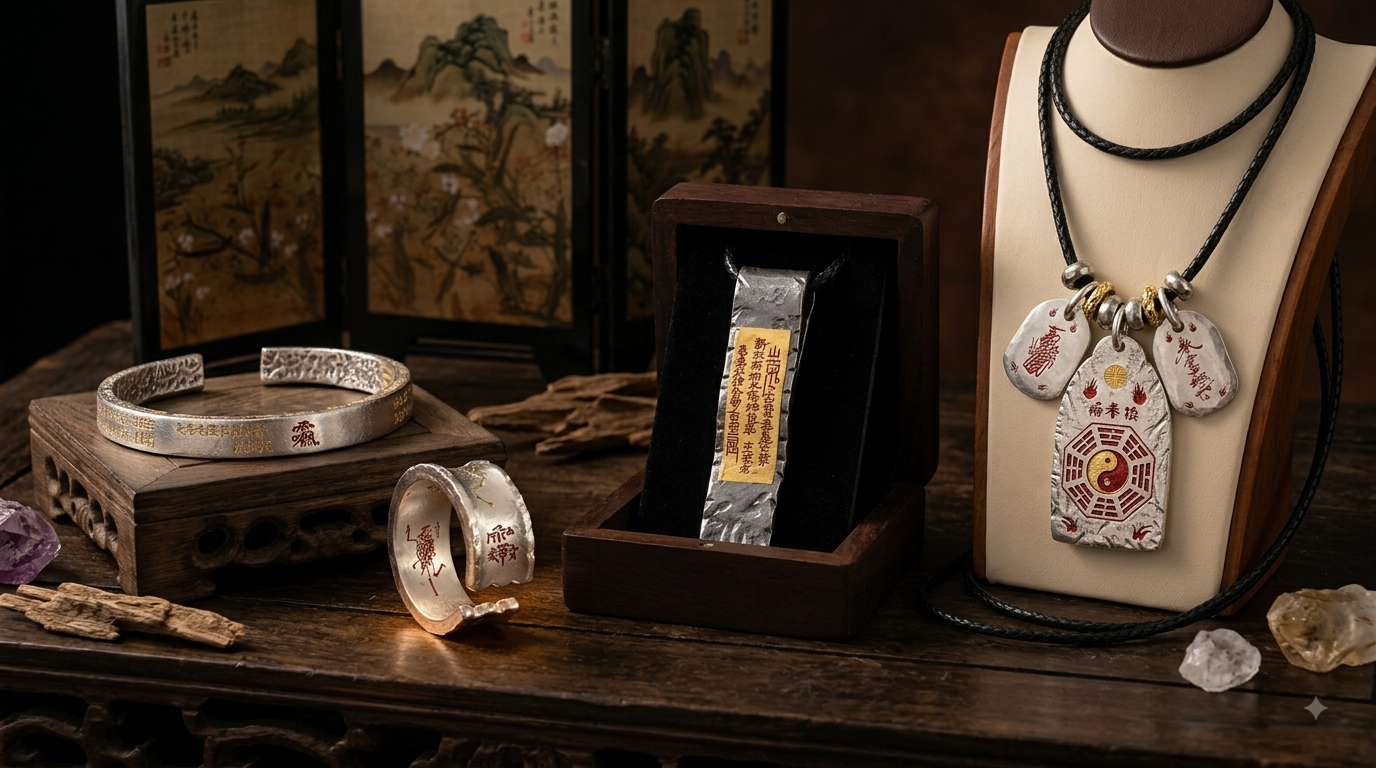
Whether you are looking for a personal devotional object, a traditional ritual implement, or simply want to learn more about Taoist material culture, we recommend choosing according to the object’s intended purpose, traditional context, craftsmanship, and your own spiritual practice.
FAQ
An Tai Sui is a traditional ritual performed early in the lunar year to formally pay respects to and seek protection from that year’s ruling Tai Sui general.
No — many practitioners perform a simplified version of the ritual at home using offerings, incense, and a red paper slip bearing the year’s Tai Sui name.
Red is traditionally considered protective and auspicious in Chinese culture, commonly worn throughout a Fan Tai Sui year to help ward off negative influence.
Many people do so as a gesture of respect and precaution, though it is generally considered most important for those directly affected by Fan Tai Sui.
Common guidance includes avoiding major renovations facing the year’s Tai Sui direction and approaching major life decisions with extra caution.
Related Posts

What Is Tai Sui? Understanding the Chinese Zodiac’s Guardian Deities and Why They Matter
Tai Sui (太歲) is a traditional Chinese calendrical and religious concept connected historically with Jupiter, [...]
Aug

Complete Analysis of the 2026 丙午(Bing wu) Horse Year Tai Sui Folk Customs: Deity Positions, Zodiac Conflicts, and Rational Inheritance
Introduction The year 2026 marks the Bing Wu (丙午) Year of the Horse, a combination [...]
Mar

2026 Rabbit Horoscope: Understanding the Mao-Wu Break in the Year of the Fire Horse
Introduction For people born in the Year of the Rabbit, 2026 is traditionally associated with [...]
Aug