
Introduction
When people think of Taoism and Taoist priests, two very different impressions often come to mind. Some see them as recluses who have withdrawn from the world, completely detached from human affairs. Others reduce Taoism to fortune-telling, feng shui, and superstition.
However, both views miss the deeper truth of Taoist philosophy. Unlike a set of rules to follow or rituals to perform, Taoism is fundamentally a way of understanding one’s relationship to daily life — a philosophy so deeply woven into ordinary living that it often goes unnoticed by those practicing it.
So, what is the real place of Taoism in everyday life?
This guide explores what Taoism truly is by examining three key areas:
why Taoism, despite its reputation for withdrawal, is ultimately a philosophy centered on human life and community
how Taoist wisdom is expressed through ordinary daily activity rather than separate from it
the balance between stillness and action that defines Taoist cultivation
The The Tao Is Found in Daily Life
Many people overlook Taoism because its teachings are deeply integrated into daily life rather than set apart in temples or formal ceremonies alone. In fact, Taoist wisdom is often described as “daily use without awareness” — a principle suggesting that most people already live in accordance with the Tao without ever recognizing it as such.
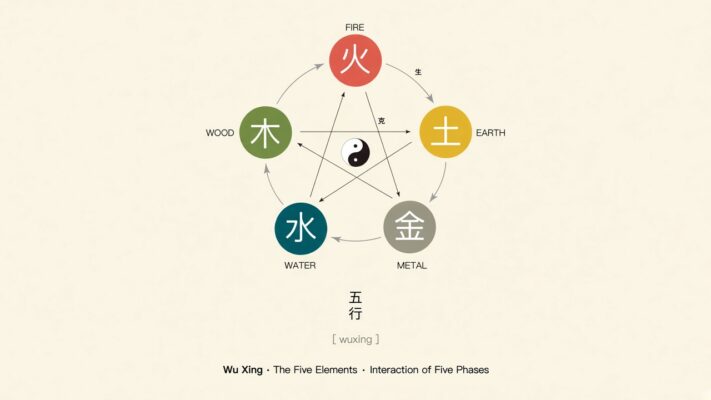
The Tao exists within all things and is closely connected to the Five Elements Theory, the framework Taoist philosophy uses to describe how energy moves and transforms throughout the natural world. Therefore, only by engaging fully in simple activities — eating, resting, and moving through the world with attention — can a person begin to understand it.
This is a central and often surprising point for newcomers to Taoist thought: enlightenment is not found by escaping ordinary life, but by inhabiting it more fully and consciously. To separate oneself from life, in this view, is to separate oneself from the Tao itself.
Between Stillness and Action
Taoism is sometimes called the “Mysterious Teaching,” and at its core, it emphasizes balance between stillness and action rather than favoring one over the other.
The principle of Wu Wei (non-action, a key idea explored further in Tao Follows Nature) does not mean doing nothing. Instead, it means acting in harmony with the natural flow of circumstances, rather than forcing outcomes through excessive effort or resistance. A person practicing Wu Wei still acts — but with far less friction, working with the grain of a situation rather than against it.
At the same time, Taoism teaches personal responsibility: each individual shapes their own path through ongoing self-cultivation, rather than passively waiting for circumstances to resolve themselves. Modern scholarship has continued to explore this apparent tension between spontaneity and discipline. Research on Guo Xiang and the Problem of Self-Cultivation in Daoist Naturalism highlights how Taoist cultivation has historically balanced natural spontaneity with structured practice — showing that Wu Wei was never meant to imply the absence of effort, but rather effort applied without unnecessary struggle.
This idea — that the body and one’s inner state mirror the wider world — reflects a core Taoist belief: harmony begins within the individual and extends outward, eventually shaping the harmony of a household, a community, and beyond.
Religion Centered on Humanity
Taoism, as a religion, ultimately focuses on people. Despite its associations with mountain hermits and mystical practice, it cannot exist apart from society, because its teachings are meant to be lived by real people navigating real circumstances.
A religion’s foundation lies in humanity — in the everyday struggles, relationships, and choices that make up a life. Taoism’s purpose, in this sense, is transformation: helping individuals move from confusion and resistance toward clarity and ease. Its highest goal is not escape from the world, but the elevation of human life within it.
To understand Taoism fully, one must see individuals as seekers, believers, and practitioners all at once — not as separate categories, but as different facets of the same ongoing process of growth.
Balance: The Heart of the Tao
Unlike many traditions that frame spiritual growth as a rejection of human needs, Taoism does not ask practitioners to reject desire outright. Instead, it seeks harmony between desire and discipline.
Basic human needs — food, warmth, dignity, and love — are not treated as obstacles to spiritual progress. Rather, they are understood as natural aspects of life that must be acknowledged and balanced, not suppressed. This same balance between inner cultivation and external life is echoed in modern psychological interpretations of Taoist thought. Research on The Taiji Model of Self: Self-Cultivation Theories explores how Taoist self-cultivation offers a model for psychological wellbeing that integrates rather than suppresses competing internal needs.
As stated in the I Ching:
“One yin and one yang — that is the Tao.”
Without balance between these complementary forces, the Tao cannot exist. This principle applies as much to daily emotional life as it does to the wider cosmological framework Taoism describes.
True Practice: Self and Others as One
Taoist cultivation shares much in common with the intention behind formal practices described in our guide to Taoist rituals and ceremonies — both are ultimately about aligning oneself with a larger sense of order and care.
Importantly, Taoist cultivation is not only personal. It also includes genuine compassion for others, extending inward discipline outward into how one treats the people around them. Historically, figures such as Wang Chongyang — founder of the Quanzhen school — emphasized both inner cultivation and outward compassionate action as inseparable parts of the same practice.
Therefore, true practice means developing oneself while simultaneously helping others along their own path. There is no real separation between self-cultivation and compassion; in Taoist understanding, they are two expressions of a single, unified practice.
The Great Cultivation Embraces the World
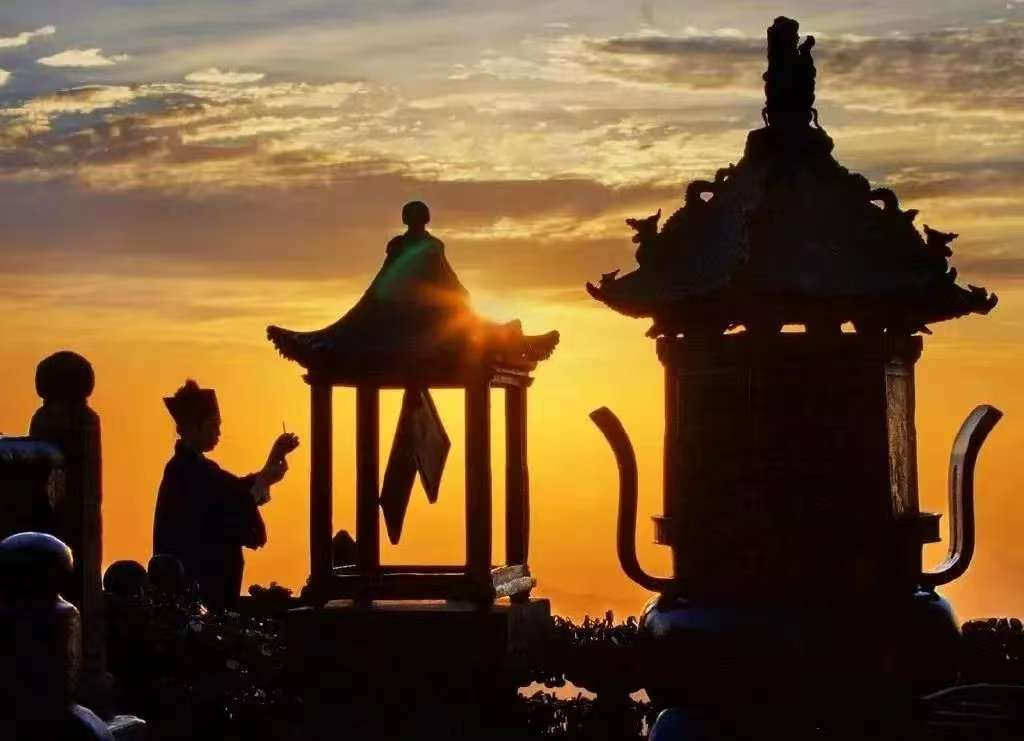
Great Taoist practitioners do not withdraw completely from society, despite common stereotypes suggesting otherwise. Instead, they learn to engage fully with the world while maintaining inner clarity — remaining unshaken by circumstance without becoming indifferent to it.
Taoism includes both withdrawal and engagement, and neither is treated as inherently superior to the other. The key lies not in choosing isolation over involvement, but in approaching daily life with a transcendent mindset — participating fully while remaining internally centered.
Only through action combined with compassion, Taoist teaching suggests, can spiritual understanding gain real meaning. Wisdom that never touches daily life, in this view, remains incomplete.
Understanding Taoism at Taoist World
Taoism is often misunderstood as either pure withdrawal or pure superstition — but as this guide explores, its true center lies in the balance between stillness and engagement, self and others, discipline and natural ease.
At Taoist World, we believe that understanding Taoist philosophy is the foundation for everything else we offer — from handcrafted ritual implements to guidance on Feng Shui and self-cultivation. Genuine appreciation for Taoist tradition begins with understanding its core ideas, not simply its outward symbols.
Explore more Taoist philosophy and culture: → Taoist Basics & Culture Collection
Conclusion
Ultimately, Taoism teaches that true transcendence comes not from escaping life, but from full engagement with it.
The Tao is not found by withdrawing to a mountain temple, but by eating, resting, working, and relating to others with attention and balance. Wu Wei is not passivity, but effortless alignment with circumstance. And self-cultivation is never separate from compassion for others — the two are, in Taoist understanding, a single practice viewed from two angles.
Only by understanding and embracing the world as it is can one begin to go beyond its confusion. To close oneself off from ordinary life, Taoist philosophy suggests, is to close the door to the Tao itself.
FAQ
Not necessarily. While some practitioners pursue seclusion, Taoism as a whole emphasizes engaging fully with daily life while maintaining inner clarity and balance.
Wu Wei, often translated as “non-action,” does not mean doing nothing. It means acting in harmony with natural circumstances rather than forcing outcomes through resistance or excessive effort.
Taoism exists as both — a philosophical tradition rooted in texts like the Tao Te Ching, and an organized religion with temples, rituals, and ordained priests. The two are deeply intertwined rather than separate.
Taoism does not treat human needs as obstacles to spiritual growth. Instead, it seeks balance between desire and discipline, viewing basic needs as a natural part of life to be acknowledged, not suppressed.
Yes. Much of Taoist wisdom is described as “daily use without awareness,” meaning it is most often expressed through ordinary daily activity rather than separate ceremonial practice alone.
Related Posts
Taoist Master Teaches You Daily Practice Blessings (Collection)
In Taoist tradition, blessing phrases act as a bridge between humans and the spiritual realm. [...]
Mar
Taoist Taboos: Three Things Not to Ask, Three Things Not to Say, Three Times Not to Rise
Introduction When people first encounter Taoist taboos, they often assume these are arbitrary superstitions — [...]
Mar
The Five Elements Theory in Taoism and Chinese Philosophy
Introduction When people first encounter the Five Elements in Chinese philosophy, they often assume Wood, [...]
Dec