

Introduction
The Six Ding and Six Jia Generals are among the most important guardian deities in the Taoist pantheon. They serve directly under the command of the True Martial Emperor, acting as divine protectors, spiritual messengers, and supernatural task executors within Taoist rituals, talismans, and thunder magic traditions. In Taoist practice, they are regarded as the closest celestial guardians to priests and cultivators, constantly assisting with protection, exorcism, healing, and spiritual operations.
Originating from the ancient Chinese Heavenly Stem and Earthly Branch system, the Six Ding and Six Jia embody the harmony of yin and yang, time and space, and celestial order. Their worship reflects Taoism’s transformation of cosmic numerology into a living divine protection system.
The Origin of the Six Ding and Six Jia
The concept of the Six Ding and Six Jia comes from the traditional Chinese calendrical system based on the Heavenly Stems and Earthly Branches.
The Six Ding Spirits
The Six Ding belong to the yin aspect of the stem-branch system and are commonly visualized as female divine spirits or celestial maidens. In Taoist scriptures they are associated with hidden spiritual forces, subtle protection, and internal energy cultivation.
The Six Jia Generals
The Six Jia belong to the yang aspect and are typically represented as armored male generals or celestial commanders. They symbolize active power, divine enforcement, martial protection, and the execution of heavenly commands.
Together, the Six Ding and Six Jia form a complete balance of yin and yang energies, becoming one of the most practical and frequently invoked divine systems in Taoism.
Core Functions of the Six Ding and Six Jia Generals
Divine Protection and Spiritual Defense
The primary role of the Six Ding and Six Jia is protection. Taoist priests summon them through talismans, incantations, meditation, and ritual hand seals to establish invisible spiritual barriers against harmful influences.
They are believed to protect practitioners from:
- Evil spirits and demons
- Malevolent qi
- Spiritual attacks
- Wild beasts and dangerous environments
- Illness and plague energies
Because of this role, they are especially important in mountain cultivation, meditation retreats, and exorcistic rituals.
Related protective systems can also be seen in The Thirty-Six Heavenly Generals and the Five Marshals of the Thunder Ministry in Taoism.
The Six Ding and Six Jia in Taoist Rituals
Divine Task Executors
Unlike higher cosmic deities who govern universal principles, the Six Ding and Six Jia specialize in carrying out practical tasks.
Taoist priests may command them to:
- Deliver spiritual documents and talismans
- Investigate distant spiritual disturbances
- Transport sacred ritual energy
- Assist in healing ceremonies
- Stabilize homes and sacred buildings
- Guard ritual altars during ceremonies
This practical nature makes them some of the most frequently summoned deities in Taoist magic traditions.
Participation in Thunder Magic
Within Taoist thunder rites, the Six Ding and Six Jia function as celestial thunder officials. They assist in controlling weather phenomena such as wind, rain, clouds, thunder, and frost.
Their role closely connects them with the powerful celestial armies described in The Seventy-Two Earth Fiends and other Taoist martial deity systems.
Relationship with Internal Alchemy and Cultivation
In Shangqing Taoism and internal alchemy traditions, the Six Ding and Six Jia are not viewed solely as external gods. They are also connected to the practitioner’s internal spiritual energies.
Internal Gods and Organ Spirits
Some Taoist teachings state that:
- The Six Ding correspond to the yin energies of the internal organs
- The Six Jia correspond to the yang energies of bodily vitality and circulation
Through meditation and energy cultivation, practitioners awaken these internal divine forces and synchronize them with the celestial Six Ding and Six Jia outside the body.
This reflects the Taoist principle that the human body mirrors the cosmos itself.
Symbolism of the Six Ding and Six Jia
The Six Ding and Six Jia represent several important Taoist concepts:
- Harmony of yin and yang
- Cosmic order through time cycles
- Divine protection in daily life
- Practical spiritual assistance
- Unity between the human body and celestial forces
Compared with the annual destiny deities of The Sixty Jiazi Gods, the Six Ding and Six Jia are more directly involved in active ritual work and immediate spiritual protection.
Cultural and Religious Influence
The Six Ding and Six Jia remain highly influential in Taoist ritual traditions today. Their names frequently appear in:
- Taoist talismans
- Exorcism rituals
- Feng shui practices
- Protective charms
- Internal alchemy texts
- Thunder magic scriptures
Because they are both approachable and highly functional, they became one of the most enduring guardian systems in Taoist religious culture.
Their worship demonstrates how Taoism transformed the abstract Heavenly Stem system into a living network of divine guardians capable of interacting directly with practitioners and ordinary believers alike.

Related Posts
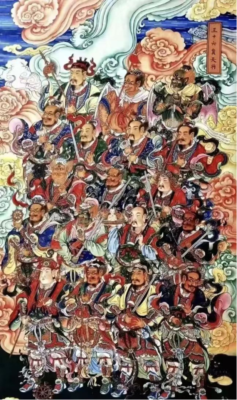
The Thirty-Six Heavenly Generals in Taoism: Guardians of Thunder, Exorcism, and Celestial Justice
The Thirty-Six Heavenly Generals are one of the most important groups of martial guardian deities [...]
Dec
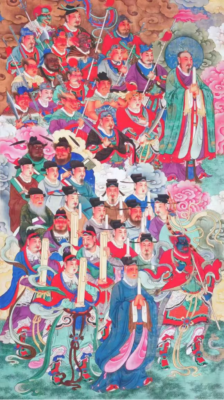
The Seventy-Two Earth Fiends in Taoist Mythology and Magic Arts
The Seventy-Two Earth Fiends are one of the most mysterious and multifaceted groups of deities [...]
Dec
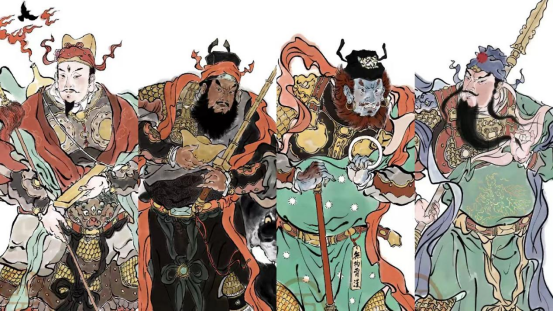
The Four Great Marshals in Taoism | Celestial Generals of Thunder, Wealth and Exorcism
The Martial Protectors of the Taoist Heavenly Armies The Four Great Marshals are among the [...]
Dec