
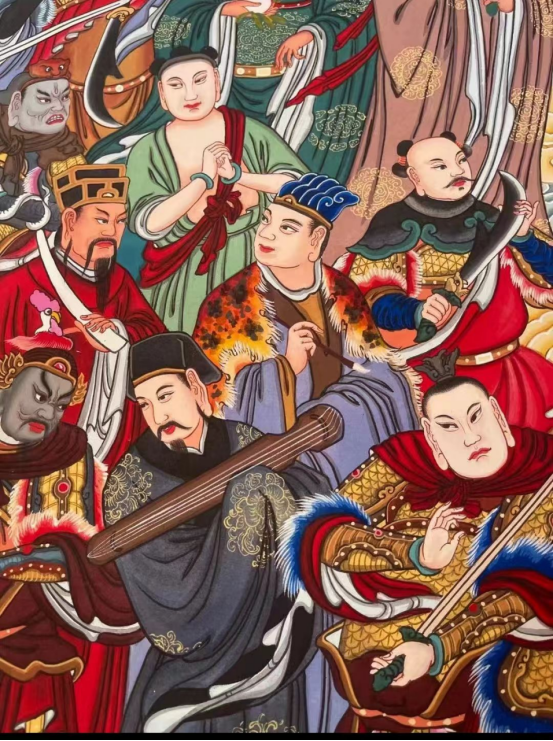
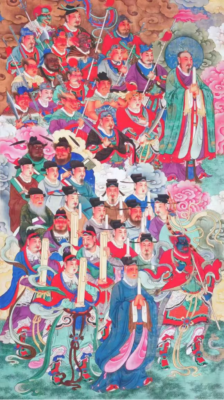
The Sixty Jiazi Gods, also known as the Sixty Tai Sui Generals, are one of the most important systems of time deities in Taoism and Chinese folk religion. They are the sacred personifications of the ancient Heavenly Stems and Earthly Branches cycle, collectively governing the rotation of years, the fortune of humanity, and the balance of blessings and disasters within the mortal world.
In Taoist belief, every year is ruled by a specific Tai Sui deity, while every individual is protected by the guardian deity corresponding to their birth year. Together, these sixty celestial officials form a complete cosmic system regulating time, fate, morality, and destiny. Their worship represents the fusion of Taoist cosmology, astrology, morality, and the ancient Chinese philosophy of harmony between Heaven and humanity.
The Origin of the Sixty Jiazi Cycle
The foundation of the Sixty Jiazi Gods comes from the ancient Chinese calendrical system known as the Sexagenary Cycle. This system combines:
- The Ten Heavenly Stems
- The Twelve Earthly Branches
When paired sequentially, they create sixty unique year combinations, such as:
- Jia Zi Year
- Yi Chou Year
- Bing Yin Year
- Ding Mao Year
After sixty years, the cycle repeats endlessly.
Taoism transformed these abstract time divisions into living divine beings. Every Jiazi year possesses its own celestial guardian, known as a Tai Sui God or Yearly Grand Duke. This gave sacred personality and spiritual authority to the passage of time itself.
Unlike ordinary star gods, the Sixty Jiazi Gods are directly involved in human affairs, influencing fortune, disasters, longevity, official success, family peace, and karmic rewards.
The system is closely connected with beliefs surrounding The Seventy-Two Earth Fiends and the celestial military structure of Taoist cosmology, where heavenly and earthly forces operate together to maintain universal order.
The Core Functions of the Sixty Jiazi Gods
Guardians of Personal Destiny
Every person is believed to possess a natal Tai Sui deity according to their birth year. This deity acts as a lifelong spiritual guardian connected to one’s destiny across time.
Devout worship of one’s natal Tai Sui is believed to:
- Protect health and longevity
- Prevent disasters
- Stabilize fortune
- Resolve hidden misfortune
- Strengthen spiritual protection
In Taoist tradition, this guardian functions almost like a celestial supervisor overseeing the karmic development of an individual throughout life.
Rulers of the Current Year
Each year is governed by a ruling Tai Sui God who presides over the fortune of the world during that specific period.
The yearly Tai Sui deity influences:
- National prosperity
- Agricultural harvests
- Natural disasters
- Social stability
- Personal luck and conflict
This is the origin of the famous saying:
“When Tai Sui sits above your head, misfortune must be treated with caution.”
People whose zodiac signs clash with the ruling Tai Sui are believed to experience instability, obstacles, illness, disputes, or sudden setbacks. This condition is commonly called “offending Tai Sui”.
Common forms include:
- Direct conflict with Tai Sui
- Zodiac punishment
- Zodiac harm
- Zodiac opposition
Modern Taoist practices related to Tai Sui are still widely observed today, especially during years such as the Fire Horse cycle discussed in Complete Analysis of the 2026 Bing wu Horse Year Tai Sui Folk Customs.
Celestial Record Keepers of Morality
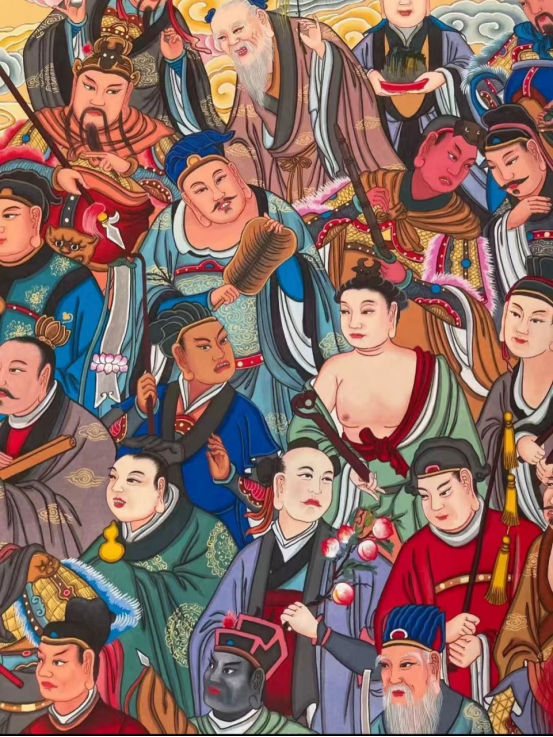
The Sixty Jiazi Gods are not merely fortune deities. They also function as divine record keepers who observe human behavior throughout the year.
According to Taoist belief, they monitor:
- Virtuous actions
- Moral failures
- Charity and compassion
- Harmful conduct
- Spiritual sincerity
Blessings and punishments are adjusted according to these records. This reflects the Taoist teaching that destiny is not fixed, but can be transformed through ethical conduct and accumulated virtue.
The Personified Forms of the Sixty Tai Sui Gods
Unlike many abstract cosmic deities, the Sixty Jiazi Gods are often represented by historical or legendary figures known for loyalty, courage, justice, and public service.
Examples include:
- General Jin Jian
- General Chen Cai
- General Geng Zhang
- General Yu Cheng
Most of these figures were righteous officials, loyal generals, or virtuous protectors celebrated for benefiting society.
This reflects the Confucian influence within Taoist theology, emphasizing that moral virtue and righteous conduct align humanity with heavenly order.
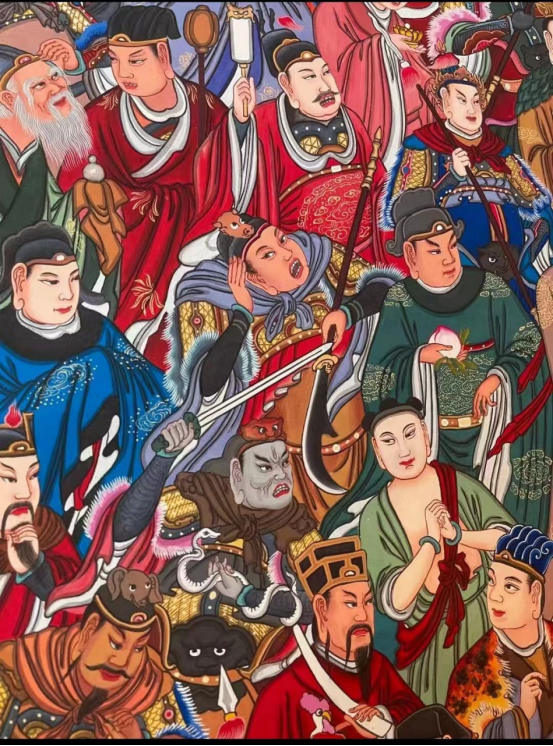
The visual portrayals of the Sixty Tai Sui Gods usually depict them as armored celestial generals carrying swords, tablets, seals, banners, or ritual weapons, symbolizing their authority over time and destiny.
The structure of these heavenly officials also relates symbolically to protective systems such as The Six Ding and Six Jia Generals, who similarly operate as celestial guardians and divine commanders within Taoist ritual traditions.
Tai Sui Worship and Ritual Practices
Pacifying Tai Sui
One of the most important Taoist annual ceremonies is the ritual of pacifying Tai Sui.
During the Lunar New Year or the first lunar month, believers visit Taoist temples to perform ceremonies intended to:
- Appease the ruling Tai Sui
- Resolve zodiac conflicts
- Remove bad luck
- Pray for peace and longevity
- Invite blessings for the coming year
These ceremonies are commonly called:
- “An Tai Sui” (Pacifying Tai Sui)
- “Bai Tai Sui” (Worshipping Tai Sui)
- “Shun Xing” (Following the Stars)
Tai Sui Talismans
Taoist priests often prepare sacred Tai Sui talismans inscribed with:
- The name of the yearly Tai Sui God
- Protective seals
- Taoist incantations
Believers carry these talismans for protection against accidents, illness, and spiritual disturbances throughout the year.
The continuing popularity of these practices can also be seen in modern zodiac guidance traditions such as 2026 Tai Sui Guide: What the Fire Horse Year Means for Your Zodiac, where ancient Taoist astrology remains deeply influential in contemporary culture.
The Religious and Cultural Meaning of the Sixty Jiazi Gods
The belief in the Sixty Jiazi Gods represents one of the clearest examples of how Chinese civilization personified cosmic order.
Instead of viewing time as abstract mathematics, Taoism transformed time into a living sacred system governed by divine intelligence.
This belief system teaches several core ideas:
- Heaven and humanity are interconnected
- Time possesses spiritual authority
- Moral behavior influences destiny
- Fate can be improved through virtue and devotion
- Cosmic order is maintained through divine administration
The Sixty Jiazi Gods therefore serve not only as zodiac guardians, but also as celestial administrators of karmic balance and temporal destiny.
Their worship continues to shape Taoist ritual culture, astrology, feng shui traditions, and annual New Year customs throughout the Chinese cultural sphere.
Related Posts
The Thirty-Six Heavenly Generals in Taoism: Guardians of Thunder, Exorcism, and Celestial Justice
The Thirty-Six Heavenly Generals are one of the most important groups of martial guardian deities [...]
Dec

What Is Tai Sui? Understanding the Chinese Zodiac’s Guardian Deities and Why They Matter
Tai Sui (太歲) is a traditional Chinese calendrical and religious concept connected historically with Jupiter, [...]
Aug
The Seventy-Two Earth Fiends in Taoist Mythology and Magic Arts
The Seventy-Two Earth Fiends are one of the most mysterious and multifaceted groups of deities [...]
Dec