
Lei Gong (雷公), also known as Lei Shen or Lei Shi, is the ancient Chinese deity responsible for thunder and lightning. In Taoism, he is regarded as an important guardian deity of the Thunder Department, responsible for carrying out thunder rituals, summoning clouds and rain, and punishing evil beings.
Because thunder represents the powerful yang energy of heaven, he is respectfully called “Gong,” meaning lord or duke. The earliest known mention of Lei Gong appears in the Chu Ci (Songs of Chu):
“Left the Rain God to wait immediately, and right Lei Gong to guard.”
Within the Taoist pantheon, Lei Gong serves under the supreme thunder deity, the Thunder Patriarch (Leizu). Together with the Lightning Mother, Wind Spirit, and Rain God, he forms the celestial weather deity system under the authority of the Jade Emperor.
Image Evolution of Lei Gong
Primitive Ancient Form
According to the Classic of Mountains and Seas (Shan Hai Jing), Lei Gong was originally described as:
- A dragon-bodied being with a human head
- Producing thunder by striking his own abdomen
This reflects the ancient Chinese understanding of thunder as a mysterious natural force.
Qin and Han Dynasty Form
During the Qin and Han dynasties, Lei Gong gradually evolved into a more humanized figure.
In Wang Chong’s Lun Heng, he was described as:
- A muscular strongman
- Holding a connected drum in one hand
- Striking it with a drumstick to create thunder
This image established the traditional connection between drums and thunder in Taoist culture.
Tang and Song Dynasty Form

After the Tang and Song dynasties, Lei Gong’s appearance largely became standardized in Taoist art.
His iconic features include:
- A bird-like face and sharp beak
- Wings on the back
- Three eyes on the forehead
- Exposed chest and abdomen
- Eagle-like claws
- Holding a thunder hammer and chisel
The combination of monkey-like facial traits and bird features symbolizes speed, sharp vision, and heavenly authority.
Functions and Responsibilities
Controller of Thunder and Lightning
Lei Gong governs thunder and works together with the Lightning Mother to manifest the power of storms through the balance of yin and yang.
According to Taoist belief:
- Lei Gong raises the drum to create thunder
- The Lightning Mother uses mirrors to generate lightning
Together they maintain cosmic balance in the natural world.
Guardian of Agriculture
As a weather deity, Lei Gong participates in forming clouds and distributing rain.

Because agriculture depended heavily on seasonal rainfall, farmers traditionally worshipped Lei Gong to pray for:
- Good weather
- Timely rain
- Prosperous harvests
He therefore became an important protector deity in rural Chinese folk belief.
Enforcer of Heavenly Justice
Lei Gong’s most famous role is enforcing punishment on behalf of heaven.
He is believed to:
- Distinguish good from evil
- Punish immoral individuals
- Strike down demons and malicious spirits
- Execute heavenly law against betrayal and injustice
In folk belief, lightning strikes were often interpreted as signs of divine punishment.
His judicial role is closely connected with the thunder law system overseen by the True Lord of the Thunderbolt in Taoism, one of the highest commanders of the Thunder Department.
Exorcist of Evil Spirits
Lei Gong also specializes in removing demons and poisonous creatures.
He is especially effective against:
- Venomous snakes
- Centipedes
- Poison spirits
- Mountain demons and evil entities
Because of this protective function, Lei Gong frequently appears in Taoist thunder talismans and exorcism rituals.
Cultural Significance
Lei Gong embodies the ancient Chinese belief that heavenly power is directly connected to morality and cosmic order.
Thunder was not viewed merely as a natural phenomenon—it was understood as the warning voice of heaven itself.
As one of the most recognizable thunder deities in Chinese religion, Lei Gong symbolizes:
- Heavenly justice
- Divine authority
- Protection from evil
- The balance between nature and morality
His image remains widely seen in Taoist temples, folk paintings, and traditional religious rituals.
Conclusion
Lei Gong is one of the central execution deities of Taoism’s Thunder Department, feared for his divine punishment and respected for his protection of the natural world.
From his ancient dragon-like origins to his iconic bird-faced warrior form, the Thunder God continues to represent justice, thunderous celestial power, and the moral authority of heaven in Taoist belief.
Related Posts
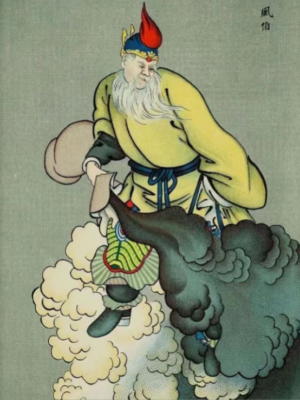
Wind Lord Fengbo (风伯): Taoist God of Wind and Weather
Fengbo, also known as Fengshi, Feilian, or Ji Bo, was an ancient wind god in [...]
Dec
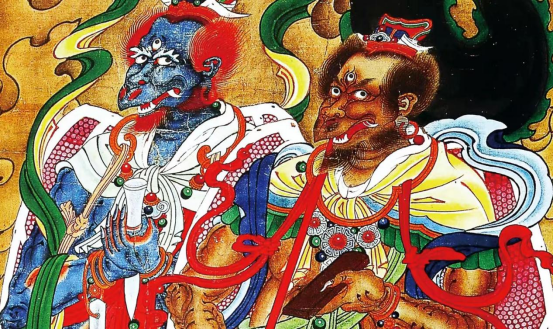
Left Attendant General Qing Lei: The Taoist Thunder Deity of Vitality and Divine Justice
The Left Attendant General Qing Lei (左侍将青雷将军), formally known as General Qinglei of the Left [...]
Dec
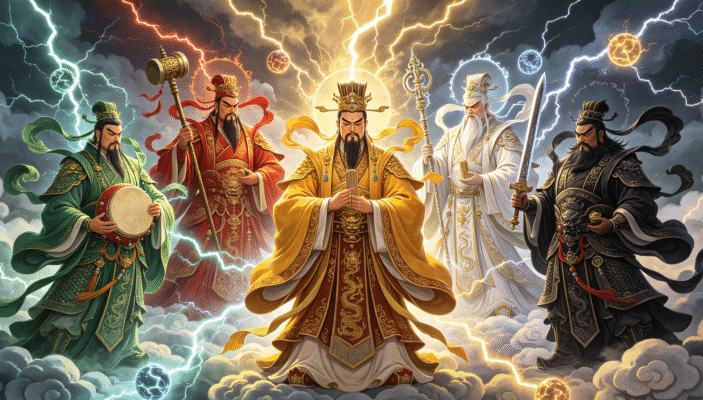
Five Directional Thunder Emperors: Supreme Taoist Gods of the Five Thunder Directions
The Five Directional Thunder Emperors (五方雷帝, Wufang Leidi) are among the highest-ranking deities in the [...]
Dec