

Introduction
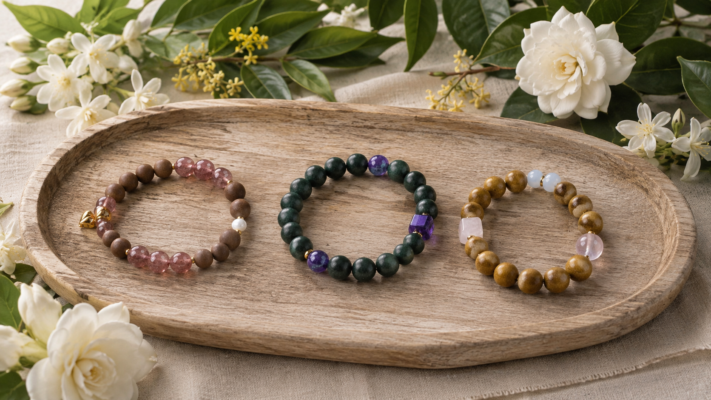
The Madam Huarui herbal bracelet is a floral-botanical design built around rose, amethyst, and warm herbal incense beads. Its appeal lies in contrast: a recognizable flower leads the fragrance story, while roots and rhizomes add depth, and purple quartz gives the bracelet a composed visual center.
Rather than treating the bracelet as medicine or as a promise of a particular outcome, this guide looks at what can be observed and responsibly interpreted: the listed formula, the fragrance profile, the material pairing, the historical resonance of the name, and the symbolism that a wearer may choose to attach to the design.
This article examines one design in detail. For the broader category—how botanical beads are made, how fragrance behaves, and how cultural meaning differs from a medical claim—start with What Are Chinese Herbal Bracelets?
Because rose is central to the formula, readers comparing floral compositions may also find our guide to jasmine, gardenia, and osmanthus herbal bracelets useful. Madam Huarui is warmer and more root-led than those three flower-focused blends.
What Is the Madam Huarui Herbal Bracelet?
Madam Huarui, also presented as Huarui Furen, combines 10 mm botanical incense beads with amethyst. The product formula lists rose, red ginseng, safflower, rhodiola, and rhubarb. Together, these ingredients create a layered composition in which floral, earthy, and gently bitter-aromatic impressions can coexist.
The beads are not simply a carrier for perfume applied to the surface. Their identity comes from a blended botanical formula and the way that formula sits beside a mineral material. This makes the piece part fragrance object, part jewelry design, and part cultural storytelling.
The Botanical Formula
Rose
Rose provides the most immediately legible theme. In fragrance, rose can feel soft, rich, fresh, powdery, or honeyed depending on the material and preparation. Here it establishes a floral opening and connects naturally with the name Huarui, which literally evokes the inner part or stamen of a flower.
Red Ginseng
Red ginseng contributes a root-like, warm, and slightly bitter aromatic foundation. In the design narrative it prevents the formula from becoming a simple rose fragrance. The contrast between flower and root gives the beads greater depth and a more distinctly herbal character.
Safflower, Rhodiola, and Rhubarb
Safflower reinforces the warm botanical direction, while rhodiola and rhubarb add further root and rhizome associations. Their presence should be understood as part of the bracelet’s aromatic material recipe. Wearing the beads is not equivalent to ingesting or clinically using these botanicals, and the article makes no therapeutic claim for skin contact or fragrance exposure.
Why Amethyst Changes the Design
Amethyst is the purple variety of quartz, as explained by the Gemological Institute of America. Its lilac-to-deep-purple color gives the bracelet a cool visual counterpoint to the warm rose-and-root formula.
In traditional and contemporary jewelry symbolism, amethyst is often associated with calmness, clarity, and thoughtful restraint. Those ideas are cultural interpretations, not scientific effects. Visually, however, the association is easy to understand: translucent purple beads can make the composition feel quiet and refined rather than bright or playful.
What Does the Name “Madam Huarui” Mean?
Madam Huarui is remembered in Chinese literary history as a woman associated with court poetry, but her exact identity and the attribution of works remain debated. A modern Springer reference entry on Huarui Furen explicitly notes competing historical identifications.
For this bracelet, the name is best read as an aesthetic and literary frame rather than proof that the formula came from a particular palace recipe. It brings together flower imagery, elegance, resilience, and cultivated expression. Keeping that distinction protects the design story from turning uncertain history into a false origin claim.
Fragrance, Mood, and Everyday Use
The expected fragrance is floral-herbal rather than purely rosy. Rose may be the first idea a wearer notices, but the root materials create warmth and gravity. Because natural aromatic impressions are personal and can vary with temperature, storage, skin moisture, and the age of the beads, no two wearers will describe the scent in exactly the same way.
The bracelet can suit reading, journaling, meditation, or other quiet routines when the wearer wants a tactile reminder to slow down. It should not be presented as a treatment for stress or sleep. Readers exploring the wider philosophical context of emotional steadiness can continue with Taoism and Anxiety. Its practical role is sensory and symbolic: scent, weight, color, and repetition can help mark a chosen moment of attention. For the practice itself, see What Is Meditation? Understanding Awareness Through Taoist Wisdom.
How to Choose and Care for It
Choose this design if you prefer warm floral fragrance, purple accents, and a composition that feels elegant without being delicate in character. Its use as a small sensory pause can also be compared with the mindful everyday ritual discussed in Tea and Taoism. If you are highly sensitive to fragrance or botanical materials, limit initial wear and stop using the bracelet if irritation occurs.
Keep the incense beads dry. Remove the bracelet before bathing, swimming, exercising heavily, or applying perfume and lotion. Amethyst itself can be cleaned carefully, but because it is combined with porous botanical beads, use a soft dry cloth for the whole bracelet. The GIA amethyst care guide also cautions against heat and steam.
View the Madam Huarui Bracelet product page for the current bead arrangement, materials, sizing, and availability.
Conclusion
Madam Huarui is best understood as a rose-led botanical bracelet whose character comes from balance: flower and root, warmth and purple clarity, literary suggestion and modern wearable design. Its meaning remains personal, while its formula and materials provide a concrete basis for choosing it.
To compare this design with other formulas, gemstones, and fragrance profiles, explore the Chinese Herbal & Botanical Bracelets collection.

Frequently Asked Questions
What ingredients are used in the Madam Huarui bracelet?
The listed botanical formula contains rose, red ginseng, safflower, rhodiola, and rhubarb, paired with 10 mm amethyst and herbal incense beads.
Does the bracelet smell only like rose?
No. Rose leads the floral theme, but roots and rhizomes add warmer, earthier, and more herbal dimensions.
Is Madam Huarui a verified historical incense formula?
The product uses the name as a literary and aesthetic theme. Because the historical identity of Huarui Furen is debated, the bracelet should not be described as a verified palace formula without additional primary documentation.
Does amethyst have proven calming powers?
Amethyst is quartz with a distinctive purple color. Calmness and clarity are traditional or personal symbolic associations, not guaranteed scientific effects.
Can I wash the bracelet in water?
Avoid soaking it. Botanical incense beads are porous and may change in texture, color, or fragrance after repeated contact with water.
Related Posts
Jasmine, Gardenia, and Osmanthus Herbal Bracelets: Exploring Three Floral Blends
Introduction Choosing a floral bracelet sounds simple until you discover how differently a flower can [...]
Sep

Jiang Zhen Xiang Bracelet: Aromatic Materials and Protective Symbolism
Explore the Jiang Zhen Xiang bracelet, its woody botanical formula, cinnabar, White Phantom quartz, protective [...]
Sep

Qinglin Sui Bracelet: Botanical Fragrance and the Symbolism of the Lu Bead
Explore Qinglin Sui’s woody-floral botanical blend, Super Seven quartz, Lu bead symbolism, everyday use, and [...]
Sep