

Chinese herbal bracelets combine aromatic botanical incense beads with wearable jewelry materials such as crystals, pearls, stones, and decorative fittings. Their character comes from the listed plant blend, the fragrance it creates, and the visual or symbolic design around it.
At Taoist World, “herbal bracelet” is a product-category description rather than a claim that every piece follows one historical recipe, has a medical effect, or serves as a Taoist ritual object. This guide explains how the blends differ, what fragrance and symbolism can mean, and how to choose and care for a bracelet based on the actual materials.
What Are Chinese Herbal Bracelets?
Chinese herbal bracelets are bracelets that incorporate aromatic herbal or botanical beads. In the designs discussed here, these incense beads are combined with decorative materials, creating jewelry that offers both a visual and an aromatic experience.
The word “herbal” refers to the ingredients used in the blend. Depending on the design, those ingredients may include flowers, aromatic woods, roots, or fruit ingredients. Each bracelet has its own composition; the category name does not describe one universal recipe.
A useful starting point is to separate three parts of the bracelet:
- The aromatic blend: the ingredients listed for the incense beads.
- The accompanying materials: pearls, crystals, stones, and decorative fittings.
- The design’s meaning: the ideas or wishes expressed through its name, colors, and symbols.
Looking at these separately helps you understand how they work together. It also prevents a poetic product name from being mistaken for a complete ingredient list.
Our Chinese Herbal & Botanical Bracelets collection includes several interpretations of this approach, from floral combinations to designs described as having deeper woody fragrances.

Fragrance and Chinese Cultural Objects
Fragrance has a long material history in China. For example, the Metropolitan Museum of Art holds a Chinese incense burner dating to the second–first century BCE, from the Western Han period.
Objects such as this provide a historical reference for the appreciation and use of incense. They do not establish that a particular modern bracelet follows an ancient recipe or was worn in the same form centuries ago.
This distinction leaves room to appreciate both history and contemporary design. A bracelet can draw inspiration from Chinese aromatic culture while combining its ingredients with modern jewelry arrangements.
For the wearer, fragrance may become part of an ordinary moment: getting dressed, sitting down to read, or pausing between tasks. The cultural connection gives the object context; the place it occupies in your own routine gives it personal meaning.
What Goes into a Botanical Bracelet?
Flowers and Other Botanical Ingredients
Flowers offer an accessible way to begin exploring the collection. Jasmine Longjing lists jasmine among its ingredients; Zhizi Hexiang includes gardenia; and Muxi Xiang’s botanical blend includes osmanthus.
Other designs introduce different ingredients. Feizi Xiao includes lychee in its blend, while Meng Ling Xiang combines lavender with ingredients including sandalwood.
These names help identify the character a design is built around. However, the finished fragrance comes from the complete formulation. A flower in an ingredient list does not tell you its proportion, and a familiar ingredient does not guarantee that the bracelet will smell exactly like the fresh plant.
Aromatic Woods and Blended Fragrance
Several formulas combine woods with flowers or other ingredients.
Wuzhen and E Li Zhang Zhong Xiang, for example, both list agarwood, clove, spikenard, and magnolia flower. Their remaining ingredients differ: Wuzhen includes costus root, while E Li Zhang Zhong Xiang includes pear and sandalwood.
This is a useful example of why two bracelets can belong to the same broad fragrance family while having distinct recipes. Shared ingredients give us a basis for comparison, but they do not establish identical proportions or identical scent.
Our guide to woody herbal bracelets explores this pair in more detail.
Crystals, Pearls, and Decorative Details
The aromatic beads are only one part of the design.
Freshwater pearls bring luster; amethyst introduces purple tones; clear quartz creates a different visual contrast beside botanical beads. Decorative elements can also carry meaning, such as the Lu bead included in Qinglin Sui.
For example, the Jasmine Longjing Bracelet combines botanical beads with freshwater pearls and strawberry quartz. Its appearance is therefore shaped by the interaction of several materials, rather than fragrance alone.
When selecting a bracelet, consider the whole arrangement: color, bead size, surface texture, and the way it will look alongside clothing or other jewelry.
Exploring Different Types of Chinese Herbal Bracelets
Fragrance descriptions offer a helpful starting point, although the following groups are a guide to this collection rather than fixed historical categories.
Floral Blends: Jasmine, Gardenia, and Osmanthus
These three designs provide a natural introduction for someone interested in floral fragrances.
Jasmine Longjing is described as having a light floral and herbal character. Zhizi Hexiang combines floral and woody notes, while Muxi Xiang is described in its original product information as having a delicate floral fragrance.
Their accompanying materials differ as well. Comparing the blend and the jewelry together gives a fuller picture than choosing by the flower name alone.
Explore the differences in our guide to jasmine, gardenia, and osmanthus herbal bracelets.
Fruit Ingredients and Woody Combinations
Feizi Xiao and E Li Zhang Zhong Xiang introduce fruit ingredients into more complex blends.
Feizi Xiao includes lychee alongside ingredients such as agarwood and clove. E Li Zhang Zhong Xiang includes pear alongside several aromatic materials. These ingredients distinguish their formulas without telling us precisely how sweet, fresh, or strong the finished fragrance will be.
The Feizi Xiao herbal bracelet guide looks more closely at the relationship between its botanical formula and crystal arrangement.
Designs for Quiet Personal Moments
Some bracelets are presented through a particular mood or setting. Meng Ling Xiang’s lavender-and-sandalwood blend is paired with softly colored materials, making an evening routine a natural theme for its design story.
You might choose such a piece as a reminder to finish the day more deliberately: put away your phone, close your work, or make time for something restful.
That is a personal use of the object, rather than a promise that wearing it will produce sleep or treat a condition. Our Meng Ling Xiang bracelet article develops this connection between fragrance, design, and an evening ritual.
Cultural Meaning and Personal Intention
A bracelet’s meaning can come from several sources: a cultural concept, a decorative symbol, the story behind its name, or an intention chosen by its wearer.
The Five Elements Tianzi Fragrance Bracelet, for example, uses the idea of balance as a design theme. Its symbolism offers a way to think about relationships and change. It should not be read as proof that the bracelet regulates organs or bodily functions.
You can explore this design in our article on Five Elements herbal bracelets.
For readers approaching these objects through Taoist thought, the connection can also be practical. A bracelet may remind you to give attention to ordinary actions and to the way you move through the day. Our introduction to Taoist philosophy and daily practice explores that broader perspective.
The object does not replace the practice. Its value as a reminder develops through what you choose to do when you notice it.
Fragrance, Enjoyment, and Health Claims
It is worth being precise about what an aromatic bracelet offers. Enjoying its scent, appreciating its appearance, and using it as a personal reminder are different from demonstrating a medical effect.
The National Center for Complementary and Integrative Health’s overview of aromatherapy describes aromatherapy as an approach involving essential oils. It also notes that evidence for some uses, including insomnia, is limited.
That research does not automatically apply to a bracelet made with botanical incense beads. The formulation, amount of aromatic material, and way it is used may differ.
Choose a Chinese herbal bracelet for its craftsmanship, materials, fragrance, and meaning. An ingredient’s traditional use in another context does not establish a therapeutic benefit from wearing it.
How to Choose a Chinese Herbal Bracelet
Start with the Fragrances You Enjoy
Think about whether floral, woody, or mixed herbal descriptions appeal to you. Use that preference to narrow the collection, then read the full blend information.
If you are particularly sensitive to fragrance intensity, ask about the individual piece before ordering. Written descriptions are useful, but they cannot fully reproduce a scent.
Look at the Materials and Fit
Consider the colors you wear most often and whether you prefer pearls, pale crystals, purple tones, or darker stones.
Check the wrist range and bead dimensions on the individual product page. A larger bead can feel quite different beside a sleeve or on a desk, even when two bracelets are intended for the same wrist size.
Let Meaning Support Your Choice
A symbolic theme can make a bracelet more personal, but it does not need to be complicated.
You may connect with a wish for balance, a reminder of self-respect, or a design that reflects your interest in Chinese culture. Choose a meaning that feels relevant to your life, alongside materials you actually enjoy wearing.
Caring for Botanical Incense Beads
Follow the care guidance supplied for the particular bracelet. Botanical beads and accompanying jewelry materials need to be considered together.
Taoist World’s published guidance recommends keeping these bracelets away from soaking, prolonged humidity, strong heat, and direct sunlight. It also advises gentle handling and dry storage, as detailed on the Zhizi Hexiang Bracelet page.
For everyday care:
- Remove the bracelet before bathing or swimming.
- Avoid stretching or pulling it unnecessarily.
- Store it in a clean, dry place away from strong fragrances.
- Ask for specific instructions before applying oils, perfume, or cleaning products.
Treat fragrance duration as product-specific. A botanical ingredient list alone cannot support a promise that a bracelet will retain the same scent for a fixed number of months.
Explore the Herbal Bracelet Series
If a particular material or design has caught your interest, these guides continue the discussion:
- Jasmine, gardenia, and osmanthus: three floral blends
- Wuzhen and E Li Zhang Zhong Xiang: comparing woody blends
- Feizi Xiao: lychee and crystal design
- Meng Ling Xiang: lavender, sandalwood, and an evening ritual
- Madam Huarui: rose, amethyst, and floral symbolism
- Five Elements Tianzi: the meaning behind the design
- Qinglin Sui: fragrance and Lu bead symbolism
- Jiang Zhen Xiang: aromatic materials and protective symbolism
- Hei Long Xian: dark stones and symbolic meaning
Each explores one part of the collection in greater depth. To view the available designs together, visit our Chinese Herbal & Botanical Bracelets collection.
Frequently Asked Questions
Do Chinese herbal bracelets all contain the same ingredients?
No. Each design has its own listed blend. Some share several ingredients, while others are built around different flowers, woods, or botanical combinations. Read the individual formula rather than relying on the category name.
Are herbal bracelets the same as essential oil diffuser bracelets?
Do not assume they are interchangeable. The bracelets discussed here contain botanical incense beads and are not presented as beads intended for adding essential oils. Follow the product’s instructions before applying any fragrance.
Do I need to burn the incense beads?
No. These products are wearable jewelry. “Incense beads” describes their aromatic component; it is not an instruction to burn the bracelet.
Are all Chinese herbal bracelets Taoist ritual objects?
A botanical blend does not by itself establish a religious function or consecration status. A design may draw on Chinese cultural ideas without being a consecrated ritual implement. Check the individual product’s description and specifications.
Does Jasmine Longjing contain Longjing tea?
The supplied formula for this design lists jasmine, eupatorium, ophiopogon, and lily; it does not list Longjing tea. Product names can be evocative, so the actual ingredient list is the better reference.
How long will the fragrance last?
There is no single duration established for the whole collection. Ask about the specific bracelet, follow its storage guidance, and avoid assuming that every blend retains the same fragrance strength over time.
Can I wear a herbal bracelet simply because I like its appearance?
Yes. You can appreciate its colors, materials, and fragrance without adopting a particular spiritual belief. Learning about the design adds context, while the meaning you give it remains personal.
Related Posts
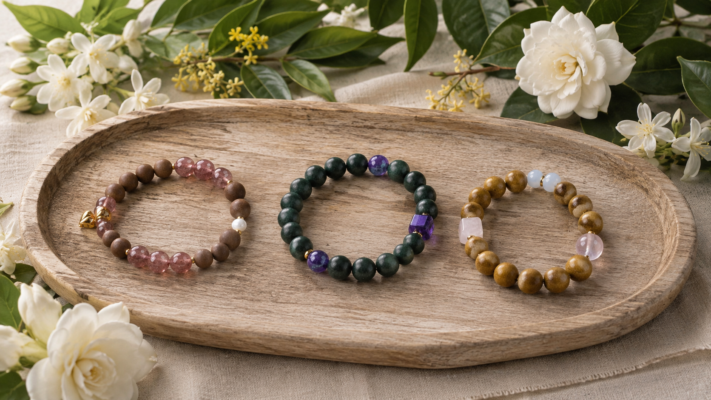
Jasmine, Gardenia, and Osmanthus Herbal Bracelets: Exploring Three Floral Blends
Introduction Choosing a floral bracelet sounds simple until you discover how differently a flower can [...]
Sep
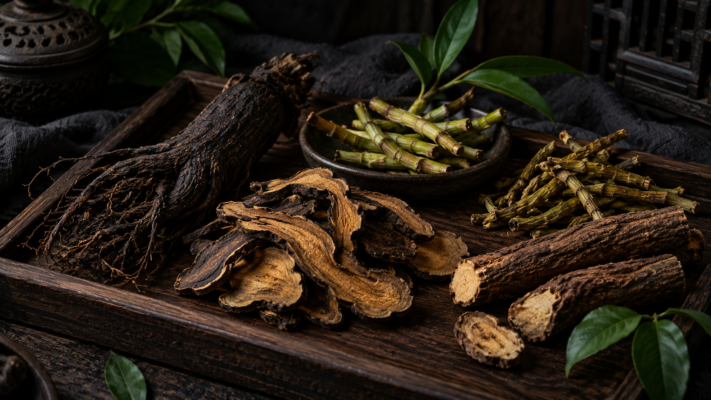
Hei Long Xian Bracelet: Dark Stones, Woody Fragrance, and Symbolic Meaning
Explore the Hei Long Xian bracelet, its dark stones, botanical formula, protective symbolism, material facts, [...]
Sep

Qinglin Sui Bracelet: Botanical Fragrance and the Symbolism of the Lu Bead
Explore Qinglin Sui’s woody-floral botanical blend, Super Seven quartz, Lu bead symbolism, everyday use, and [...]
Sep