
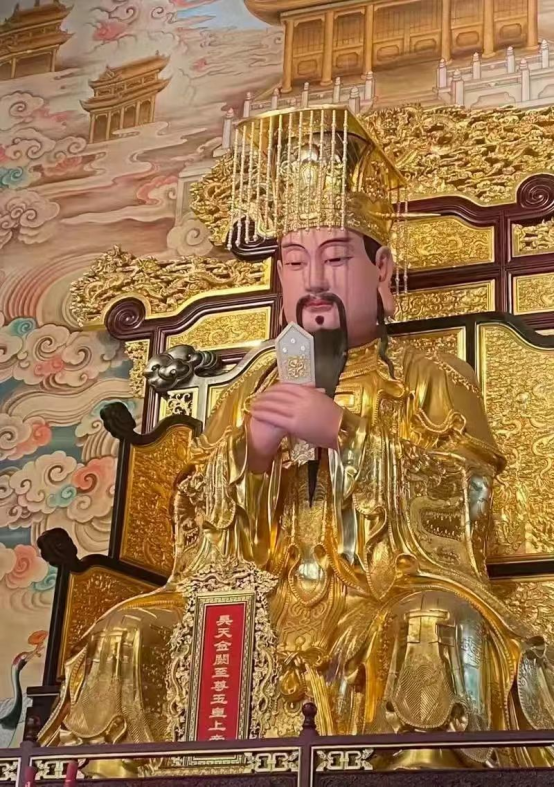
The Jade Emperor, whose full honorific title is “The Supreme Sovereign of the Heavenly Golden Tower, the Unsurpassed and Ultimate Ruler, the Naturally Wondrous and Infinite, the Universal and True Jade Emperor of the Highest Heaven,” is the highest celestial deity in Taoism and Chinese folk belief. He rules the heavens, the mortal world, and the underworld, governing all gods, immortals, spirits, and living beings across the Three Realms and Ten Directions. In traditional Chinese culture, the Jade Emperor symbolizes supreme heavenly authority, cosmic order, and moral justice.
Origin and Evolution of the Jade Emperor Belief
Ancient Worship of Heaven
The origins of the Jade Emperor can be traced back to the worship of the “Supreme Deity of Heaven” during the Shang and Zhou dynasties. Ancient Chinese rulers believed Heaven governed natural law, morality, and political legitimacy. Over time, this heavenly authority gradually became personified as a supreme celestial ruler.
The concept also reflected the traditional Chinese belief in harmony between Heaven and humanity. As imperial systems developed, the heavenly ruler became closely connected with earthly kingship and moral governance.
Integration into Taoism
After Taoism emerged during the Eastern Han Dynasty, belief in the Heavenly Sovereign was gradually incorporated into the Taoist pantheon. During the Wei, Jin, and Northern and Southern Dynasties, the title “Jade Emperor” became increasingly important within Taoist theology.
By the Tang and Song dynasties, the Jade Emperor had officially become the supreme ruler of the celestial bureaucracy. Song emperors expanded his honorific titles and promoted large-scale state rituals dedicated to him. As a result, his worship spread widely across China and later throughout overseas Chinese communities.
The Jade Emperor also stands above many celestial departments within Taoism, including the thunder, star, and fire systems represented by the The Fire Ministry Emperor article.
Divine Authority and Cosmic Functions
Supreme Ruler of the Three Realms
As the supreme ruler of Heaven in Taoist belief, the Jade Emperor presides over a vast celestial bureaucracy and governs the cosmic order of the Three Realms. Traditional Chinese concepts of the heavenly court and cosmic hierarchy are also reflected in discussions of the Chinese heavenly realm system.
He commands the entire heavenly bureaucracy and maintains the balance between yin and yang. Through this divine order, the universe operates according to moral law and cosmic harmony.
Commander of the Celestial Bureaucracy
In Taoist cosmology, countless gods and divine officials serve under the authority of the Jade Emperor. Celestial ministries, star deities, thunder officials, mountain gods, and river spirits all function within his heavenly administration.
Among these divine systems are the underworld rulers described in Hades Great Emperor, who govern judgment and reincarnation beneath the mortal realm.
The Jade Emperor represents the highest source of legitimacy for both heavenly and earthly authority. Traditional emperors were called “Sons of Heaven” because their right to rule was believed to originate from Heaven itself.
Rewarding Good and Punishing Evil
One of the Jade Emperor’s most important functions is moral judgment. Taoist belief teaches that all human actions are recorded and eventually rewarded or punished according to heavenly law.
Natural disasters, prosperity, social harmony, and personal fortune are often viewed as reflections of moral balance within society. The Jade Emperor oversees this system through celestial officials and divine departments that investigate human behavior.
This principle of cosmic justice closely connects with Taoist teachings about karmic consequence, moral conduct, and spiritual harmony.
Symbolism and Religious Meaning
The Jade Emperor symbolizes heavenly order, justice, compassion, and universal balance. His image reflects the Taoist ideal that Heaven responds to human virtue and maintains harmony throughout the cosmos.
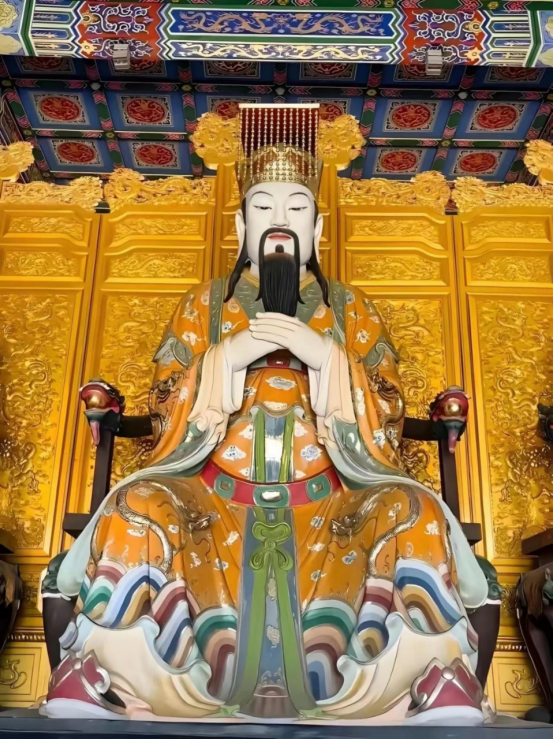
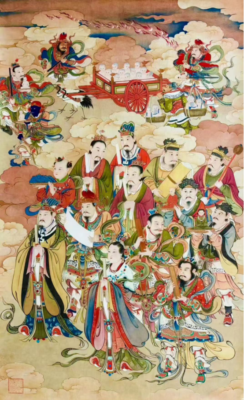
In temples and religious artwork, he is usually depicted wearing imperial robes and a ceremonial crown while seated upon a heavenly throne. His dignified appearance represents supreme authority and sacred wisdom.
In many Taoist rituals, priests pray to the Jade Emperor for protection, peace, favorable weather, and the removal of misfortune. His birthday, celebrated on the ninth day of the first lunar month, remains one of the most important observances in traditional Taoist culture.
The structure of the celestial court under the Jade Emperor also connects with divine systems discussed in All the Sages of Fengdu, which explains how Taoist heavenly and underworld administrations mirror imperial governance.
Cultural Influence in the Modern World
The worship of the Jade Emperor continues to influence Taoist temples and Chinese communities throughout East and Southeast Asia. His belief system preserves traditional ideas about morality, cosmic order, family ethics, and spiritual responsibility.
Today, the Jade Emperor remains a powerful cultural symbol of justice, balance, and harmony between humanity and Heaven. His image reflects the enduring Chinese understanding that moral order and cosmic order are inseparable.
Related Posts
The Thirty-Six Heavenly Generals in Taoism: Guardians of Thunder, Exorcism, and Celestial Justice
The Thirty-Six Heavenly Generals are one of the most important groups of martial guardian deities [...]
Dec
Hades Great Emperor: Supreme Ruler of the Taoist Underworld
The Hades Great Emperor, also known as the Fengdu Emperor or the Northern Yin Emperor, [...]
Dec
Nine Heavens Creator of Spirits in Taoism
The Nine Heavens Creator of Spirits is a divine system composed of nine celestial emperors [...]
Dec