
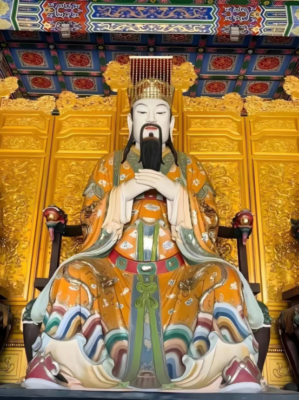
The Hades Great Emperor, also known as the Fengdu Emperor or the Northern Yin Emperor, is the supreme ruler of the Taoist underworld. In Taoist belief, he governs the realm of Fengdu and presides over the judgment of souls, reincarnation, and the balance between yin and yang.
As the highest authority of the underworld, the Fengdu Emperor shares cosmic governance with the Heavenly Court. While heavenly deities oversee the affairs of the living world, the Hades Great Emperor controls the realm of the dead and maintains the order of the netherworld.
Origin and Position in the Taoist Underworld
The belief in the Fengdu Emperor developed from ancient Chinese concepts of the afterlife and spirit worship. After Taoism systematized these traditions, the Fengdu Emperor became the supreme ruler of the underworld under the mandate of the Primordial Heavenly Emperor.
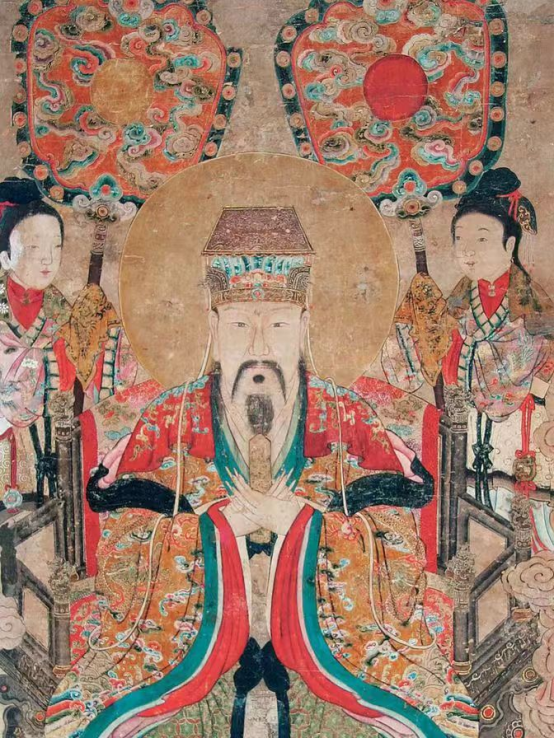
According to Taoist scriptures, he resides in Mount Luofeng, the sacred center of the underworld located in the northern Gui region. Beneath his authority exists a vast spiritual bureaucracy that includes judges, ghost officials, spirit messengers, prison wardens, and the rulers of the hell courts.
The broader hierarchy of the Taoist underworld can also be seen in All the Sages of Fengdu.
Traditional Taoist records describing the Great Emperor of Fengdu and his authority over the underworld present him as the supreme judge who maintains spiritual order between life and death.
Core Duties of the Hades Great Emperor
Governing Life and Death
One of the primary responsibilities of the Fengdu Emperor is overseeing the lifespan and death of all living beings. Taoist belief states that after death, every soul must return to the underworld of Fengdu, where spiritual officials examine the deeds committed during mortal life.
Presiding Over Judgment
The Hades Great Emperor supervises the system of rewards and punishments in the afterlife. Virtuous souls may enter favorable reincarnations, while sinful souls are sent to the various hells to undergo punishment before reincarnation becomes possible.
The judicial structure beneath him is administered through officials such as the Underworld Judge.
Maintaining Netherworld Order
In addition to judgment, the Fengdu Emperor also maintains order throughout the underworld. He suppresses rebellious spirits, prevents corruption among ghost officials, and ensures that wandering souls do not escape into the human realm.
This role reflects the Taoist belief that cosmic balance depends upon both heavenly and underworld law.
Appearance and Religious Worship
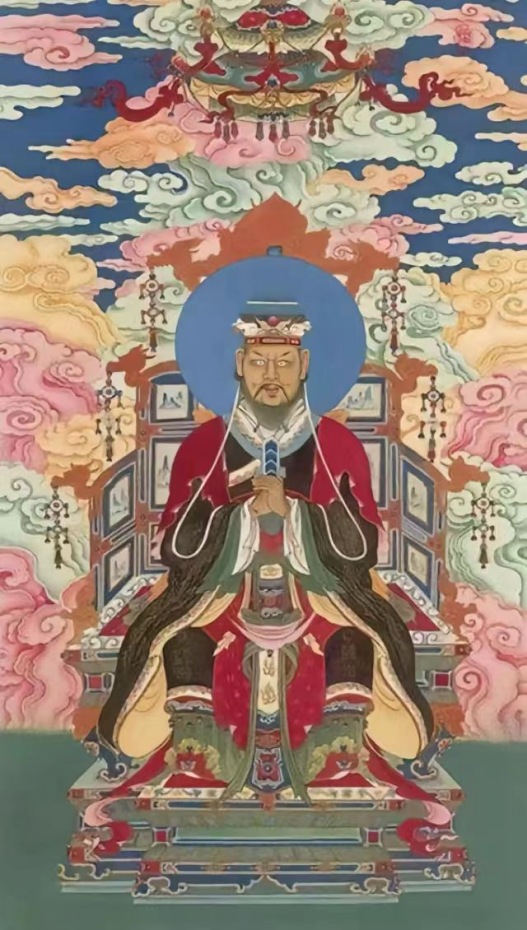
In Taoist iconography, the Hades Great Emperor appears as a solemn imperial ruler wearing a dark ceremonial robe and an emperor’s crown. He is often depicted holding the Book of Life and Death or a jade judgment tablet while seated within the great hall of Fengdu.
Celestial judges and spirit guardians commonly stand beside him, symbolizing his supreme authority over the underworld courts.
His sacred festival is traditionally observed on the ninth day of the ninth lunar month. During this time, Taoist temples may hold rituals to calm wandering spirits, pray for longevity among the living, and assist deceased souls seeking peace in the afterlife.
Relationship with Other Underworld Deities
Although the Fengdu Emperor governs the entire underworld, he does not personally conduct every trial. The rulers of the various hell courts carry out specific judgments and punishments under his command.
The spirit-capturing duties of the underworld are instead handled by officials such as Black and White Impermanence.
The Fengdu Emperor is also sometimes confused with the Eastern Mount Tai Emperor. However, their functions differ. The Eastern Mount Tai Emperor mainly supervises earthly karmic records and transitional spiritual affairs, while the Fengdu Emperor directly governs the underworld courts and reincarnation system itself.
Conclusion
In folk religion, worship of the Fengdu Emperor represents both fear of moral judgment and hope for spiritual protection. Many believers pray to him for the peaceful treatment of their ancestors in the underworld and for protection against evil influences.
Also,the cultural imagery of Fengdu Ghost City in Chinese religious tradition also strengthened the association between Fengdu and the Taoist vision of the afterlife.
His image frequently appears in Taoist ritual paintings, temple murals, funeral traditions, and spiritual talismans. These representations reinforce the moral teaching that good deeds bring blessings while evil actions ultimately lead to punishment.
The Hades Great Emperor therefore symbolizes not only authority over death, but also the Taoist principle that cosmic justice remains active across both the mortal and spiritual worlds.
Related Posts
All the Sages of Fengdu: Taoist Netherworld Deities and Their Roles
The Sages of Fengdu are a collective group of deities and spiritual officials within the [...]
Dec
The True Spirits of the Six Heavenly Palaces in Luofeng
Also known as the Immortals of the Six Heavenly Palaces, the True Spirits of the [...]
Dec
The Jade Emperor in Taoism: Supreme Ruler of Heaven and Cosmic Order
The Jade Emperor, whose full honorific title is “The Supreme Sovereign of the Heavenly Golden [...]
Dec