
The Sages of Fengdu are a collective group of deities and spiritual officials within the Taoist underworld system. Centered around the Great Emperor of Northern Yin Fengdu, these divine rulers oversee judgment, punishment, reincarnation, and the balance between yin and yang.
According to Taoist ritual traditions, the Fengdu pantheon contains multiple levels of authority, including supreme rulers, assistant ministers, regional governors, and functional officials. Together, they maintain order in the underworld and enforce the Taoist principle that good and evil ultimately receive their proper consequences.
In Chinese folk religion, the Sages of Fengdu are also worshipped for protection against evil spirits, soul-calming rituals, and prayers for peace after death.
The Supreme Ruler of Fengdu
At the center of the Taoist netherworld stands the Great Emperor of Northern Yin Fengdu, the highest ruler of the underworld. Taoist tradition states that he resides on Mount Luofeng in the northern Gui region and commands the courts, prisons, and spiritual administrations of the dead.
He governs the Register of Life and Death, supervises reincarnation, and controls the balance between yin and yang throughout the underworld system.
The authority of the Fengdu Emperor also appears in Hades Great Emperor.
Traditional descriptions of Fengdu as the Taoist City of Ghosts also connect the underworld court with sacred mountains, spirit prisons, and the broader geography of the afterlife in Chinese religion.

Core Assistant Ministers of Fengdu
Several high-ranking ministers assist the Fengdu Emperor in governing the underworld.
The Assistant Supreme Spiritual Lord and the Assistant Mysterious Nourishment Heavenly Lord coordinate many of the administrative affairs within the netherworld. In addition, the Grand Minister of Fengdu oversees official governance, while the Grand Tutor of Fengdu supervises moral instruction and ritual order.
These officials help maintain balance within the massive spiritual bureaucracy of Taoist cosmology.
Their administrative functions resemble the structure described in The True Spirits of the Six Heavenly Palaces in Luofeng.
The Four Bright Dukes
The Four Bright Dukes govern the major regions of the underworld and record the merits and sins of deceased souls.
Eastern Bright Duke (Xia Qi)
The Eastern Bright Duke supervises souls associated with the eastern regions and reviews moral conduct connected with earthly actions.
Southern Bright Duke (Shao Shuang)
The Southern Bright Duke evaluates karmic records and participates in regional judgment within the underworld courts.
Western Bright Duke (King Wen of Zhou)
The Western Bright Duke symbolizes justice and righteous governance, continuing the traditional cultural image of King Wen as a virtuous ruler.
Northern Bright Duke (Wu Jizha)
The Northern Bright Duke plays an especially important role in reincarnation affairs. Taoist belief states that he oversees reincarnation procedures within the Gan Silian Wan Lü Heavenly Palace.
The reincarnation system of the underworld is also connected with Mengpo.

Functional Officials of the Netherworld
Beyond the major rulers and dukes, the Fengdu system contains many specialized officials responsible for maintaining spiritual order.
The Beidou Lord of the Ghost Officials of Fengdu calculates karmic records and examines the relationship between sins, blessings, and celestial fortune.
The Director of the Three Officials’ Forbidden Bureau and the Lord of the Right Forbidden Department enforce spiritual prohibitions and supervise the movement of souls within the underworld.
Meanwhile, the Water Office’s Life-Determining Lord manages water-related spiritual affairs and oversees souls connected with rivers, lakes, and aquatic deaths.
The Imperial Envoy Against Wrongdoing investigates injustice in both the mortal world and the underworld, ensuring that spiritual law remains fair and balanced.
Additional attendants and court officials maintain rituals, manage records, and protect the palace of Fengdu, allowing the entire underworld system to operate smoothly.
Religious Meaning and Cultural Influence
The Sages of Fengdu form a complete governance structure that includes judgment, punishment, redemption, and reincarnation. Taoist belief presents the underworld not simply as a place of suffering, but also as a spiritual system designed to restore moral balance.
Souls guilty of serious wrongdoing face punishment, while those with lighter sins may still receive opportunities for redemption and rebirth.
This dual structure reflects the Taoist emphasis on both justice and compassion.
The moral philosophy behind these beliefs is further reflected in Ten Yama Kings of the Underworld.
In Taoist ritual ceremonies, priests often invoke the names of Fengdu deities to calm wandering spirits, ward off evil influences, and protect the living from misfortune. Over time, these beliefs also shaped temple art, literature, funeral customs, and spiritual talismans throughout Chinese religious culture.
Modern discussions about Fengdu deities and underworld beliefs in Chinese folk religion continue to show how these spiritual traditions remain influential in contemporary culture.
Related Posts
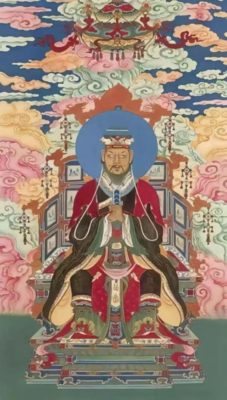
Hades Great Emperor: Supreme Ruler of the Taoist Underworld
The Hades Great Emperor, also known as the Fengdu Emperor or the Northern Yin Emperor, [...]
Dec
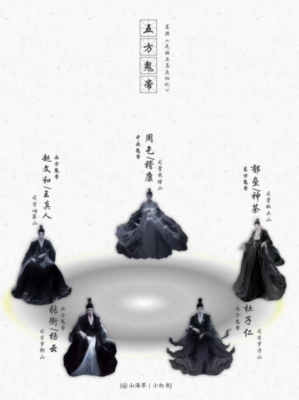
Five Directional Ghost Emperors
The Five Directional Ghost Emperors are powerful deities within the Taoist underworld system. They govern [...]
Dec
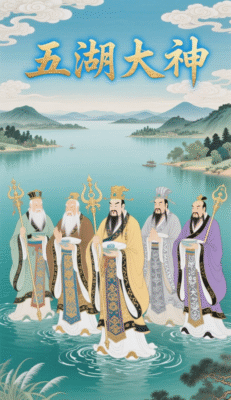
The Great Deities of the Five Lakes in Taoism
The Great Deities of the Five Lakes are important water gods in Taoism and Chinese [...]
Dec