
Discover how traditional Taoist consecration rituals transform an ordinary ritual implement into a sacred object through centuries-old ceremonial traditions.

What Does It Mean to Consecrate a Taoist Ritual Implement?
To many people outside the Taoist tradition, consecration is often understood as a simple blessing performed before a ritual object is used.
In Taoism, however, the meaning is far more profound.
A traditional Taoist consecration ceremony—commonly known as Kai Guang (Opening the Light)—is not merely a symbolic gesture or a prayer for good fortune. It is a formal religious ritual performed according to established liturgical traditions, through which an ordinary ritual implement is respectfully dedicated for sacred use within Taoist practice.
Rather than changing the physical object itself, the ceremony changes its religious role.
Before consecration, a ritual implement is simply a carefully crafted object.
After consecration, it becomes an instrument intended to participate in Taoist ritual life, representing the connection between practitioners, sacred tradition, and the deities honored within Taoism.
This distinction is one reason why traditional Taoist communities place great importance on proper consecration. As we explained in The Meaning of Taoist Ritual Implements: Why Consecration and Personalization Matter , consecration is not viewed as an optional decorative ceremony added after a ritual implement is completed. Instead, it is regarded as the final step that formally prepares the object for ritual use according to Taoist tradition.
Academic research on Taoist liturgical texts also shows that consecration ceremonies follow highly structured ritual procedures that have been preserved through generations of religious practice, reflecting both theological symbolism and ceremonial order rather than spontaneous acts of blessing.《道教開光儀式疏文之文本探勘與數位人文探索》

Understanding this context helps explain why Taoist consecration should not be confused with the simple idea of “blessing an object.”
It represents the completion of a traditional religious ceremony that integrates ritual knowledge, sacred symbolism, and the spiritual responsibilities of the officiating priest.
Why Consecration Matters in Taoist Tradition
Within Taoism, ritual implements are not regarded as magical objects possessing independent supernatural power.
Instead, they function as ceremonial instruments used within established religious practice.
Because of this, the preparation of a ritual implement extends beyond its physical craftsmanship.
Just as traditional craftsmanship preserves the cultural knowledge embedded in the object itself, consecration formally places that object within the ritual tradition where it is intended to serve.
The ceremony expresses several important ideas that have remained central to Taoist practice for centuries.
First, it demonstrates respect toward the deities honored during Taoist rituals.
Second, it affirms that sacred objects should be prepared through proper ceremonial procedures rather than treated as ordinary decorative items.
Finally, it reminds practitioners that ritual effectiveness depends not only on external objects, but also on sincerity, discipline, and personal cultivation.
For this reason, many Taoist priests describe consecration as an act of establishing harmony between the ritual implement, the practitioner, and the sacred tradition it represents.
Rather than creating spiritual power from nothing, the ceremony acknowledges the implement’s new role within Taoist religious life and prepares it to participate in future rituals according to traditional practice.
This perspective also explains why authentic Taoist consecration is performed with great care and according to established liturgical procedures rather than simplified public ceremonies or commercial demonstrations.
Preparing for a Taoist Consecration Ceremony

Before a Taoist ritual implement can be consecrated, considerable preparation takes place.
These preparations are not viewed as mere formalities. Within traditional Taoist ritual culture, the state of the ritual space, the officiating priest, and the timing of the ceremony are all considered important parts of creating an atmosphere of reverence and order.
Although details vary among different Taoist traditions and temples, several common principles appear throughout historical consecration practices.
Choosing an Auspicious Date
Traditional Taoist ceremonies are often performed on carefully selected dates.
Important festivals, deity birthdays, the first and fifteenth days of the lunar month, or other auspicious occasions may be chosen according to traditional calendrical systems.
The purpose of selecting an appropriate time is not simply to follow custom, but to express the Taoist principle of acting in harmony with natural rhythms and cosmic order.
This idea reflects a broader Taoist understanding that human activities should seek alignment with Heaven, Earth, and the cycles of nature rather than exist separately from them.
Preparing the Ritual Space
Before the ceremony begins, a ritual altar is arranged.
Incense, lamps, offerings, ritual texts, and sacred objects may be placed according to traditional liturgical requirements.
The ritual space itself is treated as a temporary sacred environment where communication between the human and divine realms is symbolically established.
One of the first actions performed by the officiating priest is often the purification of the ritual area through prayers, recitations, and ritual gestures.
This process, commonly described as “purifying the altar,” represents the removal of disorder and the creation of an environment suitable for sacred activity.
Rather than being a symbolic formality, purification marks the transition from ordinary daily space to sacred ritual space, preparing both the participants and the ritual implement for the ceremony that follows.
Preparing the Priest
Traditional Taoism places great emphasis on the personal preparation of the officiating priest.
Before major ceremonies, priests may observe periods of purification, including bathing, wearing clean ritual garments, and practicing forms of ritual abstinence.
These actions are not intended as displays of personal holiness.
Rather, they express respect for the ceremony and remind participants that sacred rituals require concentration, sincerity, and disciplined conduct.
In many Taoist traditions, the effectiveness of a ritual depends not only on external procedures but also on the moral cultivation, training, and spiritual responsibility of the priest conducting the ceremony.
For this reason, authentic consecration ceremonies are traditionally performed by experienced priests who have received formal ordination and ritual transmission.
The Main Stages of a Traditional Taoist Consecration Ritual

Although consecration ceremonies differ among Taoist lineages, many traditional rituals share a similar structure.
Historical liturgical texts describe a sequence of ceremonial stages that gradually transform an ordinary object into one prepared for sacred use.
The exact procedures may vary, but the underlying principle remains consistent:
the ritual implement is respectfully introduced into the symbolic world of Taoist religious practice.
Purifying the Ritual Space
The ceremony often begins with prayers and ritual actions intended to purify the altar and surrounding space.
Through recitations, incense, and symbolic gestures, the officiating priest establishes a harmonious environment suitable for sacred activity.
This stage represents the transition from ordinary space to ritual space.
Inviting the Deities
After purification, the priest respectfully invites the deities honored within the ritual tradition.
This stage does not imply a literal physical arrival, but expresses the Taoist understanding that ritual creates a symbolic connection between the human world and the sacred order represented by the deities.
The act of invitation reminds participants that Taoist ceremonies are not private actions performed in isolation, but part of a larger religious tradition.
Installing Sacred Elements
In some traditions, particularly when consecrating statues or larger ritual objects, symbolic items may be placed inside the object before the ceremony is completed.
These items can include:
- Ritual texts
- Five grains
- Sacred symbols
- Talismans
- Five-colored threads
- Mirrors or symbolic metals
This process, sometimes called “installing the inner elements,” reflects the idea that sacred objects should symbolically embody harmony, completeness, and connection with cosmic principles.
Empowering the Ritual Tools
Before the central act of consecration begins, several ritual instruments used during the ceremony are themselves symbolically prepared.
Traditionally, the writing brush, ritual mirror, and other ceremonial tools are purified and dedicated through prayers and sacred recitations before they are used.
In Taoist liturgical tradition, these objects are not regarded as ordinary tools. During the ceremony, they serve as ritual instruments through which the priest performs symbolic actions according to established ceremonial practice.
One particularly well-known element involves reflecting natural sunlight onto the ritual implement with a mirror.
Rather than focusing on the physical light itself, Taoist tradition understands this action symbolically. The reflected light represents the harmony of Heaven, Earth, and the natural order, expressing the hope that the ritual implement will be dedicated under the illumination of the cosmos rather than through human effort alone.
This symbolic “welcoming of light” prepares the ceremony for its most significant moment.
Opening the Light (Kai Guang)

The central moment of the entire ceremony is known as Kai Guang, literally translated as “Opening the Light.”
This is the stage from which the entire consecration ritual takes its name.
During this ceremony, the officiating priest traditionally uses a newly prepared ritual brush together with specially prepared ritual materials to symbolically touch designated points on the ritual implement.
For statues, these symbolic points often include the eyes, ears, nose, or mouth.
For ritual implements and sacred objects, the exact procedure varies according to their purpose and the liturgical tradition being followed.
The action is commonly described as “opening the eyes,” but its meaning extends far beyond a physical gesture.
Within Taoist tradition, it symbolizes awakening the ritual implement to its sacred purpose and formally dedicating it for religious use.
Rather than suggesting that supernatural power is mechanically transferred into an object, the ceremony expresses that the implement has now entered a different relationship with Taoist ritual life and religious practice.
For this reason, Kai Guang is widely regarded as the defining moment of the entire consecration ceremony.
Inviting the Divine Presence
After the symbolic opening has been completed, the ceremony enters its final stage.
Through additional prayers, ritual recitations, and formal liturgical procedures, the officiating priest completes the consecration and respectfully concludes the ceremony.
In Taoist tradition, this stage represents the formal completion of the ritual rather than the end of a performance.
The ritual implement is now considered ready to fulfill the ceremonial purpose for which it was created.
Many temples continue with scripture recitation or place the newly consecrated ritual implement before the altar for a period of offering after the main ceremony has concluded.
This final act emphasizes that consecration is understood not as a single isolated moment, but as the completion of an entire sequence of sacred rites carried out with reverence, discipline, and continuity of tradition.
Who Can Perform a Taoist Consecration?

One of the most common misconceptions is that a Taoist consecration ceremony can be performed by anyone who owns a ritual implement.
Traditional Taoism does not take this view.
Authentic consecration is generally carried out by a High Taoist Priest (Gaogong)—a priest who has received formal ordination, ritual transmission, and years of liturgical training within an established Taoist lineage.
The ceremony is not simply a matter of reciting a few prayers or following written instructions.
It requires a deep understanding of Taoist ritual texts, ceremonial procedures, symbolic actions, and the responsibilities associated with conducting sacred rites.
Because of this, genuine consecration has traditionally been performed in temples or under the guidance of qualified priests rather than as a personal ceremony at home.
For the same reason, many practitioners choose personal consecration instead of purchasing mass-produced ritual objects that have received only generalized blessings.
As discussed in Why Taoist Ritual Implements Need Personal Consecration & Customization (Internal Link), a consecration ceremony is traditionally understood as a dedicated ritual performed for a specific ritual implement and its intended practitioner, rather than a universal procedure applied identically to every object.
Common Misconceptions About Taoist Consecration

As Taoist culture has become more widely known around the world, the concept of Kai Guang is sometimes simplified or misunderstood.
Many popular explanations reduce the ceremony to ideas that do not accurately reflect traditional Taoist practice.
Understanding these misconceptions helps place consecration within its proper religious and cultural context.
Consecration Is Not Magic
A consecrated ritual implement is not regarded as a magical object capable of automatically changing a person’s life.
Traditional Taoism has never taught that simply possessing a ritual implement guarantees wealth, protection, or spiritual attainment.
Instead, the implement serves as a ceremonial aid within religious practice.
Its significance comes from the tradition it represents, the rituals in which it is used, and the sincerity of the practitioner—not from the object acting independently.
Consecration Cannot Replace Personal Cultivation
Another misunderstanding is that consecration itself is enough to solve life’s difficulties.
Taoist philosophy consistently emphasizes that external forms should support inner cultivation rather than replace it.
As the Tao Te Ching reminds readers, true transformation begins with one’s own character and alignment with the Dao rather than reliance upon external possessions.
From this perspective, a consecrated ritual implement should be understood as a reminder of one’s commitment to practice, not as a substitute for spiritual discipline.
Consecration Is Different from a Simple Blessing
Although the English word “blessing” is sometimes used to describe Taoist consecration, the two ideas are not identical.
A blessing may consist of prayers offered for protection or well-being.
A traditional Taoist consecration, however, is a complete liturgical ceremony involving prescribed ritual procedures, symbolic actions, and the formal dedication of a ritual implement for sacred use.
This distinction is important because it reflects the difference between a brief devotional act and a structured religious ceremony preserved within Taoist tradition.
Consecrated Taoist Ritual Implements
Understanding the meaning of Taoist consecration is only part of the journey. Choosing a ritual implement that has been crafted according to traditional principles and consecrated through authentic Taoist ceremony is equally important for many practitioners.
At Taoist World, every ritual implement within our Consecrated Taoist Ritual Implements Collection can be personally consecrated by an experienced Taoist High Priest following traditional Taoist liturgical procedures.
Rather than applying a generalized blessing to large batches of products, each consecration is performed individually for the specific ritual implement, respecting both Taoist tradition and the future practitioner who will use it.
Whether you are looking for ritual pendants, talismans, ritual rulers, or other sacred implements, our collection follows the same philosophy discussed throughout this article:
- Traditional craftsmanship
- Authentic Taoist symbolism
- Proper ritual consecration
- Respect for classical Taoist practice
👇Browse the complete Consecrated Taoist Ritual Implements Category👇
https://taoist-world.com/product-category/taoist-ritual-implements

A consecrated ritual implement should never be viewed as a substitute for personal cultivation. Instead, it serves as a meaningful companion to daily practice, reminding practitioners to approach the Tao with sincerity, discipline, and reverence.
Conclusion
A Taoist ritual implement is not considered sacred simply because of the material from which it is made or the beauty of its craftsmanship.
Within traditional Taoism, its religious significance is completed through a carefully preserved ceremonial tradition that combines ritual order, spiritual discipline, and profound respect for the relationship between humanity, nature, and the Dao.
Consecration is therefore best understood not as an act of “adding supernatural power” to an object, but as a formal dedication that places the implement within the living continuity of Taoist ritual practice.
Whether the ceremony includes purification, inviting the deities, opening the light, or the final liturgical rites, every stage serves the same purpose: to transform an ordinary handcrafted object into one that can participate in sacred ritual according to centuries of Taoist tradition.
At the same time, Taoist teachings consistently remind practitioners that ritual implements are companions to cultivation—not substitutes for it.
No ceremony can replace sincerity, ethical conduct, or lifelong self-cultivation.
When approached with reverence and understanding, a consecrated ritual implement becomes more than a ceremonial object. It becomes a lasting reminder of one’s commitment to walk the Taoist path with humility, discipline, and harmony.
If you are considering owning a traditional Taoist ritual implement, understanding the meaning behind its consecration is just as important as appreciating its craftsmanship.
After all, in Taoism, the true value of a ritual implement lies not only in what it is made of, but in the tradition, intention, and practice that give it purpose.
FAQ
Kai Guang, or “Opening the Light,” is a traditional Taoist consecration ceremony that formally dedicates a ritual implement for sacred use. It is a complete religious ritual rather than a simple blessing.
Traditionally, no. Authentic Taoist consecration is performed by an ordained High Taoist Priest (Gaogong) who has received formal ritual training and lineage transmission.
No. Taoism does not teach that ritual implements possess automatic magical powers. Their significance comes from proper ritual use, religious tradition, and the practitioner’s sincerity and cultivation.
A traditional ceremony typically includes altar purification, inviting the deities, preparing the ritual implement, empowering ritual tools, the Kai Guang (“Opening the Light”) ceremony, and concluding liturgical rites.
Not necessarily. Decorative items do not require consecration. However, ritual implements intended for formal Taoist ceremonies or personal religious practice are traditionally consecrated before use.
A blessing is generally a prayer for protection or well-being. Taoist consecration is a complete liturgical ceremony that formally dedicates a ritual implement for sacred religious use according to Taoist tradition.
Related Posts
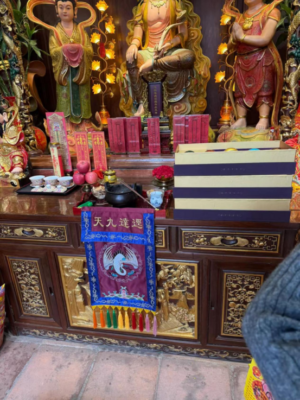
Taoist Consecration Ceremony: Meaning, Ritual Process, and Spiritual Power
Taoist consecration is a sacred ritual performed by qualified Taoist priests to invite divine spiritual [...]
Dec
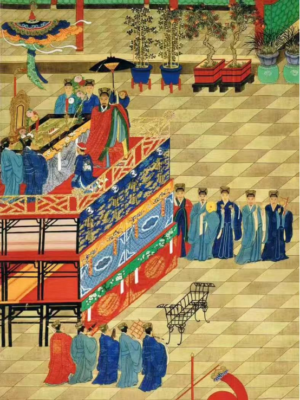
Introduction to the Procedure of the Dharma Assembly
Taoist dharma assemblies are among the most important ceremonial traditions in Taoism, combining scripture chanting, [...]
Dec
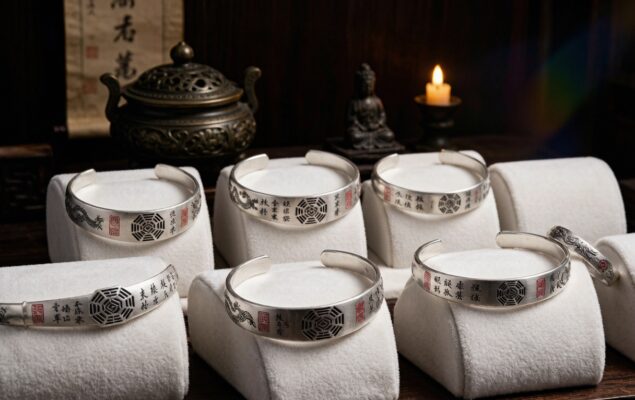
The Meaning of Taoist Ritual Implements: Why Consecration and Personalization Matter
Introduction Beyond Decoration: Understanding Taoist Ritual Implements When people first encounter Taoist ritual implements, they [...]
Aug