
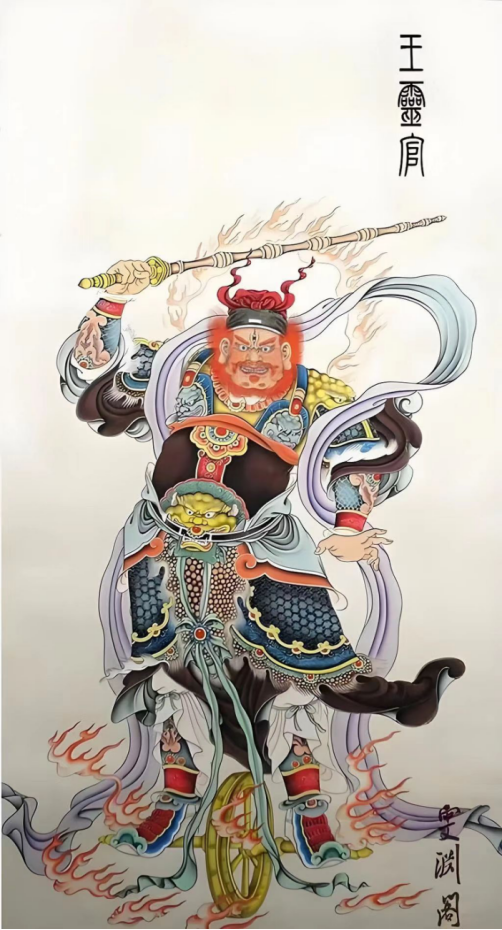
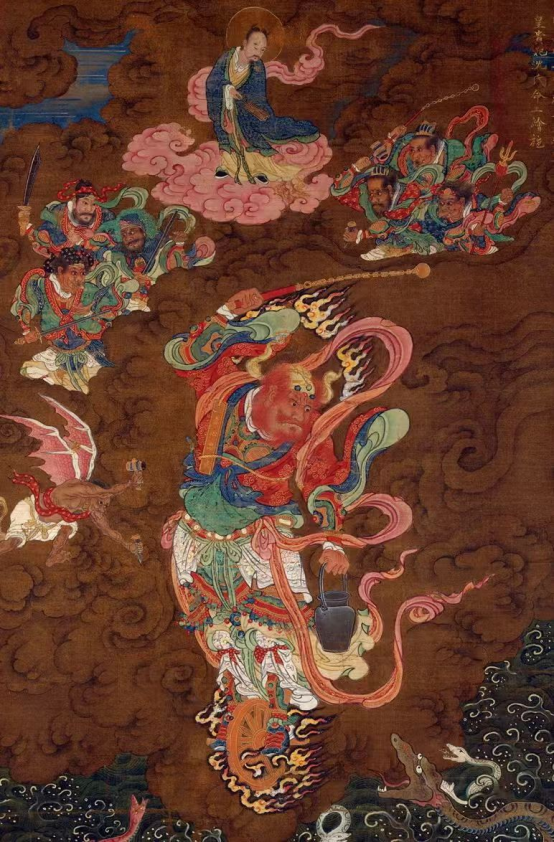
Wang Lingguan is one of the most powerful and respected guardian deities in Taoism, revered as the supreme protector of Taoist temples and the commander of countless spirit generals. Known as the “Head of the Five Hundred Spirit Deities” and the “Great Spirit General of Universal Inspection,” he serves within the Thunder and Fire Divisions under heavenly authority.
Among all Taoist guardian gods, Wang Lingguan is the most recognizable. His fierce image is commonly enshrined inside the mountain gate halls of Taoist temples, where he stands as the first divine protector against evil spirits, disasters, and malicious influences.
Iconic Appearance and Sacred Symbols
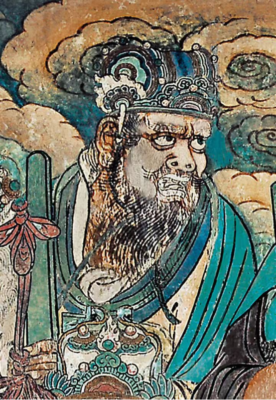
The image of Wang Lingguan is highly distinctive and filled with overwhelming spiritual authority.
He is usually portrayed with:
- A red face and long beard
- Three fierce eyes, including a vertical eye on his forehead
- Golden armor and flowing red robes
- A wind-fire wheel beneath his feet
- A golden whip or saber in his right hand
- A command tablet or loyalty decree in his left hand
His third eye symbolizes the power to perceive all spirits and hidden evil throughout the Three Realms. The golden whip represents divine punishment against demons, corruption, betrayal, and immoral behavior.
This famous appearance reflects the traditional saying:
“Three eyes observe all things in the Three Realms; one golden whip awakens all people under Heaven.”
His powerful visual identity also connects him spiritually with wandering protector deities such as the Divine Patrol Officer, though Wang Lingguan’s role is more closely tied to temple guardianship and heavenly law enforcement.
From Evil Spirit to Taoist Guardian
The origin story of Wang Lingguan is one of the most important redemption legends in Taoism.
According to Taoist tradition, Wang Lingguan was originally named Wang Wu and served as a violent local spirit or city god near the Xiang River. He demanded blood sacrifices and brought fear upon the local population.
During the Song Dynasty, the famous Taoist master Sa Shoujian traveled through the region and discovered that children were being sacrificed at Wang Wu’s temple. Outraged by the cruelty, Sa Shoujian used thunder magic to destroy the temple.
Wang Wu became furious and secretly followed Sa Shoujian for twelve years, waiting for an opportunity to take revenge. However, during those years he witnessed nothing except compassion, discipline, charity, and moral virtue. Unable to find any fault in the Taoist master, Wang Wu eventually became deeply moved.
He finally appeared before Sa Shoujian, knelt in repentance, and requested to become his disciple.
Sa accepted him and gave him the Taoist name Wang Shan, meaning “transforming from evil to goodness.” From that moment onward, Wang Shan devoted himself entirely to protecting the Tao, suppressing evil spirits, and defending righteous believers.
Because of his loyalty and merit, the Jade Emperor later appointed him as:
- Universal Inspection Great Spirit General
- Commander of the Thunder Divisions
- Leader of the Five Hundred Spirit Generals
This transformation from destructive spirit to righteous protector became one of Taoism’s greatest moral teachings about repentance, virtue, and spiritual redemption.
Guardian of Taoist Temples
Wang Lingguan’s most important role is guarding Taoist temples and sacred mountain gates.
In traditional Taoism, believers entering a temple should first pay respect to Wang Lingguan before worshipping higher deities. This symbolizes:
- Purifying the heart
- Repenting for wrongdoing
- Cultivating reverence
- Preparing spiritually before entering sacred space
Because of this role, nearly every orthodox Taoist temple contains a Lingguan Hall dedicated to him near the entrance.
He acts as the first spiritual barrier preventing demons, ghosts, curses, and negative energies from entering holy ground.
Inspector of the Three Realms
As the Great Spirit General of Universal Inspection, Wang Lingguan serves as a celestial inspector overseeing Heaven, Earth, and humanity.
His divine responsibilities include:
- Monitoring the good and evil deeds of mortals
- Inspecting spirits and lesser deities
- Reporting wrongdoing to Heaven
- Carrying out heavenly punishments
- Enforcing cosmic justice
His forehead eye is known as the “Inspector’s Eye,” representing divine awareness that sees through deception and hidden corruption.
This law-enforcement role connects him spiritually to martial celestial systems such as The Four Great Marshals, who also uphold heavenly authority through military and thunder power.
Exorcism and Disaster Removal
Wang Lingguan commands the forces of thunder and fire, making him one of Taoism’s strongest exorcist deities.
Believers pray to him for protection against:
- Evil spirits
- Demonic disturbances
- Curses and dark rituals
- Disease and plague qi
- Sudden disasters
- Misfortune within the home
Images and statues of Wang Lingguan are traditionally placed in homes and temples to repel harmful spiritual forces and maintain peace.
His fierce presence symbolizes righteous divine power capable of instantly destroying evil influences.
Protector of Taoist Cultivation
For Taoist practitioners, Wang Lingguan is also a guardian of spiritual cultivation.
He protects cultivators from:
- Spiritual interference
- Inner demonic obstacles
- Evil entities during rituals
- Distractions and temptations
- Harmful supernatural influences
Within Taoist ritual systems, he is regarded as a defender of sacred teachings and a protector of those who sincerely cultivate virtue and spiritual discipline.
His role as both protector and enforcer complements higher celestial military systems such as The Four Sage True Lords, who collectively maintain order throughout Heaven and Earth.
Cultural Influence and Symbolism
The worship of Wang Lingguan spread deeply throughout both organized Taoism and Chinese folk religion.
He became:
- The standard guardian deity of Taoist temples
- A symbol of righteous justice
- A divine protector against evil
- A spiritual model of repentance and transformation
- A guardian of moral discipline
His story embodies the Taoist teaching that all beings possess the potential to return to the Tao through sincere repentance and virtuous action.
More than simply a wrathful guardian, Wang Lingguan represents the union of justice, loyalty, discipline, courage, and redemption. Standing at the gates of Taoist temples, he warns believers to cultivate sincerity and moral conduct while simultaneously offering the strongest spiritual protection against evil and disaster.
Related Posts
Youyi Lingguan – The Divine Patrol Officer of the Three Realms
The Youyi Lingguan (Wandering Inspector Spiritual Officer) is a powerful protective deity in Taoism known [...]
Dec
The Thirty-Six Heavenly Generals in Taoism: Guardians of Thunder, Exorcism, and Celestial Justice
The Thirty-Six Heavenly Generals are one of the most important groups of martial guardian deities [...]
Dec
The Five Water Deities in Taoism: Guardians of Seas, Rivers, and Sacred Waters
The Five Water Deities are among the most important water gods in Taoist belief. They [...]
Dec