The Eight Immortals (八仙, Ba Xian) are among the most beloved and recognizable figures in Taoism. Unlike primordial gods, they are celebrated as acquired immortals—human beings who attained enlightenment through cultivation, virtue, and spiritual practice. Their stories embody one of Taoism’s most inspiring teachings: no matter who you are, immortality can be attained through sincere pursuit of the Dao.
What makes the Eight Immortals especially meaningful is their diversity. They include the old and the young, male and female, noble and humble, scholar and wanderer, healthy and disabled. Together, they represent all walks of life and symbolize the Taoist ideal that transcendence is open to everyone. Within the broader tradition of Acquired Immortals and True Lords, they remain the most famous and culturally influential examples.
Who Are the Eight Immortals?
The traditional order of the Eight Immortals is:
Tieguai Li (Iron-Crutch Li), Han Zhongli, Zhang Guolao, Lan Caihe, He Xiangu, Lü Dongbin, Han Xiangzi, and Cao Guojiu.
Each immortal possesses a sacred object or magical implement, known collectively as the Hidden Eight Immortals symbols, often used in Chinese art to represent blessings without directly depicting the deities themselves.
Tieguai Li (Iron-Crutch Li)
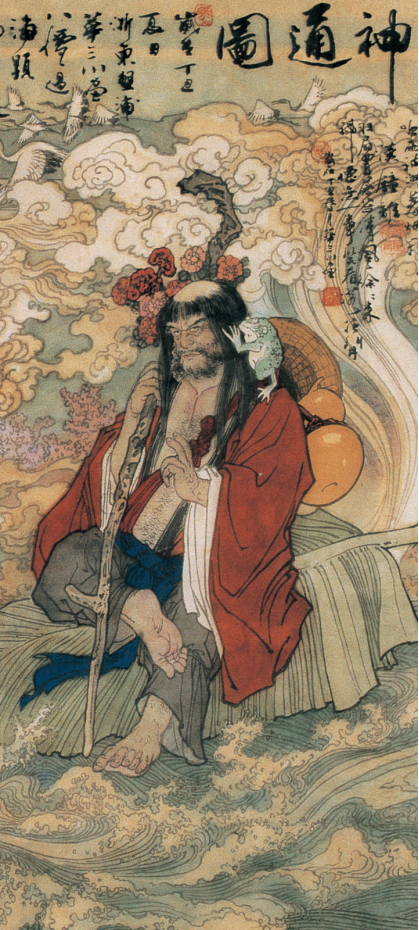
Tieguai Li is widely regarded as the leader of the Eight Immortals.
According to legend, he was originally a handsome Taoist adept whose spirit once left his body during meditation. His disciple mistakenly believed he had died and cremated his body. When his spirit returned, he had no body to enter and was forced to inhabit the body of a starving, crippled beggar.
Thus, he became the ragged immortal known as Iron-Crutch Li. On his back he carries a medicine gourd, filled with miraculous remedies used to heal the sick and save lives. He symbolizes compassion, healing, and the Taoist teaching that spiritual beauty transcends outward appearance.
Han Zhongli
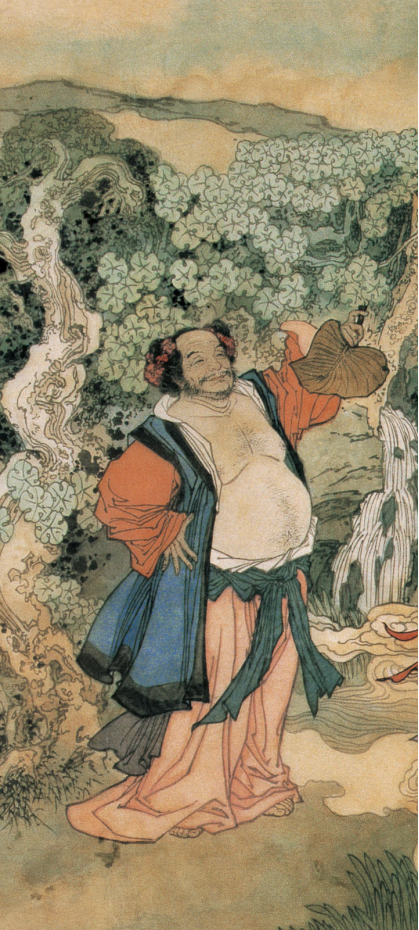
Han Zhongli is often depicted with his chest exposed, holding a palm-leaf fan.
According to tradition, he was once a general during the Eastern Han Dynasty before turning toward Taoist cultivation. His magical fan possesses extraordinary power and can even restore life to the dead, making him a symbol of transformation and renewal.
He is especially important as the spiritual teacher of Lü Dongbin, and his role in Taoist inner alchemy links him to later traditions such as the Five Patriarchs and Seven True Masters.
Zhang Guolao
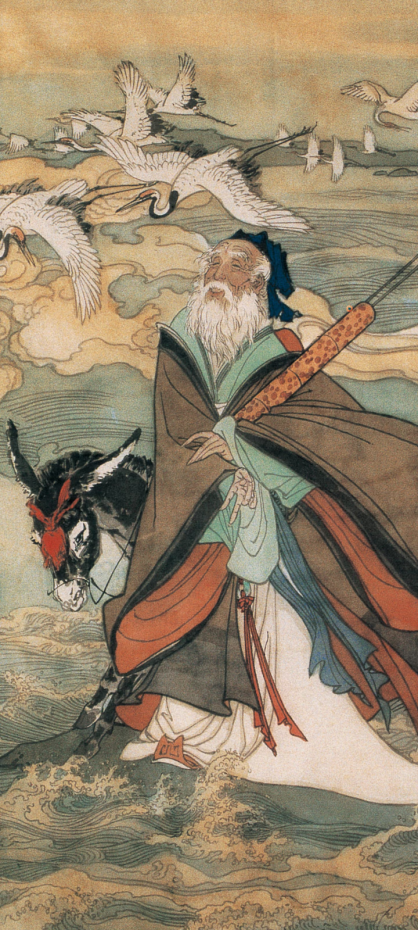
Zhang Guolao is famous for riding a donkey backward, one of the most iconic images in Taoist folklore.
He is said to remark, “It is not that I ride backward, but that I choose to look back at everything.” This unusual habit reflects profound wisdom: true understanding often comes through reflection.
His sacred implement is a fish drum, used for divination and insight into human destiny. He symbolizes longevity, wisdom, and unconventional spiritual vision.
Lan Caihe
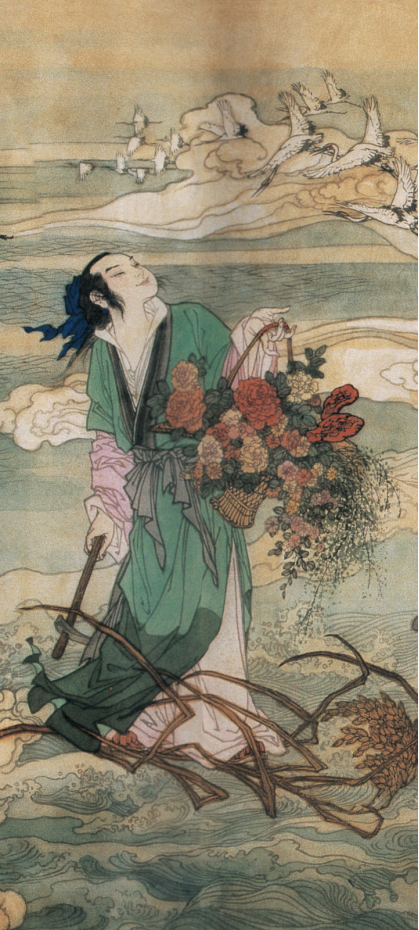
Lan Caihe appears as a wandering street performer, dressed in ragged clothing with one foot bare.
Known for singing mysterious songs that contain hidden Taoist truths, Lan Caihe carries a flower basket filled with rare and exotic blossoms. These flowers symbolize fleeting beauty and the impermanence of worldly life.
Lan Caihe represents freedom, spontaneity, and detachment from social conventions—qualities deeply valued in Taoist philosophy.
He Xiangu
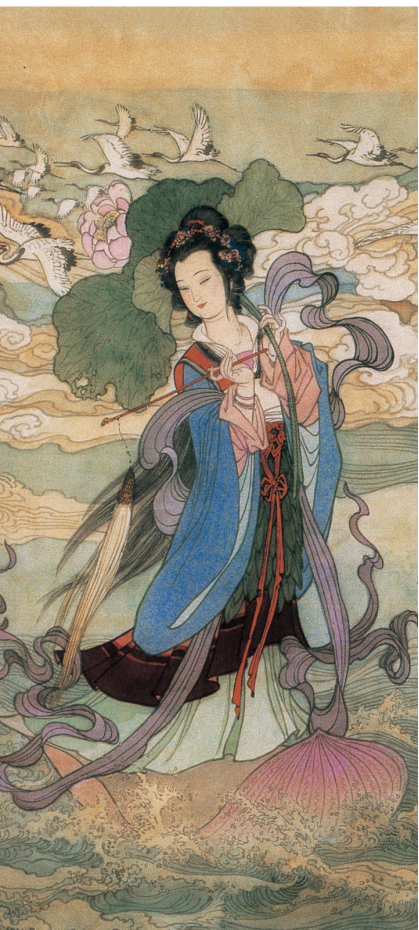
He Xiangu is the only female among the Eight Immortals and a symbol of purity and spiritual grace.
Legend says she was a woman from Zengcheng in Guangdong during the Tang Dynasty. Kind-hearted and devoted to gathering medicinal herbs, she attained immortality after consuming a divine fruit.
She is traditionally shown holding a lotus flower, representing purity, inner refinement, and self-cultivation. She is especially revered by those praying for peace, health, and family harmony.
Lü Dongbin
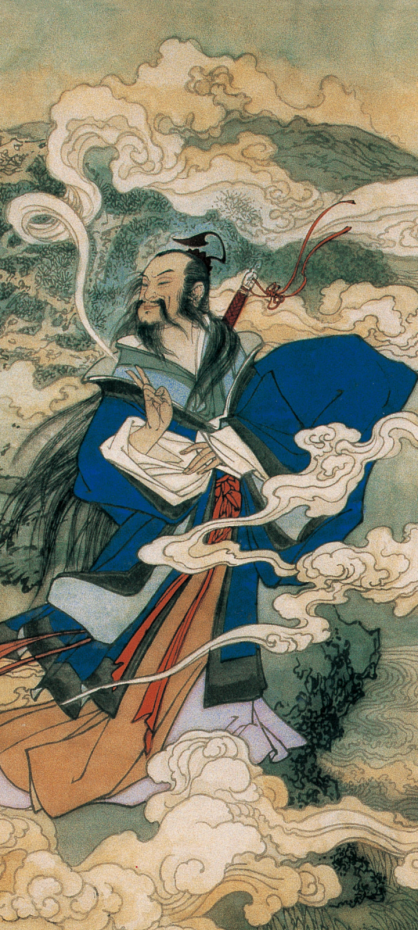
Lü Dongbin is undoubtedly the most famous and widely worshipped of the Eight Immortals.
Originally a scholar, he later abandoned worldly ambition after meeting Han Zhongli and became an immortal through Taoist practice. He carries a demon-slaying sword, which he uses to eliminate evil spirits and help ordinary people overcome suffering.
Countless legends surround him, and many Taoist temples include a dedicated Lüzu Hall in his honor. His teachings remain central to Taoist internal alchemy traditions and influenced generations of practitioners.
Han Xiangzi
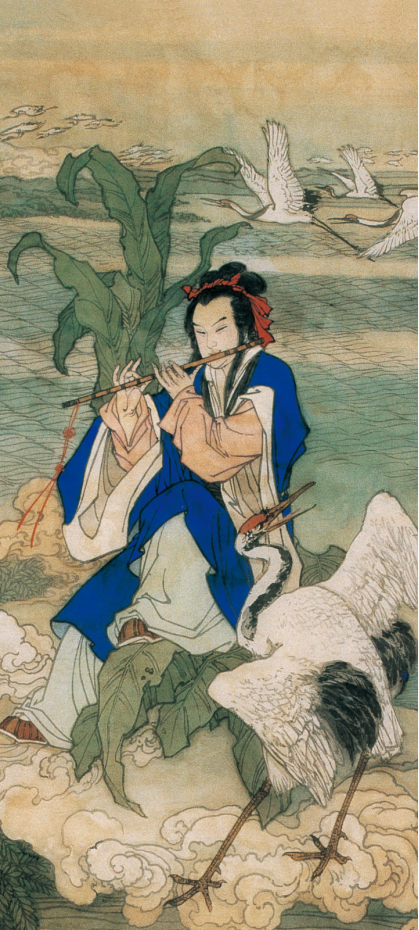
Dynasty scholar Han Yu.
Young, elegant, and gifted in music, he is known for his magical jade flute, whose melodies could awaken spiritual awareness and even cause flowers to bloom instantly.
He symbolizes artistic inspiration, youthful wisdom, and the harmony between scholarship and spiritual cultivation.
Cao Guojiu
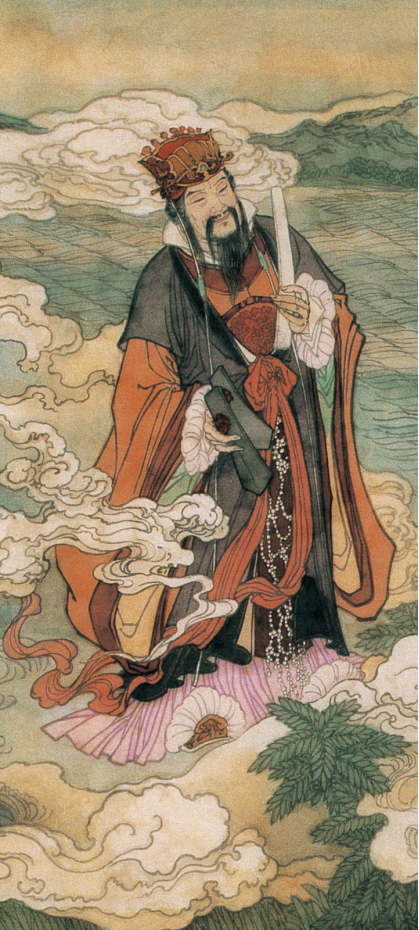
Cao Guojiu is regarded as the most noble-born among the Eight Immortals.
Legend identifies him as a relative of the imperial Song court who renounced wealth and political privilege in pursuit of the Dao. His sacred object is a jade court tablet, symbolizing dignity, discipline, and purification of the mind.
He represents the Taoist teaching that even those born into privilege must abandon attachment in order to attain enlightenment.
The Legend of the Eight Immortals Crossing the Sea
The most famous story associated with the Eight Immortals is “The Eight Immortals Crossing the Sea, Each Displaying Their Divine Powers.”
According to legend, after attending a celestial peach banquet hosted by the Queen Mother of the West, they reached the Eastern Sea and decided not to use a boat. Instead, each immortal crossed using their own sacred implement—Tieguai Li used his gourd, Han Zhongli his fan, and Lü Dongbin his sword.
Their actions disturbed the Dragon Palace and led to conflict, but through cooperation and individual strengths, the Eight Immortals triumphed. This tale has become a lasting symbol of teamwork, diversity, and the power of unique abilities united toward a common goal.
Cultural Influence and Symbolism
The Eight Immortals remain central to Taoist worship and Chinese folk culture. Their images appear in temple murals, porcelain, wood carvings, and New Year paintings.
A particularly elegant artistic tradition is the Hidden Eight Immortals, where only their magical objects are shown, allowing viewers to recognize each immortal symbolically.
Another popular theme is “The Eight Immortals Celebrating Longevity,” commonly displayed during birthday celebrations as a blessing for health, happiness, and long life. Their enduring influence reflects Taoism’s deep belief in spiritual transformation and universal access to transcendence.
Conclusion
The Eight Immortals are more than legendary figures—they are enduring symbols of Taoism’s most hopeful message: immortality can be learned, and enlightenment can be attained by anyone.
Through their miraculous stories, distinctive personalities, and sacred symbols, they continue to inspire believers and scholars alike, reminding us that the path to transcendence begins with sincerity, virtue, and dedication to the Dao.
Related Posts
Folk Immortals in Taoism (Part I): Legendary Sages, Strategists, and Founding Immortals
Folk Immortals Folk immortals are a special group in Taoist culture that are rooted in [...]
May
Folk Immortals in Taoism (Part II): Taoist Masters, Celestial Scholars, and Guardians of Blessings
Xu Xun — Leader of the Jingming Dao Xu Xun was a renowned Taoist priest [...]
May
Acquired Immortals and True Lords
The Acquired Immortals and True Lords are an important group within the Taoist pantheon who [...]
Dec