
The Acquired Immortals and True Lords are an important group within the Taoist pantheon who stand in contrast to the primordial deities that have existed since the beginning of creation. Unlike the Primeval Saints and cosmic gods, these immortals were originally mortals who attained divine status through cultivation, meritorious deeds, spiritual enlightenment, alchemy, or heavenly enfeoffment.
Their existence embodies one of the most important Taoist beliefs: “immortality can be attained through cultivation.” Through self-discipline, virtue, compassion, internal alchemy, and service to humanity, ordinary people could transcend mortality and ascend into the celestial realm.
Among the most famous Acquired Immortals are the Four Great Heavenly Masters, the Five Great True Lords, the Five Patriarchs and Seven True Masters, the Three Maos True Lords, the Eight Immortals, Zhang Sanfeng, Magu, the Nine Heavens Xuannü, and Mazu.
The Four Great Heavenly Masters

The Four Great Heavenly Masters are foundational patriarchs of the Zhengyi Taoist tradition. All four were originally mortal cultivators who attained immortality through Taoist practice and great spiritual achievements.
Zhang Daoling — The First Heavenly Master
Zhang Daoling cultivated the Dao in Sichuan and founded the Orthodox Unity tradition. He became famous for subduing demons, curing illness, and establishing organized Taoist ritual systems. Later generations honored him as the First Heavenly Master of Taoism.
Ge Xuan — Master of Talismans and Alchemy
Ge Xuan specialized in talismanic arts, Taoist rituals, and alchemy cultivation. He traveled widely using spiritual methods to save people and spread Taoist teachings, eventually becoming revered as Heavenly Master Ge.
Xu Xun — Protector Against Floods
Xu Xun became renowned for controlling floods and eliminating harmful water spirits that endangered local communities. His achievements in protecting ordinary people earned him divine recognition after ascending to immortality.
Sa Shoujian — Compassionate Exorcist
Sa Shoujian dedicated his life to helping the sick, relieving suffering, and exorcising evil spirits. His compassionate image remains highly respected in Taoist ritual traditions.
The Four Heavenly Masters collectively preside over exorcism, spiritual protection, disaster prevention, and the continuation of Taoist orthodoxy.
The Five Great True Lords

The Five Great True Lords are major representatives of Taoist philosophy, spiritual cultivation, and internal enlightenment.
Zhuangzi — The Nanhua True Lord
Zhuangzi authored the influential text Zhuangzi, advocating freedom of spirit, natural harmony, and unity with the Dao. His teachings became one of the philosophical foundations of Taoism.
Liezi — The Chongxu True Lord
Liezi emphasized emptiness, tranquility, and non-action. Legends describe him as mastering the “Way of the Wind Immortal,” allowing him to ride the wind and travel freely through the heavens.
Wenzi — The Tongxuan True Lord
Wenzi inherited and transmitted Laozi’s teachings, spreading Taoist wisdom through his writings and moral cultivation.
Kang Cangzi — The Dongling True Lord
Kang Cangzi advocated returning to one’s true nature and harmonizing body and spirit with the Dao. His teachings emphasized virtue, wisdom, and longevity cultivation.
Zhang Boduan — The Ziyang True Lord
Zhang Boduan founded the Southern School of Taoist Internal Alchemy and authored The Awakening of the Truth, one of the most influential Taoist alchemical classics.
His internal alchemy teachings later influenced cultivation traditions associated with The Divine Boys of the Five Directions.
The Five Patriarchs and Seven True Masters
The Five Patriarchs and Seven True Masters are among the most important figures in Taoist Internal Alchemy and the Quanzhen tradition.
The Five Patriarchs of the Southern School
The Southern School Five Patriarchs include Zhang Boduan, Shi Tai, Xue Daoguang, Chen Nan, and Bai Yuchan. They preserved and transmitted internal alchemy traditions focused on cultivating life force and spiritual essence simultaneously.
The Five Patriarchs of the Northern School
The Northern School lineage includes Wang Chongyang, Zhongli Quan, Lü Dongbin, Liu Haichan, and Wang Xuanfu.
Wang Chongyang later founded the Quanzhen School, emphasizing moral discipline, meditation, simplicity, and the integration of Confucianism, Buddhism, and Taoism.
The Seven True Masters
The Seven True Masters were Wang Chongyang’s seven primary disciples: Ma Danyang, Tan Chuduan, Liu Chuxuan, Qiu Chuji, Wang Chuyi, Hao Datong, and Sun Bu’er.
Each established regional branches of Quanzhen Taoism and played a central role in spreading Taoist cultivation traditions across China.
The Three Maos True Lords
The Three Maos True Lords are the founding patriarchs of the Maoshan tradition. The three brothers — Mao Ying, Mao Gu, and Mao Zhong — lived during the Han Dynasty.
All three abandoned official careers to cultivate the Dao in seclusion on Maoshan Mountain. They mastered longevity techniques, ritual healing, exorcism, and plague prevention, earning widespread respect among the people.
After ascending to immortality, they became protectors of Maoshan’s spiritual traditions and were honored as the founding patriarchs of the Maoshan School.
The Eight Immortals
The Eight Immortals are the most beloved group of Acquired Immortals in Chinese folk religion. Unlike distant celestial gods, they represent ordinary people from different social classes who achieved immortality through cultivation and virtue.
Tieguai Li
Tieguai Li was originally a handsome scholar. During one spiritual journey, his physical body was lost, forcing his spirit to inhabit the body of a crippled beggar. Despite his appearance, he became a compassionate immortal dedicated to healing the sick and helping the poor.
Zhongli Quan
Originally a Han Dynasty general, Zhongli Quan attained enlightenment after military defeat led him to seek spiritual truth. He later mastered golden elixir cultivation.
Lü Dongbin
Lü Dongbin repeatedly failed the imperial examinations before meeting Zhongli Quan, who guided him toward enlightenment. He became famous for swordsmanship, exorcism, demon-slaying, and helping ordinary people.
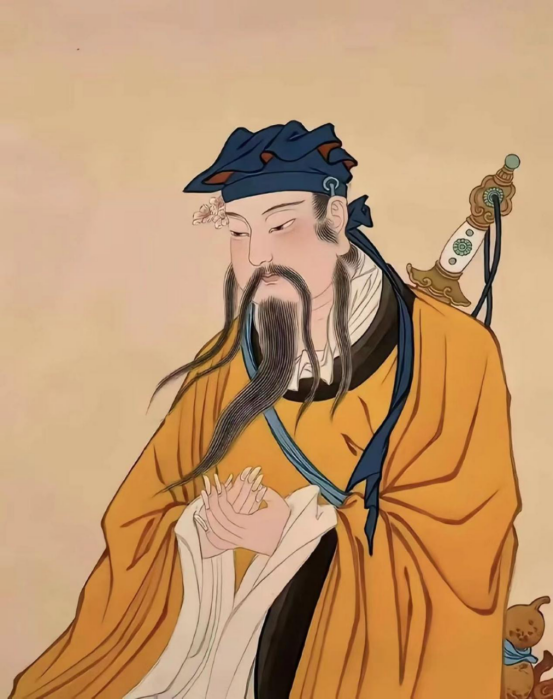
Zhang Guolao
Zhang Guolao lived as a mountain recluse and became famous for traveling while riding his donkey backward, symbolizing unconventional wisdom and transcendence.
He Xiangu
He Xiangu is the only female member of the Eight Immortals. After consuming sacred mica, she attained immortality and became associated with compassion, purity, and protection for women.
Lan Caihe
Lan Caihe wandered through marketplaces singing songs and teaching spiritual wisdom through humor, laughter, and unconventional behavior.
Han Xiangzi
Han Xiangzi, nephew of the famous scholar Han Yu, mastered Taoist flute magic and spiritual arts, eventually guiding his uncle toward deeper understanding of the Dao.
Cao Guojiu
Cao Guojiu was a royal relative during the Song Dynasty who abandoned wealth and political status to pursue Taoist cultivation under Lü Dongbin’s guidance.
The Eight Immortals symbolize the Taoist belief that enlightenment is possible for all people regardless of status or background.
Read the full article about the Eight Immortals of Taoism here : Eight Immortals (Ba Xian): Legends, Symbols, and the Taoist Meaning of the Eight Immortals
Zhang Sanfeng and Wudang Taoism
Zhang Sanfeng was a legendary Taoist master during the late Yuan and early Ming periods. He studied widely before dedicating himself fully to Taoist cultivation and internal alchemy practice.
He founded the Wudang martial tradition and emphasized the dual cultivation of body and spirit. His philosophy focused on softness overcoming hardness and achieving harmony between internal and external cultivation.
Zhang Sanfeng later became revered as the immortal founder and protector of Wudang Taoist martial arts traditions.
Magu — Goddess of Longevity
Magu is a Taoist goddess associated with longevity, blessings, and auspicious omens. According to legend, she once witnessed the East Sea transform into mulberry fields several times, symbolizing the passage of immense cosmic ages.
She is widely worshipped during birthday celebrations as a symbol of long life, prosperity, and happiness.
The Nine Heavens Xuannü
The Nine Heavens Xuannü is associated with warfare, strategy, talismanic arts, and Taoist esoteric practices. Some Taoist traditions describe her as originally attaining enlightenment through mortal cultivation.
According to legend, she assisted the Yellow Emperor in defeating Chiyou and later became a divine protector of righteous armies and Taoist rituals.
Her martial and mystical authority also connects with traditions involving The Ten Divine True Lords.
Mazu — The Sea Goddess

Mazu was originally Lin Mo, a woman from Fujian Province during the Song Dynasty. From childhood, she displayed extraordinary intelligence and often rescued fishermen and sailors from dangerous storms.
After her ascension at the age of twenty-eight, people honored her as a protector of the seas, maritime trade, and travelers.
As her worship spread, she gradually became one of the most important protective deities in Chinese folk religion.
Her maritime authority closely parallels the ancient water-governing traditions associated with The Dragon Kings of the Four Seas.
Legacy of the Acquired Immortals
The Acquired Immortals and True Lords represent one of the most human and approachable parts of the Taoist divine system. Unlike primordial gods who transcend mortal experience, these immortals began as ordinary people who achieved enlightenment through cultivation, wisdom, compassion, and righteous deeds.
Their stories continue to inspire Taoist practitioners and believers, embodying the ideals of spiritual transcendence, moral virtue, harmony with nature, and the possibility that humanity itself can attain immortality through the Dao.
Related Posts
Folk Immortals in Taoism (Part II): Taoist Masters, Celestial Scholars, and Guardians of Blessings
Xu Xun — Leader of the Jingming Dao Xu Xun was a renowned Taoist priest [...]
May

Four Heavenly Masters in Taoism: Founders and Guardians of Taoist Tradition
The Four Great Heavenly Masters are four patriarchal True Lords revered as “Heavenly Masters” in [...]
Dec
Folk Immortals in Taoism (Part I): Legendary Sages, Strategists, and Founding Immortals
Folk Immortals Folk immortals are a special group in Taoist culture that are rooted in [...]
May