
Five Dragon rain-prayer traditions belong to the history of Chinese dragon worship. Historical scholarship records the collective term 五龍神 / 五龙神 (wǔ lóng shén), meaning Five Dragon Deities, in a discussion of five-dragon worship and official recognition. This page examines documented rain-prayer and cult contexts rather than assigning the group universal authority over the world’s waters.
Directional cosmology forms part of some historical accounts, but similar names do not prove that every five-dragon group had identical members, duties or status. The historical question here is how worshippers and institutions understood rain prayer, not whether rituals demonstrably changed the weather.

Historical Rain-Cult Contexts
Studies of Chinese dragon worship describe five-dragon rites in relation to rain petitions and directional cosmology. These accounts involve different historical settings; they should not be reduced to a single moment when Taoism completed a universal dragon bureaucracy. Rain-prayer practices can be discussed as historically situated religious activity without assuming that all local, state and Taoist contexts were identical.
Song Recognition: A Documented Example
Tao Jin and Yu Xiao (pp. 196–198, especially p. 197 n. 111) report a 1108 imperial grant of kingly titles to five color-named dragon deities, citing Song huiyao jigao. This is a specific example of official recognition, not evidence that every Five Dragon tradition shared one unchanging identity or hierarchy.
Rain Prayer, Drought and Agricultural Concern
The historical evidence places five-dragon worship within concerns about rain and drought. Worshippers petitioned for favorable conditions; the religious purpose of those petitions must be distinguished from evidence that a rite produced rain or protected crops. Agricultural concern explains the setting of rain prayer, rather than proving divine control of weather.
Ritual Context and the Limits of the Evidence
State recognition, local worship and Taoist ritual participation are different kinds of evidence. Each example should be read in its documented setting. The sources used here do not establish one universal liturgy for every Five Dragon group, nor a guaranteed result from an invocation.
Historical Cult and Directional System: Different Questions
Historical five-dragon worship and directional dragon-king schemes share related cosmological language, but that relationship does not establish unrestricted equivalence across all texts and periods. A member/system profile answers who the named directional figures are; this page concerns documented rain-cult contexts and their historical interpretation.
For the member names and directional framework, see the Dragon Kings of the Five Emperors.
Conclusion
Five Dragon rain-prayer traditions offer a historically situated view of the relationship between religious practice and concern for rain. The documented examples support discussion of worship, recognition and belief; they do not establish universal water jurisdiction or the efficacy of rituals.
Sources
Tao Jin and Yu Xiao, 九州清晏, pp. 196–198: historical five-dragon cult contexts and the reported 1108 ennoblement.
Xu Kaixiang, 宋代成都龍女祠及其信仰空間的變遷, p. 96: historically situated directional rain-cult organization and Taoist participation.
Related Posts
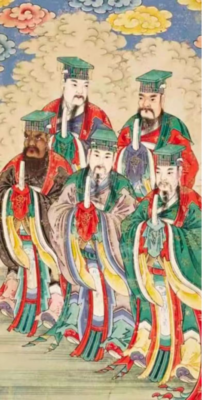
Dragon Kings of the Five Emperors in Taoism
The Dragon Kings of the Five Emperors are a group of five directional dragon kings [...]
Dec
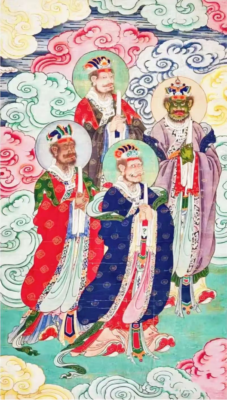
The Four Sea Dragon Kings in Taoism: Guardians of Oceans, Rain, and Maritime Protection
The Dragon Kings of the Four Seas are among the most important water deities in [...]
Dec
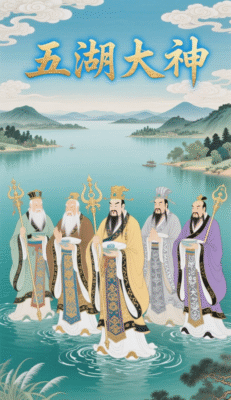
The Great Deities of the Five Lakes in Taoism
The Great Deities of the Five Lakes are important water gods in Taoism and Chinese [...]
Dec