
Who Are the Goddesses of the Five Directions?
The Goddesses of the Five Directions (五方神女), also known as the Five Directional Divine Ladies, are revered female deities in Taoism who govern the east, south, west, north, and center. They embody the feminine spiritual manifestations of the Five Elements (Wood, Fire, Earth, Metal, and Water) and help maintain the balance of heaven, earth, and humanity.
Paired with the male directional sovereigns, these goddesses represent the yin dimension of cosmic governance, ensuring harmony through seasonal balance, elemental regulation, and moral guidance. Their theological foundation appears in important Taoist texts such as Yunji Qiqian (Seven Taoist Classics), Laozi Zhongjing, and Taiping Jing.
The Sacred Roles of the Five Divine Ladies
Eastern Blue-Staffed Jade Lady (Wood Element)
The Eastern Blue-Staffed Jade Lady governs the energy of wood, springtime vitality, and the eastern seas. Described in Yunji Qiqian, she is depicted wearing a blue celestial robe and holding a blue jade scepter symbolizing growth and renewal.
Her divine functions include:
- encouraging plant growth and agricultural prosperity
- protecting spring planting and autumn harvests
- balancing eastern climate and preventing floods or drought
- preserving the virtue of benevolence (Ren)
- supporting scholars, students, and creative inspiration
As a guardian of renewal, her nurturing energy mirrors Taoism’s emphasis on cyclical regeneration and life harmony.
Southern Red-Staffed Jade Lady (Fire Element)
The Southern Red-Staffed Jade Lady governs the energy of fire, light, summer warmth, and the southern realm.
Clothed in red silk and surrounded by radiant flames, she symbolizes passion, vitality, and spiritual illumination. Her responsibilities include:
- regulating summer heat and seasonal balance
- protecting social order through the virtue of propriety (Li)
- dispelling pestilence and negative spiritual influences
- blessing careers, marriage, and business prosperity
Her protective energy complements the benevolent celestial authority described in The Three Great Emperor-Officials, where divine beings also oversee blessings, moral order, and relief from worldly suffering.
Central Yellow Jade Lady (Earth Element)
The Central Yellow Jade Lady governs earth energy, agricultural abundance, and the harmonization of the four seasons.
She is portrayed in golden robes, holding a jade seal that symbolizes central authority and stability. Her sacred duties include:
- protecting fertile land and grain production
- balancing the Five Elements across all directions
- safeguarding national unity and dynastic stability
- preserving the virtue of faith and sincerity (Xin)
As the stabilizing force at the cosmic center, she reflects Taoist ideals of balance and grounded harmony.
Western White Jade Lady (Metal Element)
The Western White Jade Lady governs the metal element, autumn, purification, and righteous transformation.
Often depicted in white robes and carrying a luminous jade blade or ritual object, she presides over:
- purification and energetic cleansing
- autumn harvest and seasonal completion
- protection through the virtue of righteousness (Yi)
- spiritual clarity and release of negativity
Her symbolism resonates with Taoist themes of refinement and disciplined transformation, much like the sacred feminine authority embodied by Queen Mother of the West, another powerful goddess associated with immortality and cosmic order.
Northern Black Jade Lady (Water Element)
The Northern Black Jade Lady governs water energy, winter, wisdom, and hidden spiritual power.
Dressed in black robes and surrounded by icy mist, she represents introspection, adaptability, and protective depth. Her functions include:
- regulating snowfall and water cycles
- protecting maritime safety and safe journeys
- dispelling cold-related spiritual harm
- preserving the virtue of wisdom (Zhi)
- blessing academic progress and family continuity
Her connection to sacred water aligns with Taoist reverence for divine water governance, reflected in traditions surrounding The Five Water Deities.
The Yin-Yang Balance of the Five Divine Ladies
Together, the Five Divine Ladies form a yin counterpart to the male directional deities, completing Taoism’s cosmic model of yin-yang harmony.
Their combined powers govern:
- the Five Elements
- the Five Directions
- the Four Seasons
- the Five Moral Virtues
- natural and social equilibrium
Their worship demonstrates the Taoist belief that feminine and masculine divine forces must cooperate to sustain cosmic order.
Ritual Worship and Cultural Significance
In Taoist ceremonies, priests often perform rituals to invite the Five Divine Ladies, seeking blessings for:
- favorable weather
- peace and prosperity
- agricultural success
- family harmony
- spiritual purification
Seasonal offerings are traditionally held during the Spring Equinox, Summer Solstice, Autumn Equinox, and Winter Solstice.
Their symbolism continues to inspire modern Taoist art, protective jewelry, and spiritual practice, reminding believers to respect nature’s cycles and cultivate the virtues of benevolence, propriety, faith, righteousness, and wisdom.
The Enduring Wisdom of the Five Divine Ladies
The Goddesses of the Five Directions embody one of Taoism’s deepest teachings: that harmony arises through balanced interaction between nature, morality, and spirit.
As guardians of elemental energy and sacred order, they remain timeless symbols of feminine power, cosmic protection, and the living wisdom of Taoist philosophy.

Related Posts
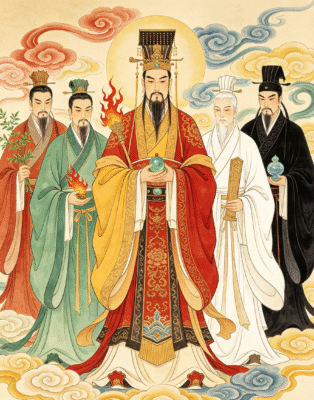
The Deities of the Five Directions in Taoism: The Five Elemental Gods of Wood, Fire, Metal, Water, and Earth
The Five Elemental Deities of Wood, Fire, Metal, Water, and Earth are central figures in [...]
Dec
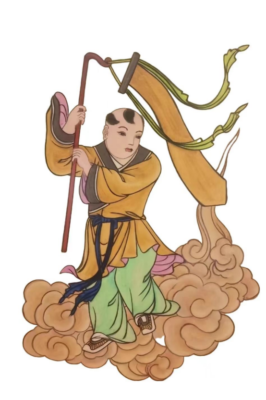
The Divine Boys of the Five Directions in Taoism: Guardians of Souls and Guides of the Five Elements
Introduction to the Divine Boys of the Five Directions The Divine Boys of the Five [...]
Dec
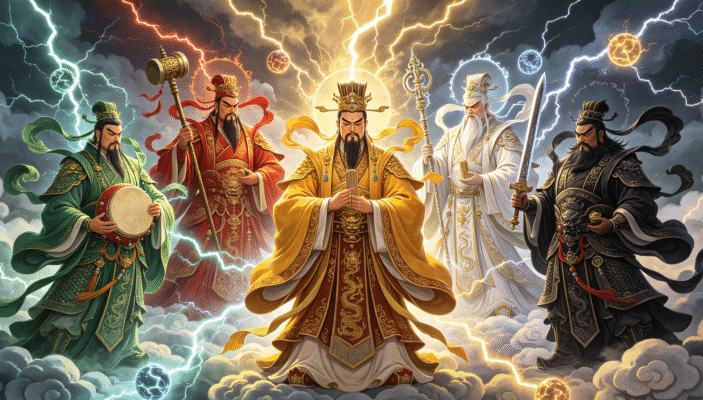
Five Directional Thunder Emperors: Supreme Taoist Gods of the Five Thunder Directions
The Five Directional Thunder Emperors (五方雷帝, Wufang Leidi) are among the highest-ranking deities in the [...]
Dec