
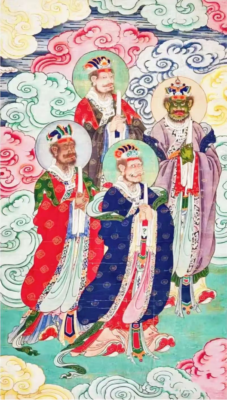
The Four River Source Kings are revered water deities in Chinese mythology and Taoism, each governing one of the four great rivers traditionally regarded as the lifelines of ancient China—the Yellow River, Yangtze River, Huai River, and Ji River. Honored as divine rulers of water systems, they were worshiped as protectors against floods, guardians of navigation, and bestowers of agricultural prosperity.
As part of the Taoist celestial administration, the Four River Source Kings were officially recognized as Water Emperors, serving under the authority of the Water Official Great Emperor and embodying the sacred relationship between natural waterways and cosmic order.
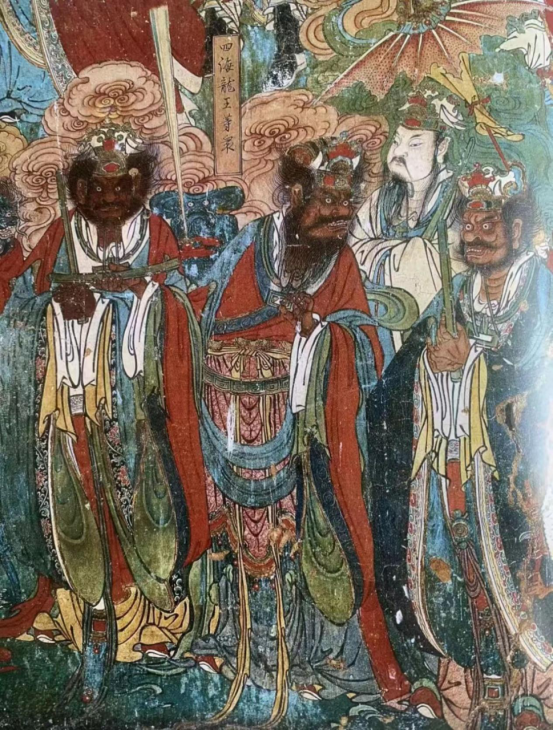
Origins and Religious Status of the Four River Source Kings
The worship of river gods in China dates back to early antiquity, when rivers were viewed as living spiritual forces essential to survival and civilization. Taoism later formalized these beliefs by incorporating the Four River Source Kings into its divine hierarchy.
Unlike the The Dragon Kings of the Four Seas, who govern oceanic waters and coastal rainfall, the Four River Source Kings focus on inland river systems and freshwater balance. Their responsibilities include regulating water flow, preventing floods, protecting transportation routes, and ensuring fertile agricultural conditions.
They also reflect the Taoist principle of harmony between heaven, earth, and humanity, in which rivers serve as sacred channels connecting cosmic energy to the human world.
The Four River Source Kings
1. Huanghe Lingyuan Hongjiuzhong King
Yellow River Source King of Divine Power
The Yellow River Source King is the most prominent among the Four River Source Kings and is traditionally identified with River God Feng Yi, an ancient deity associated with the Yellow River.
Divine Functions
- Governs the entire Yellow River basin
- Controls floods and water volume regulation
- Protects farmlands and settlements along the river
- Ensures national stability through water harmony
Sacred Symbolism
He is often depicted with a human face and fish-like body, holding a jade scepter to symbolize divine authority over waterways.
His major worship center was the Yellow River God Temple in Shanxi, where emperors performed sacrifices for favorable weather and peace.
2. Changjiang Guangyuan Shunjiuzhong King
Yangtze River Source King of Broad Governance
The Yangtze River Source King governs China’s longest river and is closely associated with regional water balance and transportation.
Some traditions connect this deity to Qu Yuan, whose spiritual association with rivers made him a symbolic protector of flowing waters.
Divine Functions
- Oversees the Yangtze River basin
- Protects shipping and river trade
- Maintains freshwater equilibrium
- Guards communities dependent on river transport
In Taoist symbolism, he represents the power of flowing vitality, much like the cosmic balance described in The Five Water Deities.
3. Huaihe Changyuan Bojiuzhong King
Huai River Source King of Great Governance
The Huai River Source King is responsible for one of China’s most historically flood-prone river systems.
Divine Functions
- Controls Huai River water levels
- Prevents floods and seasonal disasters
- Protects irrigation systems and farmland
- Maintains river navigation safety
He is commonly portrayed wearing golden armor and carrying a spear, symbolizing strength and flood suppression.
His sacred center at Tongbai Mountain’s Huaiyuan Temple became an important site for imperial offerings.
4. Jihui Qingyuan Pujiuzhong King
Ji River Source King of Pure Governance
Though the ancient Ji River later disappeared due to Yellow River changes, its deity remains an important symbol of purity and hidden spiritual waters.
Divine Functions
- Protects hidden and underground water sources
- Purifies water quality
- Maintains ecological balance
- Symbolizes sacred renewal and clarity
He is often shown holding a pure water vase, representing spiritual cleansing and Taoist purification.
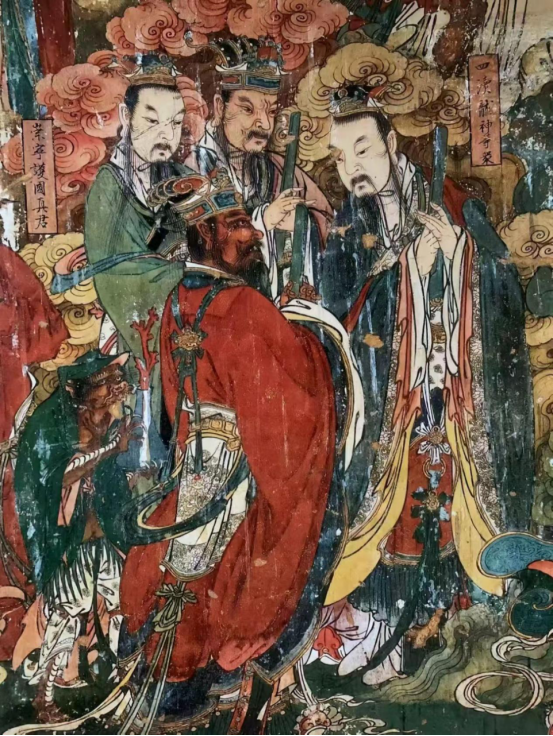
Core Religious Functions of the Four River Source Kings
Water Regulation and Flood Prevention
Their primary duty is maintaining orderly river flow and preventing destructive floods. In Taoist ritual practice, they are invoked to calm waters and restore environmental balance.
Protection of Transportation and Livelihoods
Ancient fishermen, merchants, and grain transport workers regularly offered sacrifices to these deities for safe passage and successful journeys.
Agricultural Blessings
By controlling rainfall and irrigation systems, the Four River Source Kings were essential to food production and rural prosperity.
Ritual Invocation and National Stability
According to Taoist liturgical texts such as The Comprehensive Secret Essentials for Assisting the State and Saving the People by the Supreme Lord, these deities are summoned in ceremonies praying for peace, abundant harvests, and stable waterways.
Relationship to Taoist Cosmology
Within Taoism, the Four River Source Kings serve under the Water Official Great Emperor, complementing broader cosmic systems such as The Great Emperors of the Five Great Mountains, which govern sacred terrestrial spaces.
Together, mountain and river deities form a complete spiritual geography, expressing the Taoist understanding that natural forces must remain balanced for civilization to thrive.
Cultural Legacy and Continuing Worship
The Four River Source Kings symbolize the fusion of environmental reverence and divine governance. Their worship reflects China’s enduring belief that rivers are not merely physical resources, but sacred lifelines protected by celestial powers.
Even today, their legacy survives in river temples, local festivals, and Taoist ceremonies dedicated to water purification, safety, and prosperity.
Related Posts
The Five Water Deities in Taoism: Guardians of Seas, Rivers, and Sacred Waters
The Five Water Deities are among the most important water gods in Taoist belief. They [...]
Dec
The Great Deities of the Five Lakes in Taoism
The Great Deities of the Five Lakes are important water gods in Taoism and Chinese [...]
Dec
The Four Sea Dragon Kings in Taoism: Guardians of Oceans, Rain, and Maritime Protection
The Dragon Kings of the Four Seas are among the most important water deities in [...]
Dec